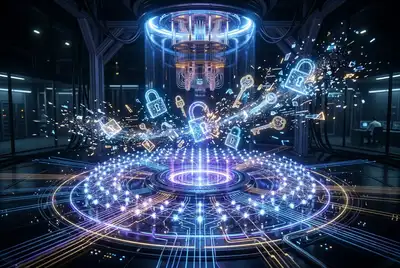
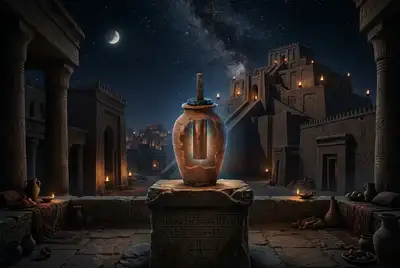
I remember watching documentaries about ancient libraries, like the Library of Alexandria, and feeling a profound sense of loss for the knowledge that vanished with them. It’s a powerful reminder of how fragile our collective understanding can be, easily swept away by fire, war, or the relentless march of time. Today, our data isn't written on scrolls or carved into stone; it's digital, ethereal, residing on servers and cloud networks. But is it truly more secure? When I think about the potential for catastrophic solar flares, devastating cyber-attacks, or even unforeseen natural disasters on Earth, I can't help but wonder: where do we put humanity's most precious digital heritage to truly safeguard it?
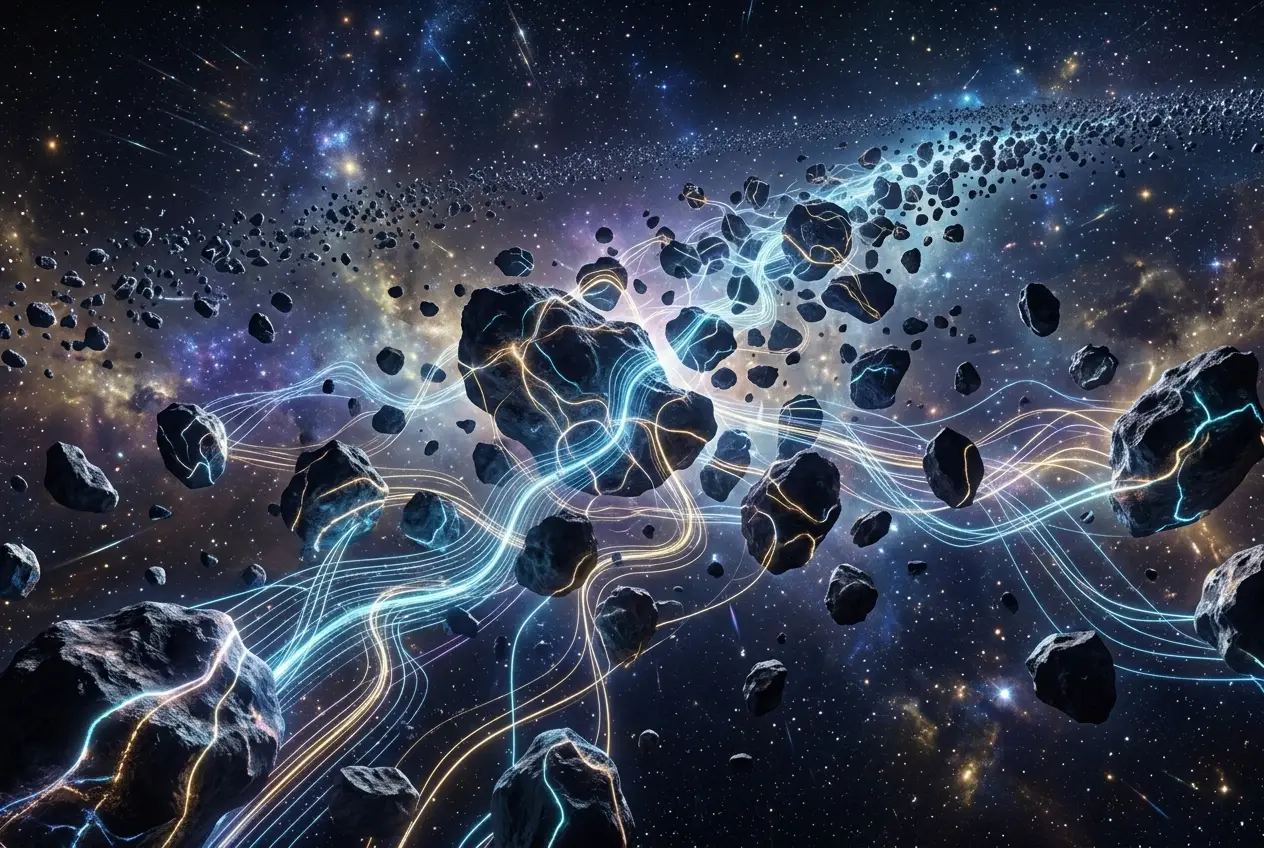
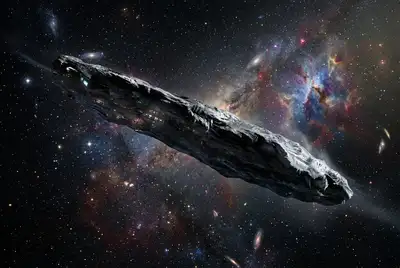
This question leads me to a concept that sounds like science fiction but is gaining serious traction: **storing humanity's data on asteroids**. Imagine turning these barren, cosmic rocks into indestructible vaults, preserving our entire digital civilization—from scientific breakthroughs and artistic masterpieces to our very genetic code—for eons. It's a bold vision, one that blends cutting-edge technology with the vast, silent permanence of space.
The Fragility of Terrestrial Data: Why We Need a Cosmic Vault
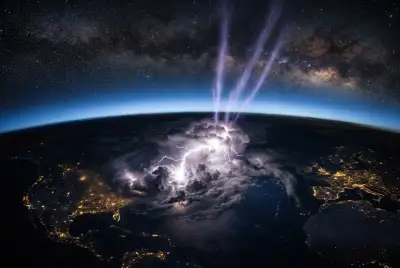
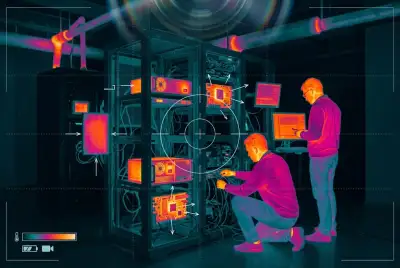
On Earth, our digital information is paradoxically both ubiquitous and vulnerable. We generate exabytes of data daily, yet the storage solutions we rely on have inherent limitations. Hard drives fail, optical discs degrade, and even the most robust data centers are susceptible to a range of terrestrial threats. Natural disasters like earthquakes, tsunamis, or even a supervolcanic eruption could wipe out vast swathes of our digital records. Beyond geological threats, our data faces the continuous dangers of cyber warfare, electromagnetic pulses (EMPs), and even the simple, inescapable problem of technological obsolescence.
Consider the lifespan of current storage media. A typical hard drive might last 5-10 years, solid-state drives perhaps a bit longer, but even archival-grade magnetic tapes require controlled environments and periodic migration. Digital data, despite its apparent resilience, is surprisingly delicate over geological timescales. We've explored the notion of our digital legacy surviving a dark age [here](/blogs/our-digital-legacy-can-data-survive-a-dark-age-1519), and the conclusion often points to the need for something far more robust than what we currently employ on our home planet. Ensuring data reliability and longevity is a complex challenge, as detailed on Wikipedia's page about [data storage](https://en.wikipedia.org/wiki/Data_storage).
Why Asteroids? A Cosmic Haven for Humanity's Knowledge
Asteroids, those seemingly insignificant remnants of the early solar system, offer a compelling suite of advantages as potential data repositories.
Micro-Vaults and Cosmic Archiving: Beyond Earth's Grasp
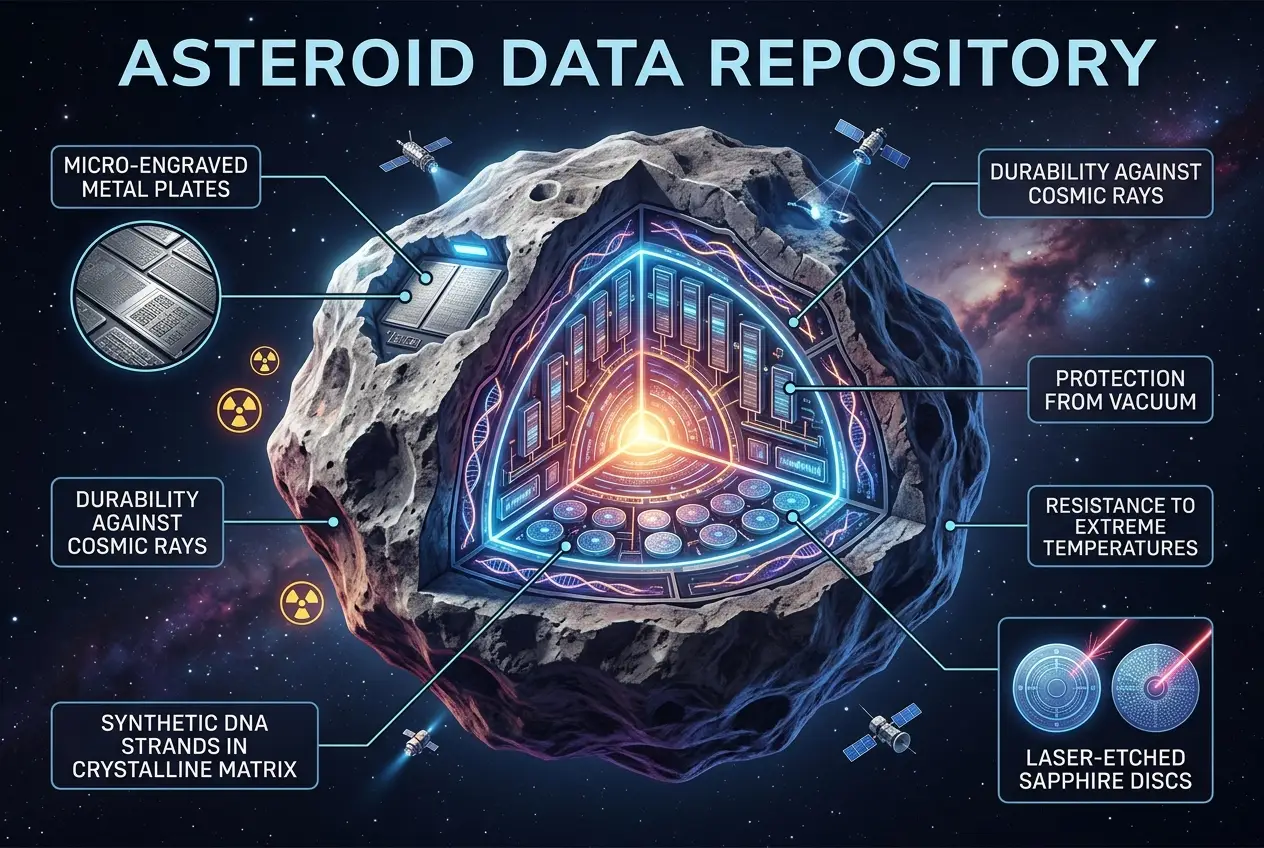
The primary appeal of asteroids lies in their **stability and isolation**. Located far from Earth's volatile atmosphere and geological activity, they exist in a near-perfect vacuum, shielding data from corrosion and atmospheric degradation. The extreme cold of space also dramatically slows down material decay, extending the lifespan of storage media far beyond anything achievable on Earth. Furthermore, the sheer number of asteroids in the Main Asteroid Belt provides an unimaginable amount of distributed storage capacity, meaning no single event could destroy the entirety of our cosmic library.
We're not talking about simply dumping hard drives onto a space rock. The concept of asteroid data storage involves highly specialized, ultra-durable storage solutions. Researchers are exploring methods that could endure for millions, if not billions, of years. One fascinating avenue is the use of **laser-etched metallic plates**, possibly made of noble metals like platinum or gold, or highly stable synthetic sapphire discs. These could encode information in microscopic patterns, making them incredibly resistant to radiation and cosmic dust. Another promising frontier is **synthetic DNA storage**, which, as we've discussed previously [here](/blogs/can-dna-store-the-worlds-digital-data-5328), can pack immense amounts of data into a microscopically small, biologically stable form. Imagine our entire internet compressed into a crystalline structure embedded within an asteroid.
Engineering the Cosmic Library: How Would It Work?
The practicalities of creating an asteroid data archive are, admittedly, monumental, but not insurmountable with future technological advancements.
The Journey to the Belt: Sending Data to Deep Space
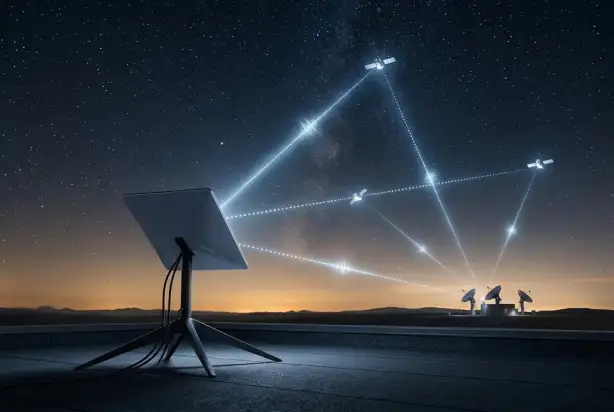
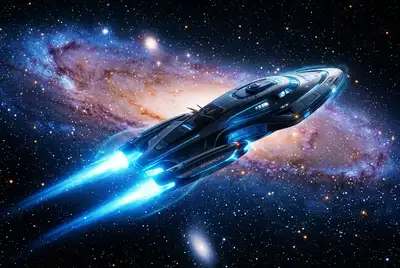
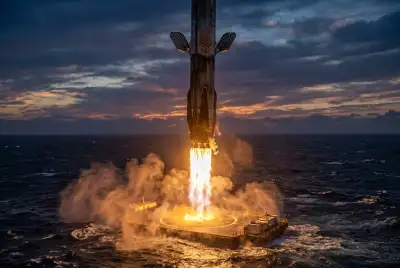
The first step would involve launching missions specifically designed to transport these specialized data modules to selected asteroids. These missions would build upon existing propulsion technologies, perhaps even leveraging concepts like solar sails or advanced ion thrusters for fuel-efficient, long-duration journeys to the Main Asteroid Belt. The selection of suitable asteroids would be crucial—they would need to be gravitationally stable, relatively inert, and ideally located to minimize the risk of collision with other space debris. This logistical challenge mirrors some of the early considerations for asteroid mining, a concept we've explored in depth [here](/blogs/asteroid-mining-fueling-our-space-future-9995).
Materials and Methods: Beyond Earthly Storage
The key to an enduring cosmic archive lies in the materials and encoding methods. We need data carriers that are practically indestructible by cosmic standards.
Here’s a comparison of potential candidates for ultra-long-term data storage:
| Medium | Data Density (Relative) | Longevity (Estimated) | Durability (Environment) | Retrieval Complexity | Current Status |
| :--------------------- | :---------------------- | :-------------------- | :----------------------- | :------------------- | :---------------------- |
| **Laser-Etched Metal/Sapphire** | High | Millions of years | Extreme | Moderate | Proof-of-concept |
| **Synthetic DNA** | Extremely High | Thousands-Millions of years | High | High | Research & Development |
| **Quartz Glass (5D Data)** | Very High | Billions of years | Extreme | Moderate | Research & Development |
| **Microfilm/Microfiche** | Low | Centuries | Moderate | Low | Archaic/Specialized |
| **Digital Hard Drives**| High | Decades | Low | Low | Standard (Short-term) |
*Note: Longevity estimates for space environments are theoretical and subject to ongoing research.*
Advanced optical storage techniques, like 5D data storage in quartz glass, offer theoretical lifespans of billions of years, capable of withstanding temperatures up to 1,000°C and cosmic radiation. This kind of technology, detailed further on Wikipedia's page on [long-term data storage](https://en.wikipedia.org/wiki/Long-term_data_storage), could form the bedrock of an extraterrestrial archive. The data would need to be encoded in a format that is not reliant on any specific future technology for deciphering, perhaps using universal mathematical constants or pictorial representations in addition to digital code.
Challenges and Ethical Cosmic Quandaries
While the concept is exciting, the challenges are immense and extend beyond engineering.
The Long Game of Retrieval and Access
Perhaps the most significant challenge is **retrieval**. If humanity ever needed to access this data in a far-flung future, or if a successor civilization were to discover it, how would they do so? The information would need to be stored with a "Rosetta Stone"—a key for deciphering the format, language, and cultural context. This might involve storing multiple copies using different encoding methods and including clear, universal instructions for access. The vast distances involved would also make retrieval a decades-long endeavor.
Who Owns the Cosmic Archive?
The ethical and legal implications are also profound. If we establish such an archive, who would govern it? Would it be open-source, or controlled by a single entity? International space law, particularly the [Outer Space Treaty](https://en.wikipedia.org/wiki/Space_law), currently governs celestial bodies, stating they are "not subject to national appropriation." This principle would need to be carefully considered and potentially expanded to address ownership and access rights for humanity's cosmic data vaults. The potential for a single catastrophic event to erase our history is a strong argument for collective ownership and decentralized storage.
Beyond Preservation: A Digital Time Capsule for the Stars
Beyond merely preserving our past, asteroid data banks could serve a far grander purpose: a **digital time capsule for the cosmos**. If other intelligent life forms were to eventually traverse our solar system, these cosmic archives could be our greeting card, a comprehensive record of who we were, our triumphs, our failures, and our aspirations. They would represent not just a backup of our data, but a testament to our existence, patiently waiting for discovery among the stars. I find it a deeply poetic thought, this idea of our legacy etched into the very fabric of the cosmos.
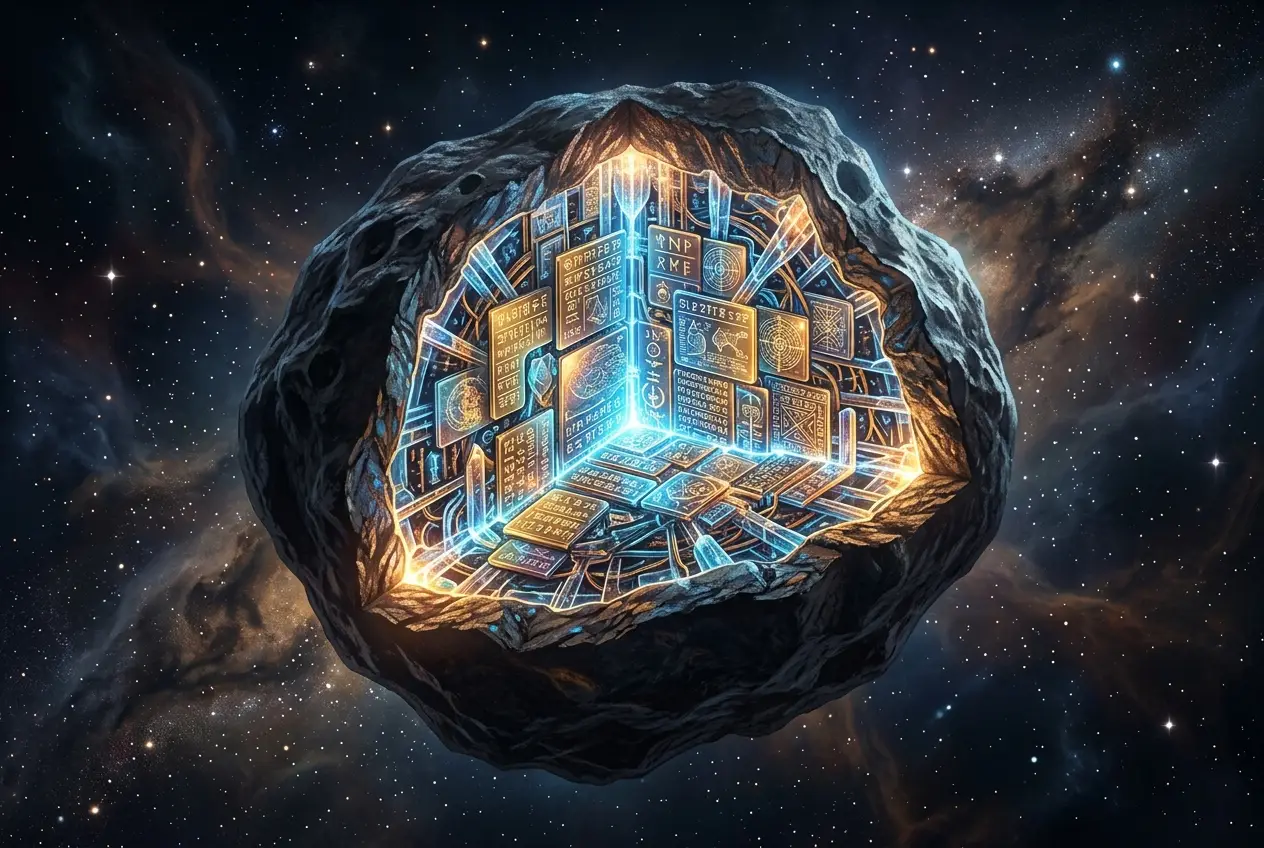
The vision of asteroids as our future digital memory banks is more than just a contingency plan; it's an ambitious leap in ensuring the continuity of human knowledge. It forces us to think on cosmic timescales, considering not just the next generation, but the next million generations. It’s a challenge that pushes the boundaries of engineering, ethics, and our collective imagination, compelling us to look to the stars not just for exploration, but for our very survival.
Frequently Asked Questions
Asteroids offer extreme environmental stability, a natural vacuum, low temperatures, and protection from many terrestrial disasters (natural or man-made), making them ideal for ultra-long-term data preservation compared to Earth-bound data centers which are vulnerable to obsolescence, disasters, and degradation.
Researchers are exploring highly durable methods like laser-etched metallic or sapphire plates, synthetic DNA storage, and 5D data storage in quartz glass. These technologies are designed to withstand harsh cosmic conditions and last for millions to billions of years.
Retrieval is a significant challenge. Any cosmic archive would need to include a 'Rosetta Stone'—universal keys and instructions for deciphering the data's format, language, and cultural context, using methods recognizable across vast spans of time and potential civilizational changes.
Ethical questions include who would govern access and ownership of such a vault, whether the data should be open-source, and how to ensure fair representation of humanity's knowledge. International space law would need to evolve to address these unique challenges.
Yes, beyond preservation, these archives could act as a digital time capsule, a comprehensive record of humanity's existence and achievements, potentially discoverable by other intelligent life forms in the distant future, serving as our greeting to the cosmos.
Verified Expert
Alex Rivers
A professional researcher since age twelve, I delve into mysteries and ignite curiosity by presenting an array of compelling possibilities. I will heighten your curiosity, but by the end, you will possess profound knowledge.
Leave a Reply
Comments (0)
No approved comments yet. Be the first to share your thoughts!
 Join Us

 Unknown Author














Leave a Reply
Comments (0)