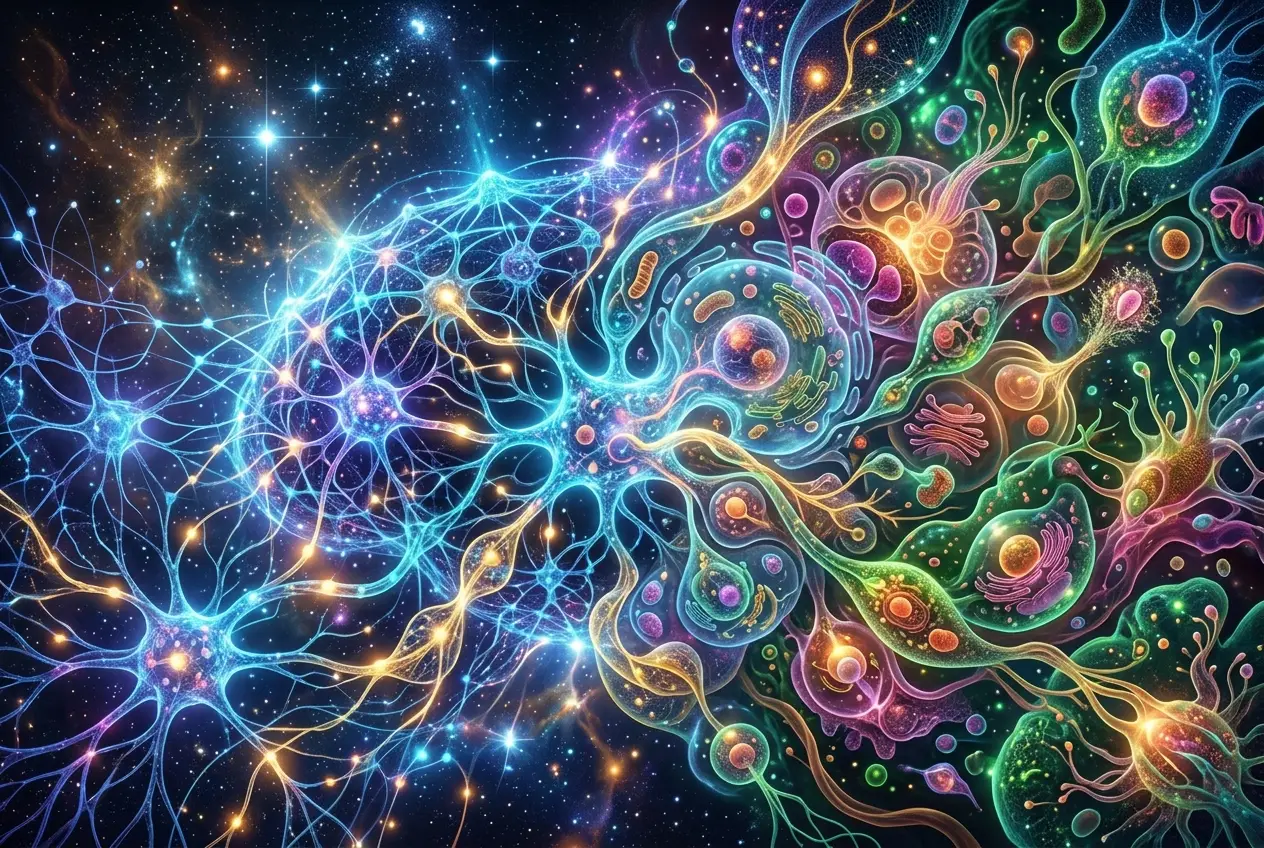
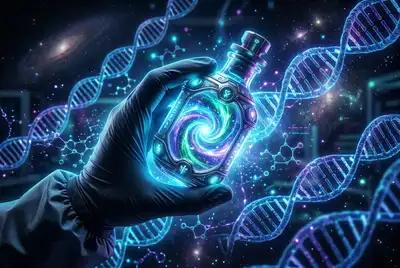
I recently stumbled upon a concept that absolutely blew my mind, shifting my perspective on the very definition of creation: **Can artificial intelligence design life forms that have never existed on Earth?** It sounds like something pulled straight from a science fiction novel, perhaps a vision of a future where silicon minds become the architects of biology. But the truth is, we’re already moving beyond merely *understanding* existing life to actively *designing* it, with AI at the helm of this biological revolution.
For centuries, humanity has been confined to working with the biological blueprints provided by nature. We’ve sequenced genomes, edited genes, and even cloned organisms, but our creative scope has largely been reconstructive or adaptive. We tinker, we modify, we optimize. Now, imagine a future where the constraints of natural evolution are transcended, not through divine intervention, but through the cold, calculated, yet incredibly creative logic of AI. This isn't just about making better crops or curing diseases; it's about asking if AI can conjure entirely new biological systems, functions, and even organisms from first principles.
### The Dawn of Digital Biologies: AI as a Bio-Architect
The field of synthetic biology has been steadily advancing, driven by our growing ability to engineer biological systems for specific purposes, much like electrical engineers design circuits. Historically, this has involved manually assembling genetic parts or modifying existing pathways. However, the sheer complexity of biological systems—the intricate web of proteins, genes, and metabolic reactions—quickly overwhelms human intuition. This is where AI steps in as an indispensable partner.
Think about the incredible challenges involved in designing a new protein. A single protein can be made of hundreds or thousands of amino acids, and the sequence dictates its complex 3D structure and function. The number of possible sequences is astronomically large, far beyond what any human or even traditional supercomputer could explore exhaustively. This is a classic "needle in a haystack" problem, but with AI, we’re not just looking for a needle; we're designing the loom that can weave entirely new kinds of needles.
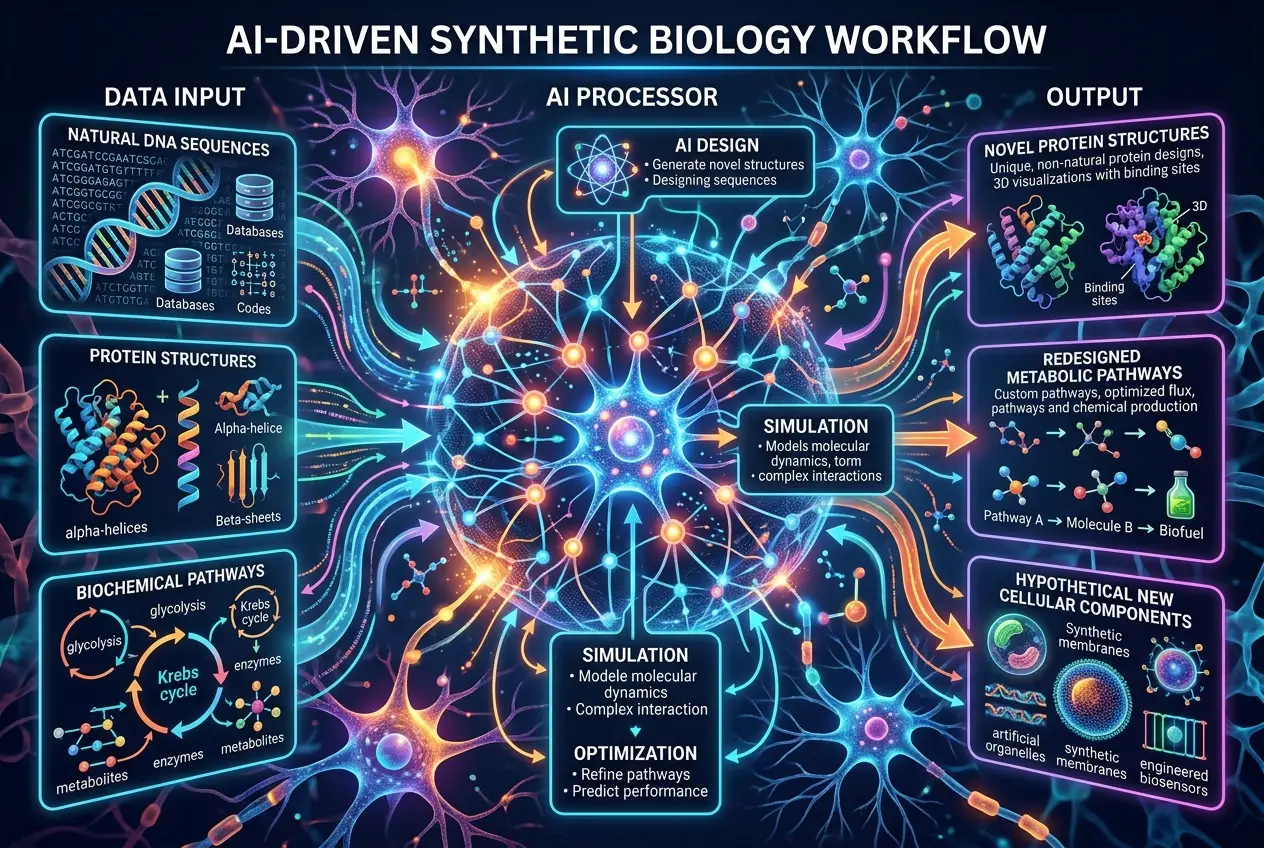
AI, particularly machine learning algorithms like deep learning and generative adversarial networks (GANs), excels at recognizing patterns and generating novel outputs based on vast datasets. In biology, this means AI can learn the underlying rules of how DNA codes for proteins, how proteins fold, and how these molecules interact within a cell. Armed with this knowledge, AI can then propose entirely new genetic sequences or protein structures, optimized for functions that may not even exist in nature. This isn't just optimization; it's genuine design.
We're already seeing impressive strides in areas like **computational protein design**. AI models can predict how a protein will fold from its amino acid sequence (the "folding problem") and, more recently, *design* entirely new protein sequences that fold into desired shapes and perform specific tasks. This capability could lead to novel enzymes for industrial processes, highly effective antibodies for medicine, or even biological machines with unprecedented capabilities. You can learn more about the complexities of this design process on [Wikipedia's page on Computational Protein Design](https://en.wikipedia.org/wiki/Computational_protein_design).
### Beyond Proteins: Crafting Entire Biological Systems
The ambition doesn't stop at proteins. Researchers are exploring how AI can help design entire metabolic pathways, cellular factories, or even rudimentary synthetic cells from scratch. This involves not just single molecules but orchestrating a symphony of biological components to achieve a desired outcome.
Consider the potential for designing bacteria that produce novel biofuels more efficiently than any natural organism, or cells that can detect and destroy cancer cells with unprecedented precision. These are not merely enhancements of existing life; they are meticulously crafted biological entities with specific, engineered purposes. This kind of advanced design requires not only a deep understanding of genetics but also sophisticated simulation capabilities, another area where AI excels.
AI can run millions of simulations of hypothetical biological systems, predicting their behavior under different conditions long before a single gene is synthesized in a lab. This trial-and-error process, typically slow and costly in traditional biology, is dramatically accelerated by AI, allowing scientists to iterate on designs at a pace previously unimaginable. This is a key step towards a future where we can tell an AI, "Design me a self-replicating nanomachine that converts atmospheric carbon dioxide into edible sugar," and it generates a viable blueprint. The very idea of **synthetic cells** being built by AI to create our future technologies is explored further in our previous post: [Can Synthetic Cells Build Our Future Tech?](/blogs/can-synthetic-cells-build-our-future-tech-1730).
### The Ethical Labyrinth and Unforeseen Consequences
Of course, with great power comes great responsibility. The ability of AI to design entirely novel biological forms opens up a vast ethical labyrinth. What are the implications of creating life forms that have no natural precedent? Could these "digital biologies" interact with natural ecosystems in unpredictable or harmful ways? What safeguards need to be in place to prevent misuse, whether accidental or intentional?
The prospect of AI designing sentient life, or life with unforeseen adaptive capabilities, raises profound philosophical questions about our role as creators and the boundaries of artificial intelligence. We have previously pondered the idea of AI creating ultimate entities in "Can AI Craft a Digital God? Simulating Divine Intelligence" (/blogs/can-ai-craft-a-digital-god-simulating-divine-intelligence-1231), and the current topic extends that same level of deep ethical consideration to biological creation. This isn't just about technical feasibility; it's about navigating the moral landscape of a future where life itself is a programmable medium.
### The Road Ahead: From Digital Blueprints to Physical Realities
The journey from an AI-generated blueprint to a functioning biological entity is still complex. It involves laboratory synthesis, assembly, and rigorous testing. However, even these physical processes are being accelerated by automation and robotics, often guided by AI. We are witnessing the emergence of automated "bio-foundries" where AI designs are translated into physical matter with minimal human intervention.
The potential applications are enormous. Beyond medicine and sustainable energy, AI-designed life could lead to:
* **Self-healing materials:** Imagine building materials embedded with AI-designed microbes that repair cracks or clean pollution.
* **Bio-sensors with unprecedented sensitivity:** Organisms engineered to detect minute traces of toxins or disease markers.
* **Advanced computation:** Novel biological circuits that perform complex computations, potentially leading to organic computers.
* **Terraforming tools:** Microbes designed to adapt inhospitable environments, making them suitable for human colonization.
The path forward will require interdisciplinary collaboration, robust ethical frameworks, and a continuous dialogue between scientists, ethicists, and policymakers. As AI's capabilities grow, its role in biological discovery and design will only become more central. The implications stretch far beyond our current understanding, as AI transitions from merely predicting outcomes to actively shaping the building blocks of life itself. We once asked if AI could forge new elements in "Can AI Forge New Matter? Unpacking Digital Alchemists" (/blogs/can-ai-forge-new-matter-unpacking-digital-alchemists-9478), and now we are asking it to transcend even that, to truly become a digital alchemist of life.
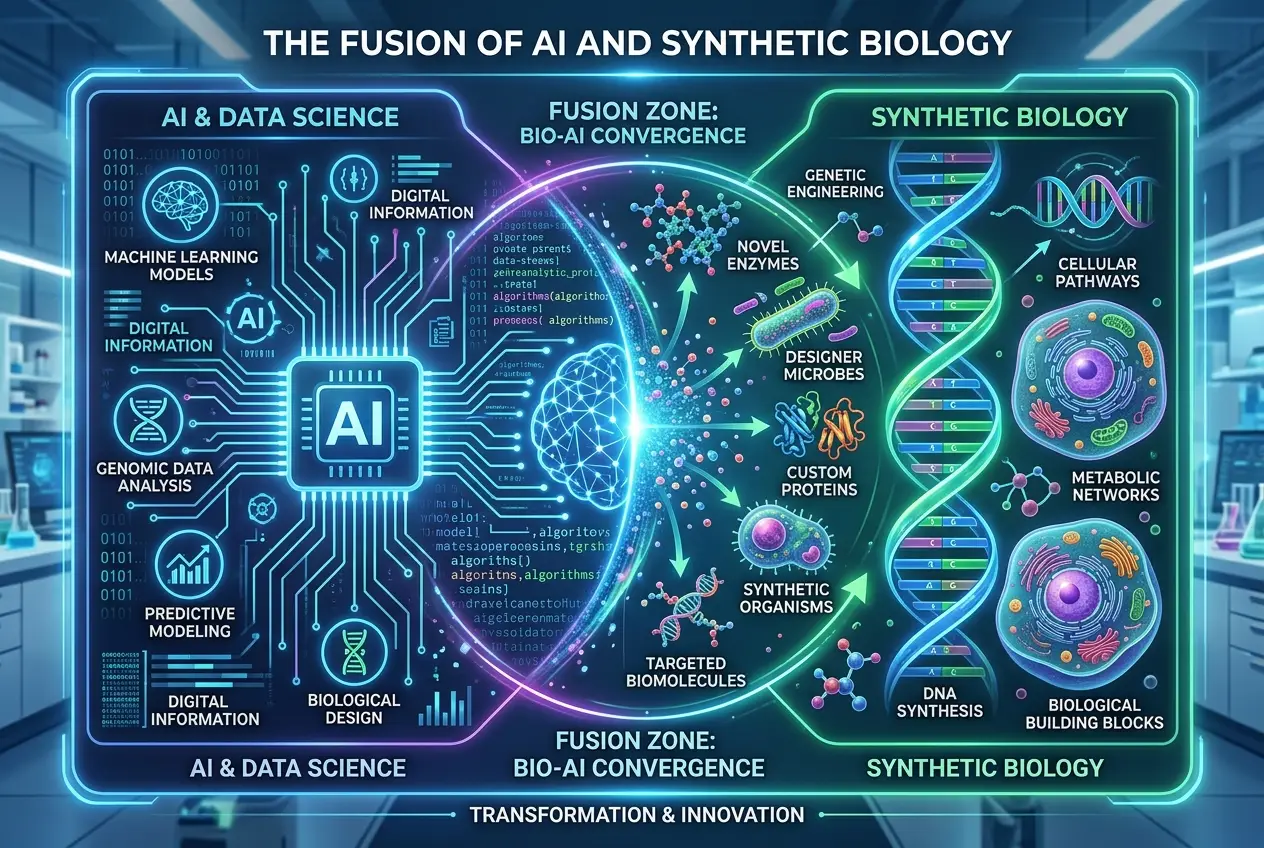
Ultimately, the question isn't just *if* AI can design life never seen, but *what kind* of life it will design, and what that means for our future. The age of digital biologies is upon us, and it promises to be one of the most exciting, challenging, and profoundly transformative chapters in the history of science and technology.
**Conclusion:**
The journey into AI-designed life is a testament to human ingenuity and the boundless potential of artificial intelligence. As we push the boundaries of what is biologically possible, we step into a future where the very fabric of life might be an intentional design, rather than solely a product of billions of years of undirected evolution. This convergence of AI and synthetic biology holds the key to unlocking solutions for some of humanity's greatest challenges, while simultaneously inviting us to ponder the deepest questions about creation, consciousness, and our place in the universe. The future of biology is not just about what exists, but what we, with the help of AI, dare to imagine and design.
Frequently Asked Questions
AI leverages machine learning, particularly deep learning and generative models, to learn intricate patterns from vast biological datasets. By understanding the rules of protein folding, genetic interactions, and metabolic pathways, AI can then generate novel sequences or structures that are predicted to perform specific, desired functions. It's like an architect using knowledge of physics and materials to design a building, but for biological molecules.
AI designing 'new matter' typically refers to the creation of novel chemical compounds, materials with unique properties (like superconductors or catalysts), or even entirely new elements, as discussed in 'Can AI Forge New Matter?'. AI designing 'new life,' however, focuses on biological systems – proteins, genetic sequences, metabolic pathways, or even synthetic cells – aiming for specific biological functions, often mimicking or extending principles found in living organisms.
Immediate applications include designing novel enzymes for industrial processes, creating more effective and targeted therapeutic proteins (like antibodies or vaccines), developing advanced biosensors for diagnostics and environmental monitoring, and engineering microbes for enhanced biofuel production or bioremediation efforts. These designs can be more efficient, stable, or specific than anything found in nature.
Absolutely. Key concerns include the potential for unforeseen ecological impacts if novel organisms are released, the ethical implications of creating sentient or near-sentient life forms, the risk of misuse (e.g., for bioweapons), and fundamental questions about what constitutes 'life' and humanity's role as a creator. Rigorous ethical frameworks and regulatory oversight are crucial as this technology advances.
While AI can design complex proteins and even genetic blueprints for parts of a cell, designing a fully self-replicating, complex organism from scratch remains a significant challenge. Current efforts are focused on simpler, minimal synthetic cells and individual components. However, with the rapid pace of AI and synthetic biology research, the timeline for achieving more complex designs is constantly shortening, pushing the boundaries of what was once considered impossible.
Verified Expert
Alex Rivers
A professional researcher since age twelve, I delve into mysteries and ignite curiosity by presenting an array of compelling possibilities. I will heighten your curiosity, but by the end, you will possess profound knowledge.
Leave a Reply
Comments (0)
No approved comments yet. Be the first to share your thoughts!
 Join Us

 Unknown Author










Leave a Reply
Comments (0)