I’ve always been fascinated by the ingenuity of ancient civilizations. It’s easy to dismiss them as primitive, yet every so often, we uncover something that makes us question the timeline of human innovation. Recently, I was pondering the concept of energy – specifically, how our ancestors might have harnessed natural phenomena beyond simple fire or waterwheels. This led me down a captivating rabbit hole: could ancient cultures have tapped into Earth's own immense heat, long before modern geothermal power plants?
We often associate geothermal energy with cutting-edge technology: vast power stations drawing steam from deep wells, or advanced heat pumps warming our homes. But the Earth's internal furnace has always been there, manifesting as hot springs, geysers, and volcanic activity. The question isn't *if* ancient people interacted with these phenomena, but *how deeply* they understood and intentionally utilized them. Were they just enjoying a natural hot bath, or were they engineering something far more sophisticated?
## The Unseen Power Beneath: A Brief on Geothermal Energy
Before we dive into antiquity, let's briefly touch upon what geothermal energy actually is. It’s quite literally "earth heat" – thermal energy generated and stored within the Earth. This energy originates from the original formation of the planet (about 20%) and from radioactive decay of minerals (80%) in the planet's mantle. The Earth's core is as hot as the surface of the sun! This heat continuously flows outwards, warming rocks and water in the Earth's crust. Where this heated water rises close to the surface, we find hot springs, geysers, and fumaroles, offering a direct glimpse into the planet's fiery heart. Modern geothermal technology captures this heat, either directly for heating or by converting steam into electricity via turbines. You can learn more about its scientific basis on [Wikipedia's Geothermal Energy page](https://en.wikipedia.org/wiki/Geothermal_energy).
## Early Encounters: Hot Springs and Human Ingenuity
Our earliest ancestors undoubtedly stumbled upon hot springs and volcanic vents. The benefits would have been immediately apparent: warmth in cold climates, natural cooking spots, and perhaps even perceived medicinal properties. Archaeological evidence from various parts of the world suggests a long history of utilizing these natural wonders:
### Roman Baths: The Apex of Ancient Geothermal Comfort
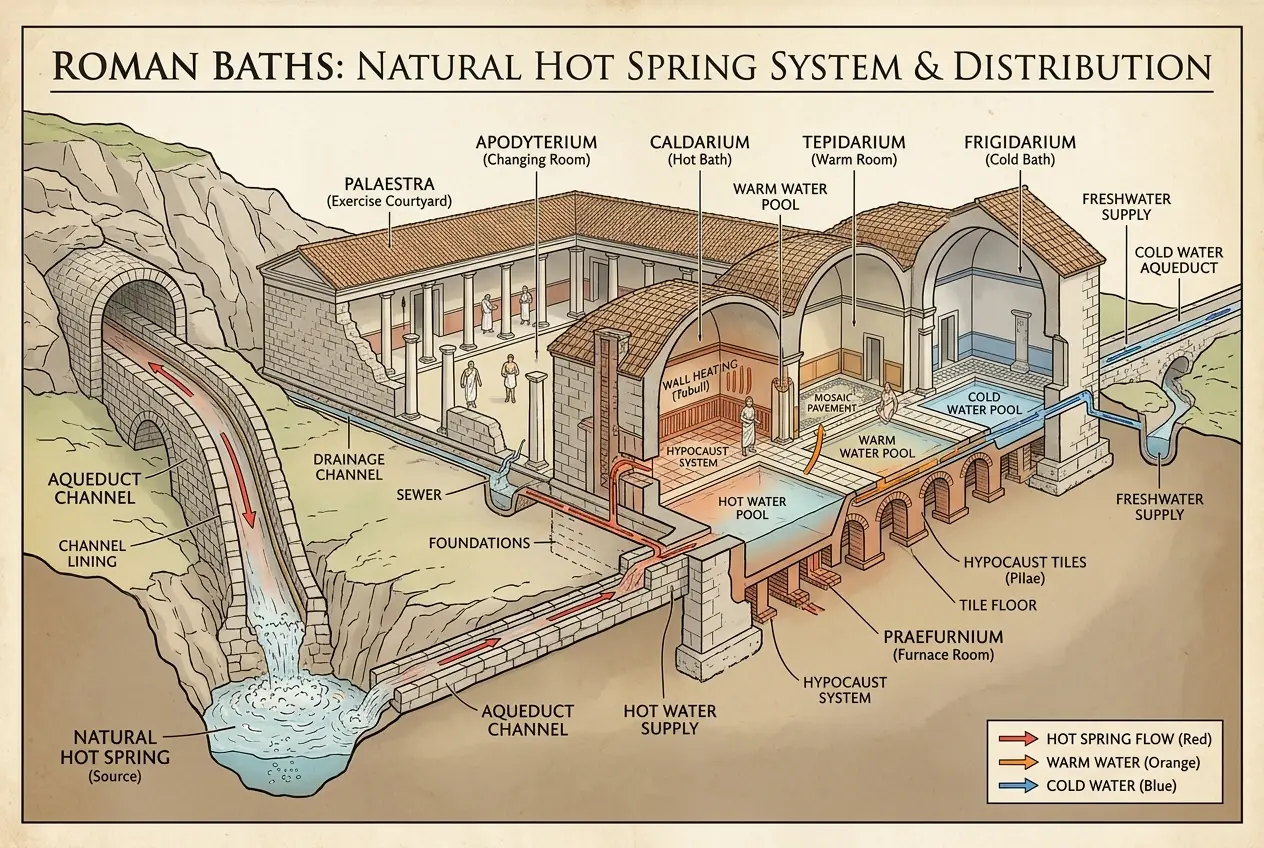
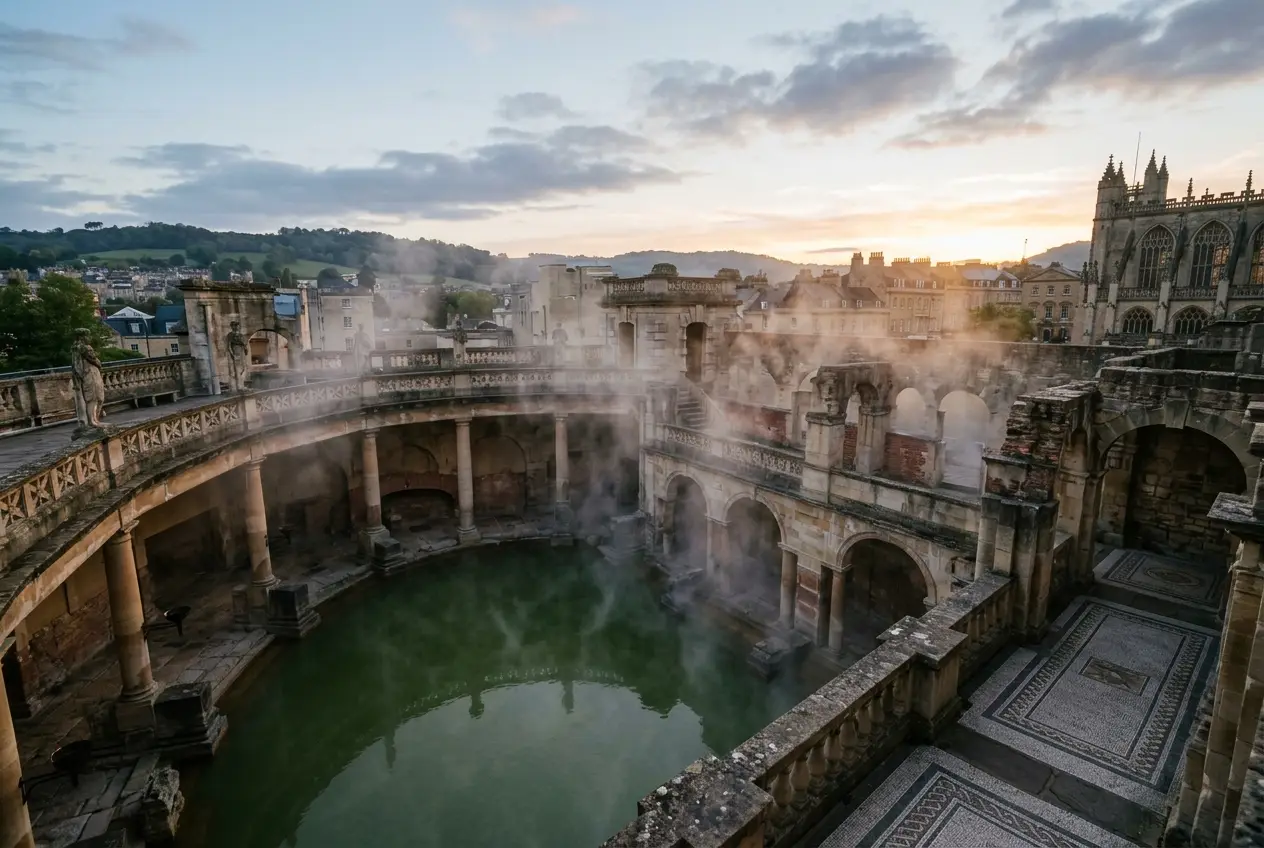
When I think of ancient geothermal use, my mind immediately jumps to the Roman Empire. The Romans were masters of civil engineering, and their public baths (thermae) were iconic. While many Roman baths were heated by vast hypocaust systems using wood fires, a significant number, especially those in volcanically active regions, clearly leveraged natural hot springs. Places like Bath in England, named after its famous Roman Baths, are prime examples. The Roman Aquae Sulis at Bath was built around natural hot springs that deliver around 1.1 million litres of 46°C (115°F) mineral-rich water every day.
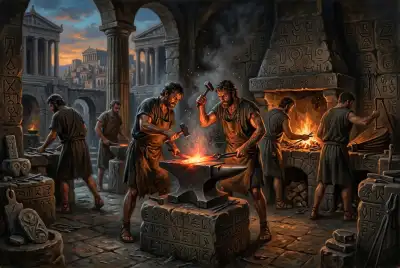
Imagine the sophistication: channeling hot water, designing complex plumbing, and creating intricate heating systems for multiple pools and rooms. This wasn't just happenstance; it was deliberate engineering. The Romans understood fluid dynamics, heat transfer, and the consistent supply of their natural thermal resources. They built elaborate structures that not only accommodated the hot water but also regulated its flow and temperature for comfort and sanitation. This kind of advanced urban planning, integrating natural resources, is something I find truly remarkable. It wasn't "geothermal electricity," but it was undeniably direct geothermal heating on a massive scale.
### Other Ancient Civilizations and Their Thermal Links
The Romans weren’t alone. Across the globe, various cultures recognized and utilized Earth's warmth:
* **Japan:** With its abundant volcanic activity, Japan has a rich history of *onsen* (hot springs) usage for bathing and healing, dating back millennia. Shinto rituals and early settlements often formed around these naturally occurring hot spots. While the engineering wasn't always as monumental as Rome's, the cultural integration of geothermal resources was profound.
* **Mesoamerica:** Civilizations like the Maya and Aztecs, particularly in regions with volcanic activity, also used hot springs for ritualistic purification and therapeutic purposes. Some historians even theorize that these hot spots may have influenced settlement patterns and trade routes.
* **Iceland:** One of the most geothermally active regions on Earth, Iceland's early Norse settlers would have quickly discovered the utility of hot springs for heating, cooking, and bathing, laying the groundwork for its modern, almost entirely geothermal-powered society.
These examples highlight a common thread: wherever natural geothermal activity was present, ancient peoples found ways to incorporate it into their daily lives. The degree of "harnessing" varied, but the principle of using Earth's natural heat was consistent.
## Beyond the Bath: Evidence of Industrial or Agricultural Use?
This is where the speculation gets really interesting, and where we move beyond simple bathing to more intentional, larger-scale applications. Could ancient civilizations have used geothermal energy for purposes akin to industrial processes or sophisticated agriculture?
### Drying and Processing Materials
Consider regions with abundant fumaroles or steam vents. The constant, dry heat could have been ideal for drying crops, preserving food, or even curing materials like wood or clay. While direct evidence of large-scale, dedicated geothermal drying facilities is scarce, the logistical advantages would have been clear. Instead of relying on unpredictable sunlight or fuel-intensive fires, a consistent geothermal vent offered a reliable, free heat source.
Some archaeological sites show evidence of ancient kilns or ovens built near volcanic vents, suggesting a deliberate choice to capitalize on existing heat. While not exactly a "power plant," optimizing industrial processes by using natural heat sources certainly counts as a form of harnessing geothermal energy.
### Heating Structures and Early District Heating
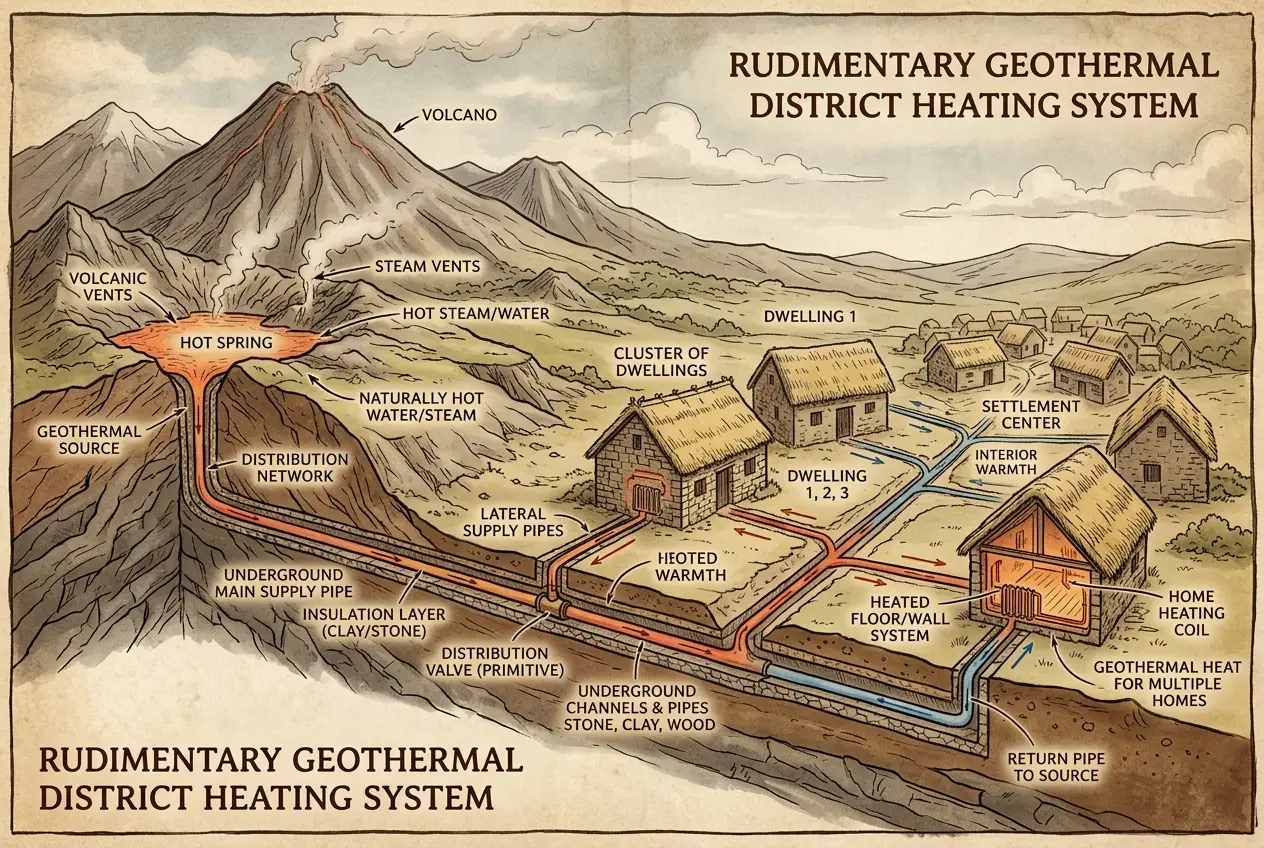
The Roman baths show the capability for distributing hot water. Could this concept have been extended to entire settlements or specific buildings for heating? The idea of "district heating" isn't new; it has existed for centuries in various forms. In ancient communities, particularly those in colder, geothermally active zones, a network of channels distributing warm water or even steam from a central hot spring could have provided rudimentary but effective heating for homes or public buildings.
This would require a sophisticated understanding of pipe networks, insulation, and pressure—skills that ancient engineers, especially the Romans, demonstrably possessed. For example, some speculate that certain Roman villas in Italy might have incorporated more extensive geothermal heating beyond just the bathhouses. This is a topic that overlaps with how ancient structures might have used subtle energy flows, as explored in articles like [Did Ancient Structures Resonate with Earth's Frequencies?](https://www.curiositydiaries.com/blogs/did-ancient-structures-resonate-with-earths-frequencies-1132).
### Geothermal Agriculture: Hotbeds and Greenhouses
For colder regions, agriculture was often limited by frost and short growing seasons. Could geothermal heat have been used to extend these seasons or cultivate non-native crops? The concept of a "hotbed" or rudimentary greenhouse, heated by natural geothermal activity, is an intriguing possibility.
By building raised beds or enclosed structures over geothermally active ground, or by channeling warm water beneath cultivation areas, ancient farmers could have created microclimates. This would allow for earlier planting, later harvests, or the growth of more sensitive plants. While archaeological evidence for such advanced geothermal agriculture is hard to definitively identify, the knowledge and the need would have been present. This is a more complex application, but not entirely beyond the scope of ancient agricultural innovation.
## The Limits of Ancient Geothermal "Technology"
It's crucial to distinguish between direct use and power generation. Ancient civilizations, despite their brilliance, lacked the metallurgical knowledge, high-pressure turbine technology, and electrical generation understanding required for modern geothermal power plants. Their "harnessing" was primarily passive or low-tech: channeling, diverting, and utilizing heat and hot water directly.
The absence of a "cosmic computer" built by ancient Greeks (a topic we specifically avoided due to its proximity to the Antikythera mechanism, which was already covered in /blogs/antikythera-was-it-our-first-analog-computer-1343) doesn't mean they weren't technologically advanced in other ways. Their advancements were often in areas that served immediate practical needs—like heating, sanitation, and resource management.
However, their understanding of heat transfer, fluid mechanics, and material durability was highly sophisticated within their technological constraints. The ability to build aqueducts and intricate plumbing systems, as demonstrated by the Romans, implies a strong grasp of the principles needed to manage geothermal resources. For further reading on ancient engineering marvels, you might find articles like [Roman Concrete: Did Ancients Master Self-Healing Materials?](https://www.curiositydiaries.com/blogs/roman-concrete-did-ancients-master-self-healing-materials-6161) insightful, as it touches on their material science prowess.
## What Does This Tell Us About Ancient Innovation?
The exploration of ancient geothermal use reaffirms a powerful truth: human ingenuity is not a modern phenomenon. Faced with environmental challenges and opportunities, ancient peoples consistently found innovative solutions using the resources at hand. While they didn't generate electricity from steam, their direct use of geothermal heat demonstrates:
1. **Observational Acuity:** They recognized patterns in nature and understood the consistent energy source beneath their feet.
2. **Engineering Prowess:** They developed sophisticated methods to channel, control, and distribute natural hot water and steam.
3. **Adaptability:** They integrated these natural resources into their urban planning, public health, and potentially even their economies.
It’s a powerful reminder that our perception of "technology" often limits our understanding of historical achievements. Just because it wasn't silicon chips and supercomputers doesn't mean it wasn't profoundly advanced for its time. These ancient applications of geothermal energy were, in their own right, marvels of sustainable engineering. Perhaps the lesson here is that sometimes the most profound innovations come from understanding and working *with* nature, rather than simply trying to conquer it.
Could they have developed even more extensive geothermal networks that time has simply erased? It's a question that continues to fuel my curiosity. As archaeological methods become more refined, perhaps we'll uncover even more compelling evidence of just how deeply our ancestors tapped into Earth's fiery heart.
Frequently Asked Questions
The primary difference lies in the scale and method. Ancient civilizations primarily used geothermal energy directly for heating water for baths, warming structures, or drying. Modern geothermal technology, in addition to direct heating, also focuses heavily on converting geothermal steam into electricity through turbines, a process ancient cultures lacked the technological means to achieve.
The Roman Empire is arguably the most famous for its sophisticated use of geothermal heat, particularly in their public baths (thermae) like those at Bath (Aquae Sulis) in England. They engineered complex systems to channel and distribute natural hot spring water.
Beyond bathing, ancient societies likely used geothermal heat for drying crops or materials, cooking, and potentially for rudimentary district heating systems in settlements located near hot springs or volcanic vents. There is also theoretical speculation about its use in early forms of agriculture like heated hotbeds.
Yes, in principle, ancient direct geothermal use was inherently sustainable. They tapped into a naturally replenishing heat source without consuming fossil fuels or creating significant waste products. Their methods were passive and low-impact, aligning with modern principles of sustainable resource management, even if they didn't conceptualize it that way.
It's highly probable. Many ancient sites remain undiscovered or only partially excavated. As archaeological techniques advance, especially non-invasive methods, it's possible that more evidence of sophisticated ancient geothermal harnessing, particularly in remote or less-studied geothermally active regions, could still come to light.
Verified Expert
Alex Rivers
A professional researcher since age twelve, I delve into mysteries and ignite curiosity by presenting an array of compelling possibilities. I will heighten your curiosity, but by the end, you will possess profound knowledge.
Leave a Reply
Comments (0)
No approved comments yet. Be the first to share your thoughts!
 Join Us



 Unknown Author































Leave a Reply
Comments (0)