


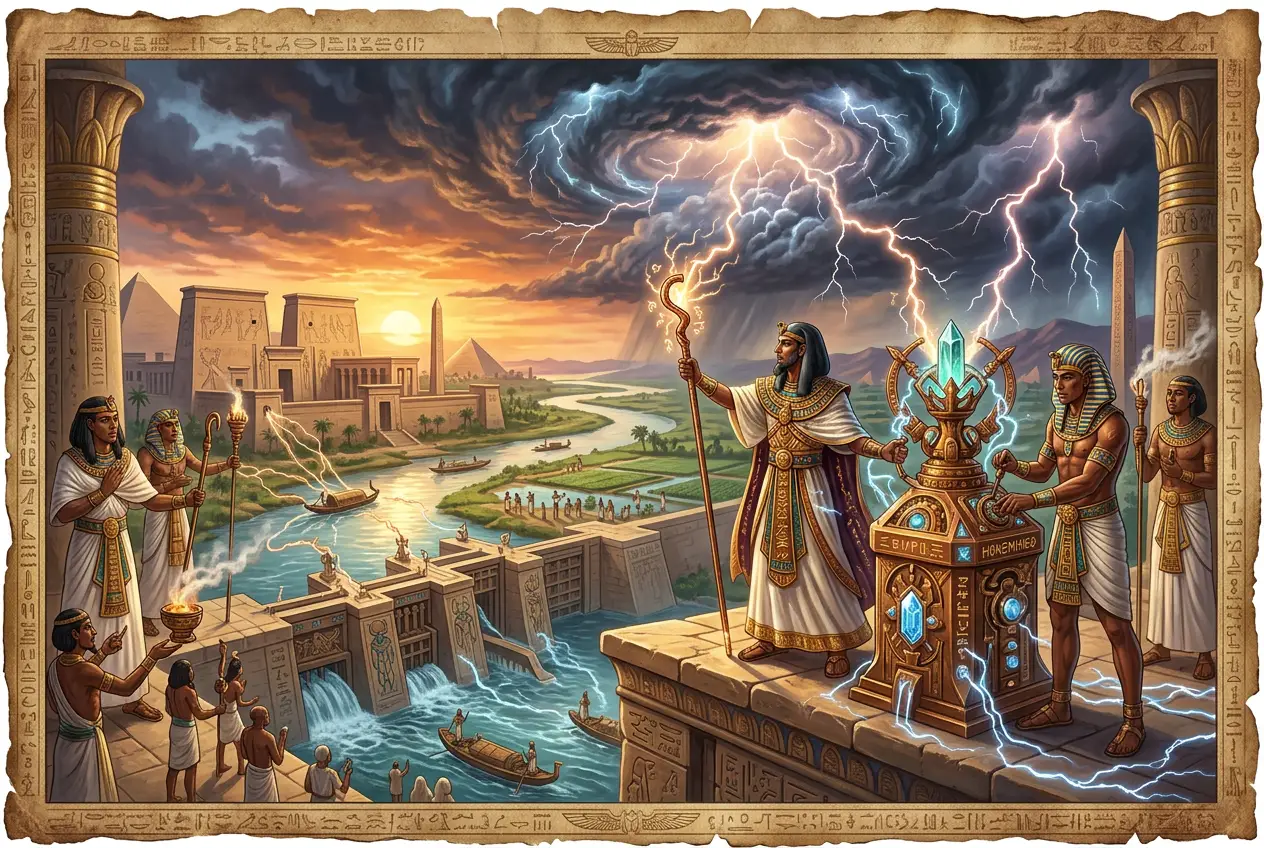
I remember a childhood fascination with ancient Egypt. Not just the pyramids and mummies, but the sheer ingenuity that allowed a civilization to thrive for millennia in a harsh desert environment. It wasn't just about survival; it was about monumental achievements that still mystify us today. Recently, I found myself diving into a peculiar rabbit hole: did ancient Egyptians, renowned for their mastery of architecture and agriculture, also possess a rudimentary form of weather control or, at least, a profound understanding of manipulating their environment that went beyond simple irrigation?
The idea might sound like something out of a science fiction novel, yet the more I delved, the more I uncovered intriguing threads that hint at a deeper, more sophisticated relationship between the Egyptians and the forces of nature. Forget the simple rain dances; we’re talking about potential large-scale engineering, intricate knowledge of atmospheric conditions, and even a spiritual reverence intertwined with practical, cutting-edge (for their time) solutions.
The Nile: Lifeblood and Unpredictable Giant
At the heart of Egyptian civilization lay the Nile River. Its annual inundation was both a blessing and a curse. Too little flood meant famine; too much meant widespread destruction. The Egyptians didn't just passively accept this cycle; they actively managed it. Their intricate system of canals, dikes, and reservoirs wasn't merely about diverting water; it was about predicting, modulating, and even influencing the flow of a colossal river.
Consider the Nilometers, sophisticated structures used to measure the Nile's clarity and water level. These weren't just gauges; they were critical data points informing agricultural planning, taxation, and even religious festivals. This meticulous data collection over centuries, I believe, speaks to a deep empirical understanding of their local climate and hydrology. They likely observed patterns that allowed them to anticipate the severity of floods with surprising accuracy, long before satellite imagery or advanced meteorology. Could this detailed knowledge have extended to understanding the atmospheric conditions that caused the floods themselves?
The "Shedet" and Water Temples: More Than Just Rituals?
Ancient Egyptian texts and archaeological findings frequently reference temples and rituals associated with water. The cult of Hapy, the god of the Nile flood, was central to their belief system. But were these just superstitious prayers, or did they accompany practical efforts?
Take, for instance, the term "Shedet," sometimes translated as "Lake Moeris," a vast artificial lake or basin constructed during the Middle Kingdom. This colossal hydrological project, attributed to Pharaoh Amenemhat III, served as an enormous reservoir to regulate the Nile’s flow, storing excess water during high floods and releasing it during droughts. Modern estimates suggest its capacity was immense, capable of significantly altering regional water availability. To me, this is a form of environmental engineering on a truly grand scale, arguably a precursor to modern geoengineering efforts. While not directly "weather control," manipulating such a massive body of water could certainly have localized microclimatic effects, influencing humidity, local cloud formation, and even precipitation patterns in specific areas. This ambitious project demonstrates a capacity and will to reshape their environment in profound ways. For more details on this incredible feat of engineering, you can read about Lake Moeris on Wikipedia.
Furthermore, some scholars suggest that certain temple layouts and architectural features might have been designed to interact with natural atmospheric phenomena. For example, some speculate that the open courtyards and specific orientations of certain temples might have been used to channel winds or even create updrafts. While largely theoretical, it sparks curiosity about whether their structural ingenuity extended to meteorological considerations.
Unexplained Phenomena and Ancient Lore
Beyond large-scale engineering, there are whispers of other, less tangible phenomena. Egyptian mythology, like many ancient belief systems, is rich with tales of deities controlling storms, winds, and rain. While typically seen as religious metaphors, I sometimes wonder if these myths contained kernels of observational truth or even records of unusual atmospheric events that the Egyptians attempted to understand or influence.
Consider the "Desert Kites" or "Works of the Old Men" – vast, mysterious stone structures found across the deserts of the Middle East, including areas bordering Egypt. These massive V-shaped walls, some extending for miles, were designed to funnel animals into enclosures for hunting. But some researchers have hypothesized broader environmental impacts. Could such large-scale structures have influenced localized wind patterns or even, in conjunction with other practices, contributed to microclimatic changes? It’s a bold thought, perhaps, but one that encourages us to look beyond conventional explanations. For a fascinating dive into these structures, Wikipedia offers insights into Desert Kites.
I’m also drawn to the idea that some rituals, understood by us as purely spiritual, might have contained forgotten practical elements. Could the burning of specific incense, the creation of large fires, or even the careful management of agricultural smoke have had localized effects on cloud seeding or precipitation? Early forms of "cloud seeding" have been explored with varying degrees of success in modern times, often involving the introduction of substances into clouds to encourage rain. While direct evidence is lacking for ancient Egypt, the meticulous nature of their practices, combining religious ceremony with practical application, makes me pause. Perhaps some of their "prayers for rain" were accompanied by intentional actions designed to tip the scales. It's a mystery that makes me think about how much knowledge was lost or misinterpreted through time, much like the potential for ancient sound technology discussed in our previous post: "Lost Acoustic Tech: Did Ancients Control Sound Waves?" /blogs/lost-acoustic-tech-did-ancients-control-sound-waves-5016.
The "Aetolian Plan" and Historical Precedents
While directly about ancient Greece, the historical account of the "Aetolian Plan" offers a fascinating parallel to the idea of environmental manipulation. In the 4th century BCE, the Aetolians allegedly planned to divert a river to flood Delphi, thereby winning a siege. This kind of environmental warfare or manipulation shows that the concept of altering nature for strategic advantage was certainly within the realm of ancient thought and ambition, if not always executed with success. It underscores the potential for ancient civilizations to consider large-scale projects that could impact natural phenomena, even if they didn't explicitly call it "weather control."
Modern Parallels and the Unseen Hand
Today, we talk about geoengineering, cloud seeding, and climate modification with sophisticated technology. But the underlying principles – understanding atmospheric conditions, manipulating water cycles, and even influencing local temperatures – might have rudimentary echoes in ancient practices. Could the Egyptians have, perhaps inadvertently, stumbled upon some of these principles through centuries of intense observation and trial-and-error?
I find it compelling to consider their deep understanding of astronomy, their ability to predict celestial events, and their sophisticated calendar system. This capacity for long-term observation and pattern recognition suggests a scientific mindset that could extend to meteorology. The very existence of such precise timing for their festivals and agricultural cycles points to an intimate knowledge of environmental rhythms.
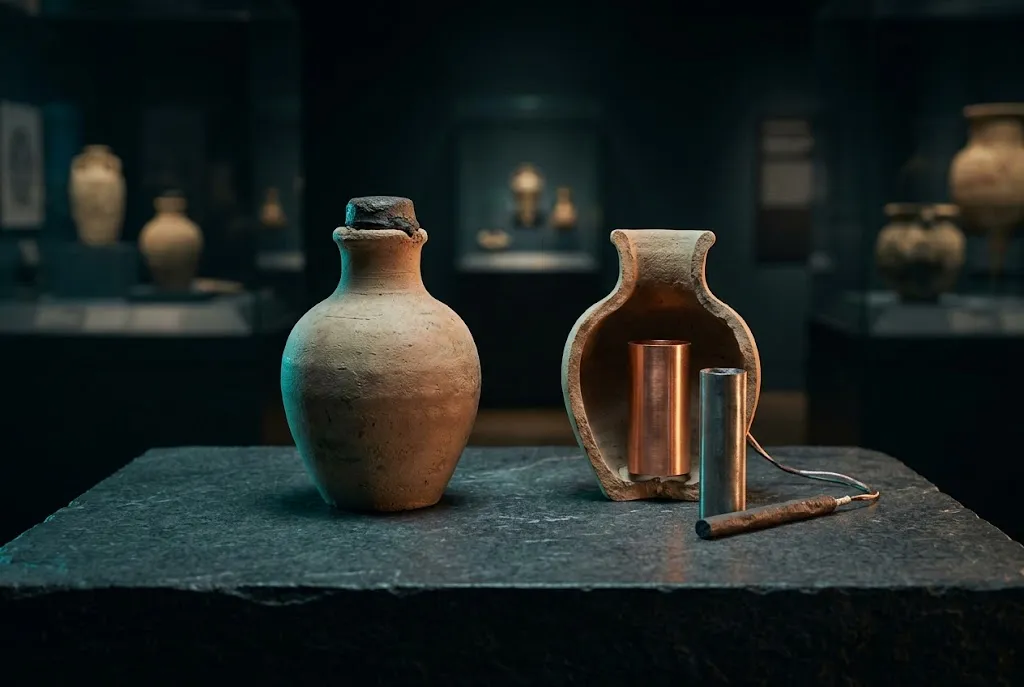
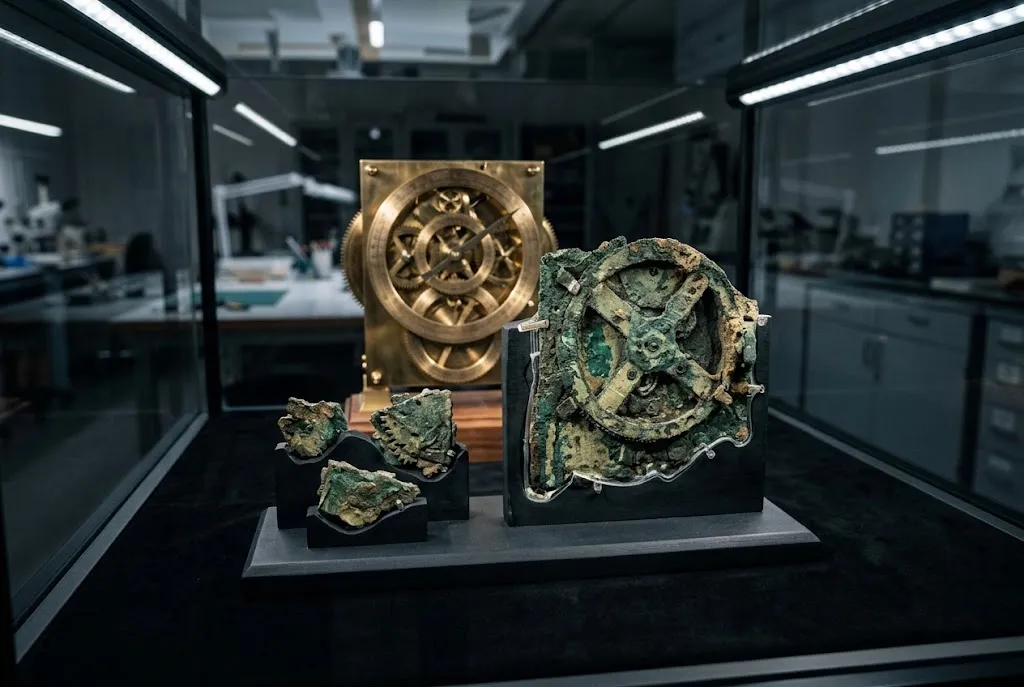
Furthermore, the recent discoveries concerning impossible artifacts like those discussed in "Impossible Artifacts: Clues to Lost Ancient Tech?" /blogs/impossible-artifacts-clues-to-lost-ancient-tech-2132 and the debate around ancient energy sources, as explored in "The Baghdad Battery: Did Ancient Iraqis Power a Lost Civilization?" /blogs/the-baghdad-battery-did-ancient-iraqis-power-a-lost-civilization-9975, make me question the limits of what ancient civilizations could achieve. It's not about claiming they had weather machines, but rather recognizing that their understanding of the world might have been far more advanced and nuanced than we typically give them credit for.
Conclusion: A Legacy of Ingenuity and Wonder
So, did ancient Egyptians build the first weather control devices? Probably not in the way we envision modern technology, with complex machinery and atmospheric probes. However, I believe they practiced a form of environmental engineering that was so sophisticated for its time, so deeply integrated with their understanding of the natural world and their spiritual beliefs, that it might have given them a level of influence over their immediate climate and hydrological cycles that verges on what we might conceptually consider "control." Their mastery over the Nile, their vast hydrological projects, and their meticulous observation of natural patterns reveal a civilization that didn't just adapt to nature but sought to co-create with it.
The real "secret" might not be a lost device, but a lost philosophy – a holistic approach to living in harmony with (and subtly shaping) the environment, driven by observation, engineering, and perhaps, a touch of faith. It’s a fascinating reminder that human ingenuity, in every age, finds remarkable ways to overcome challenges and leave us, millennia later, still scratching our heads in wonder.


Conversation0
No comments yet. Be the first to share a thought — the best questions often become new stories.