


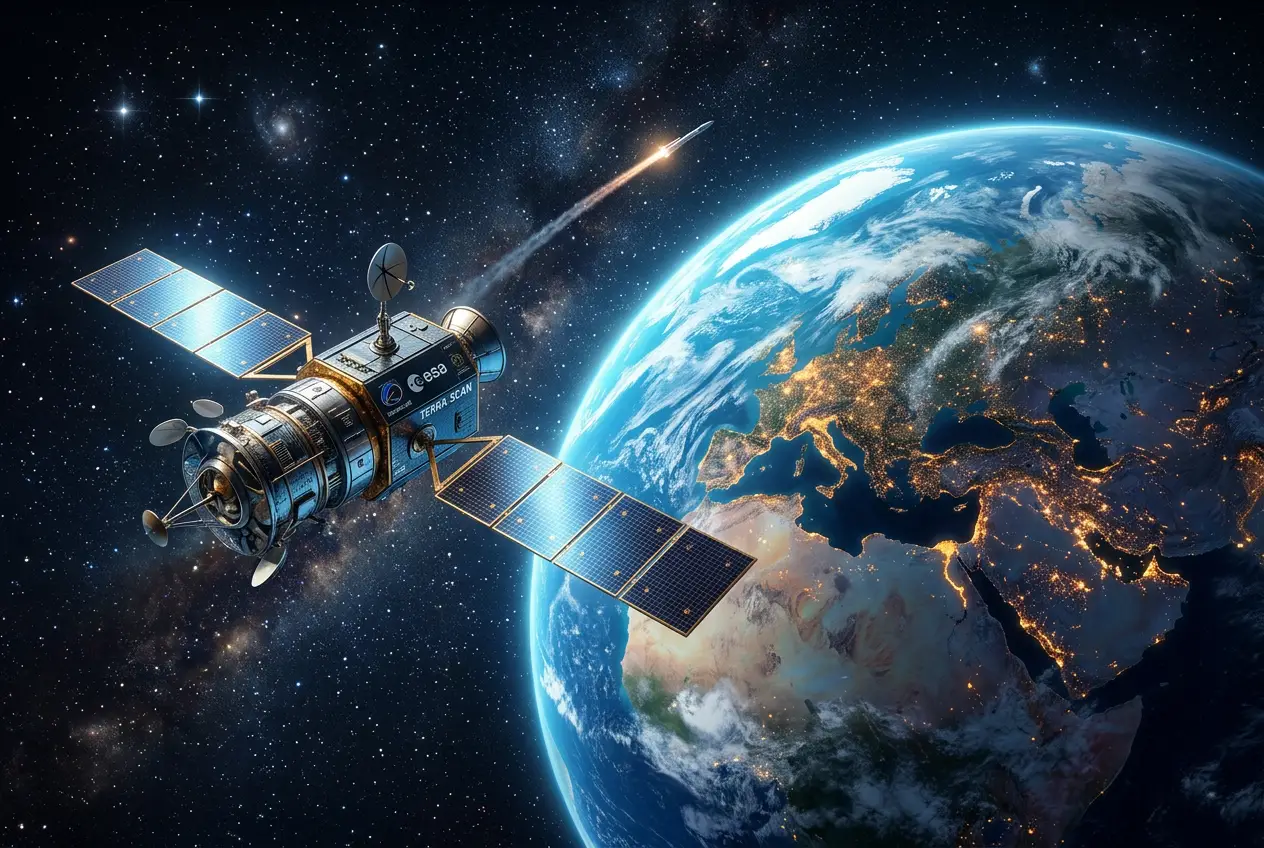
I often find myself gazing at the night sky, not just admiring the stars, but occasionally catching a faint, steady light moving across the cosmic tapestry. It’s not a plane, and it’s certainly not a shooting star; it’s one of the thousands of satellites humanity has launched into orbit, silently fulfilling its mission. It’s an incredible thought, isn’t it? That a piece of complex machinery, built here on Earth, can be flung into the vacuum of space, traveling at thousands of miles per hour, and stay there for years, beaming back data, connecting our world, or observing distant galaxies.
But have you ever really stopped to consider the monumental journey involved? From the initial spark of an idea to the delicate unfurling of solar panels millions of miles away, the process of getting a satellite into space is a symphony of cutting-edge technology, meticulous engineering, and often, nail-biting suspense. It's a testament to human ingenuity, pushing the boundaries of what we thought possible.
Conception: The Genesis of a Star-Bound Machine
Before a single bolt is tightened or a wire connected, a satellite begins its life as a mission concept. What is its purpose? Is it for communication, weather forecasting, Earth observation, navigation (like GPS), or scientific research, perhaps peering into distant cosmic phenomena like our exploration of cosmic neural networks? This fundamental question dictates every subsequent decision.
Engineers and scientists then define the satellite's specific requirements:
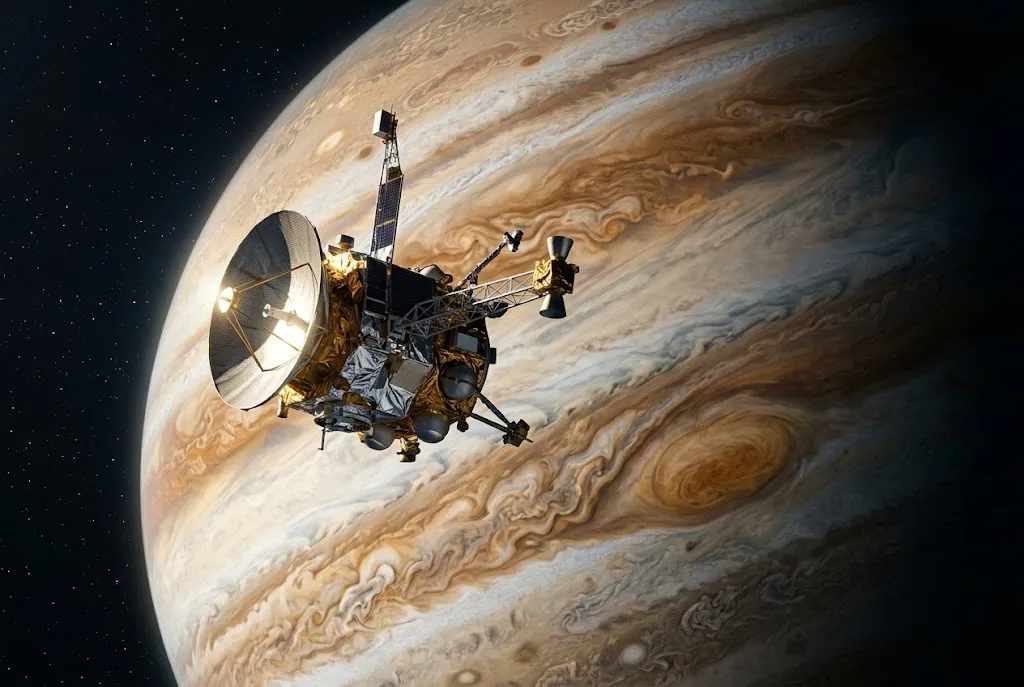
- Payload: This is the "brain" or "eyes" of the satellite—the instruments that perform its primary mission (e.g., cameras, antennas, scientific sensors).
- Bus (Service Module): This is the satellite's body, housing all the essential support systems:
- Power System: Solar panels and batteries to generate and store electricity.
- Propulsion System: Thrusters and fuel to maintain orbit, maneuver, or de-orbit.
- Attitude Control System: Sensors and reaction wheels to keep the satellite correctly oriented.
- On-board Computer: The "brains" that control all operations.
- Communication System: Antennas and transponders to send and receive data from Earth.
Every component must be designed to withstand the brutal environment of space—extreme temperature fluctuations, vacuum, and constant radiation. This initial design phase involves extensive computer-aided design (CAD) and simulation to predict performance and identify potential flaws. It's an iterative process, refining every detail before moving to physical creation.
Fabrication: Precision in a Sterile World
Once the design is finalized, the actual building begins. Satellites aren't built on a typical factory floor. They require clean rooms—environments meticulously controlled for temperature, humidity, and, most critically, particulate matter. A single speck of dust could interfere with sensitive electronics or optical instruments once in space. Workers wear "bunny suits" to prevent contamination, making the manufacturing process feel almost surgical.
Materials are chosen for their specific properties: lightweight yet strong composites for the structure, radiation-hardened electronics, specialized thermal coatings. Each part, from the smallest microchip to the largest antenna, undergoes rigorous testing. Components are often built by specialized manufacturers around the world and then integrated into the main satellite structure.
- Vibration Testing: Shaking the satellite violently to simulate the stresses of a rocket launch.
- Thermal Vacuum Testing: Exposing the satellite to extreme hot and cold cycles in a vacuum chamber to mimic space conditions, ensuring it can operate without atmosphere to dissipate heat.
- Acoustic Testing: Blasting the satellite with incredibly loud sounds to replicate the engine noise during launch.
This phase can take years, with teams of engineers and technicians working tirelessly to assemble, test, and re-test every subsystem. The cost of a single satellite can range from tens of millions to several billion dollars, making any failure a massive setback. For a deeper dive into the engineering complexities, you can explore resources like the NASA Spacecraft Systems Design and Engineering page (opens in a new tab).
The Journey to the Launchpad: A Delicate Dance
Once fully assembled and tested, the satellite, often encased in a protective transport container, begins its final journey to the launch site. This can involve specialized transport vehicles, large cargo planes, or even ships, depending on the distance and security requirements. Every bump, every vibration, is meticulously monitored.
Upon arrival at the launch facility (like Cape Canaveral in the US, Baikonur Cosmodrome in Kazakhstan, or Guiana Space Centre), the satellite is carefully hoisted into the payload fairing of its designated rocket. The fairing is the protective nose cone that shields the satellite from atmospheric drag and heat during the ascent through Earth's atmosphere. This integration process is another high-stakes operation, where the satellite is connected to the rocket's power and communication systems for the first time.
Launch: The Fiery Ascent to the Heavens
This is where the magic, and the immense power, truly happens. Launch day is a culmination of years of work. Weather plays a crucial role; specific "launch windows" are calculated based on the satellite's desired orbit and celestial mechanics. Any adverse weather—high winds, thunderstorms, or even specific cloud types—can cause a scrub.
The launch vehicle itself is a marvel of engineering. Most modern rockets are multi-stage, designed to shed empty fuel tanks and engines as they ascend, making them lighter and more efficient. The process goes something like this:
- Ignition: Massive engines roar to life, generating millions of pounds of thrust.
- Liftoff: The rocket slowly, then rapidly, ascends, battling Earth's gravity.
- Gravity Turn: The rocket begins to pitch over, turning from a vertical climb to a more horizontal trajectory, gaining speed efficiently.
- Stage Separation: As fuel in the first stage depletes, it detaches and falls back to Earth (or is guided for recovery in reusable systems). The second stage ignites.
- Fairing Jettison: Once the rocket is high enough in the atmosphere, where aerodynamic forces are no longer a threat, the payload fairing splits open and falls away, revealing the satellite to the vacuum of space for the first time.
- Orbit Insertion: The final stage fires to achieve the precise velocity and altitude required for the desired orbit. This speed, known as orbital velocity, is critical. For low Earth orbit (LEO), this is typically around 17,500 mph (28,000 km/h) – a mind-boggling speed that allows the satellite to continuously fall around the Earth, rather than crashing into it.
The entire ascent can take anywhere from a few minutes to a couple of hours, depending on the orbit. The sheer power and noise of a rocket launch are awe-inspiring, a true demonstration of humanity's drive to explore. If you're fascinated by the physics of launch, the Orbital Mechanics Wikipedia page (opens in a new tab) offers a great overview. For more on the concept of propulsion and reaching these speeds, you might also be interested in our blog, Could Exotic Matter Unlock Faster Than Light Travel?, though satellites don't typically use such speculative tech.
Deployment & Operations: Bringing the Satellite to Life
Once the satellite reaches its target orbit and separates from the final rocket stage, its mission truly begins. This is a critical period of "initial acquisition."
- Solar Panel Deployment: The satellite's solar panels, often folded tightly during launch, unfurl like delicate wings, orienting themselves towards the sun to begin generating power.
- Antenna Deployment: Communication antennas extend, ready to link with ground stations.
- Stabilization: Small thrusters or reaction wheels activate to stabilize the satellite and point its instruments in the correct direction.
- AOS (Acquisition of Signal): Engineers on Earth nervously await the first "ping"—the signal that confirms the satellite is alive and communicating.
Satellites operate in various orbits, each serving different purposes:
- Low Earth Orbit (LEO): ~160-2,000 km altitude. Used for Earth observation, remote sensing, and some communication constellations (like Starlink). Satellites here move fast and complete an orbit in about 90-120 minutes.
- Medium Earth Orbit (MEO): ~2,000-35,786 km altitude. Primarily used for navigation systems (GPS, Galileo).
- Geosynchronous Earth Orbit (GEO): ~35,786 km altitude. Satellites here appear stationary in the sky from Earth, making them ideal for broadcast television, weather, and stable communication links.
Once fully commissioned, the satellite settles into its operational routine, communicating with ground stations to send data, receive commands, and sometimes adjust its orbit. These ground stations are complex facilities, constantly tracking satellites and managing their operations. This continuous communication with our orbiting tech is what makes us wonder if deep space itself is a giant antenna, as explored in our post, Echoes From The Void: Is Deep Space A Giant Antenna?.
The End of the Line: De-orbiting and Space Debris
Satellites are not immortal. Their lifespan depends on their design, fuel reserves, and the harshness of their environment. When a satellite reaches the end of its operational life, steps are taken to prevent it from becoming space debris—the growing collection of defunct satellites, rocket stages, and fragments that pose a collision risk to active spacecraft.
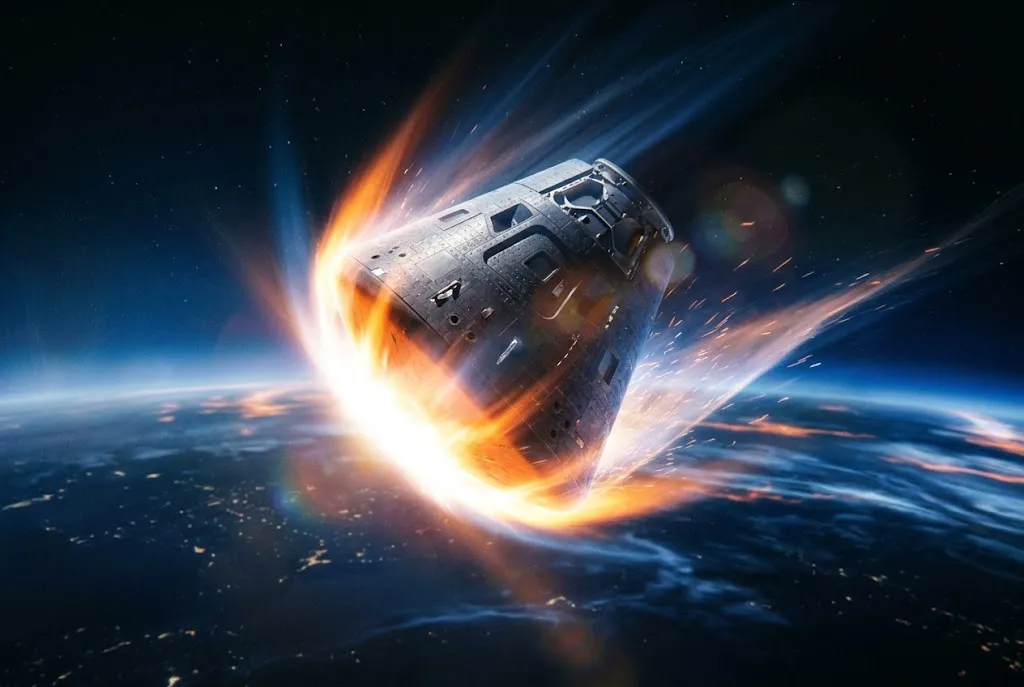
For LEO satellites, they are often directed to perform a controlled re-entry, burning up harmlessly in the atmosphere, or boosted into "graveyard orbits" for GEO satellites. International guidelines are becoming stricter about managing space debris, a critical challenge for the future of space exploration and utilization. For a broader look at some of the challenges in space, you might enjoy reading about Is The Great Filter Real? Tech's Biggest Cosmic Test.
A Marvel of Human Endeavor
The journey of a satellite, from a blueprint on a computer screen to a silent sentinel circling our planet, is an epic tale of scientific discovery, engineering prowess, and sheer human determination. It's a process fraught with challenges and high risks, but the rewards are immeasurable: global communication, climate monitoring, advanced navigation, and a deeper understanding of our universe. Every time I see that distant moving light in the night sky, I'm reminded of the incredible effort behind it—a testament to what we can achieve when we aim for the stars.
Conversation0
No comments yet. Be the first to share a thought — the best questions often become new stories.