


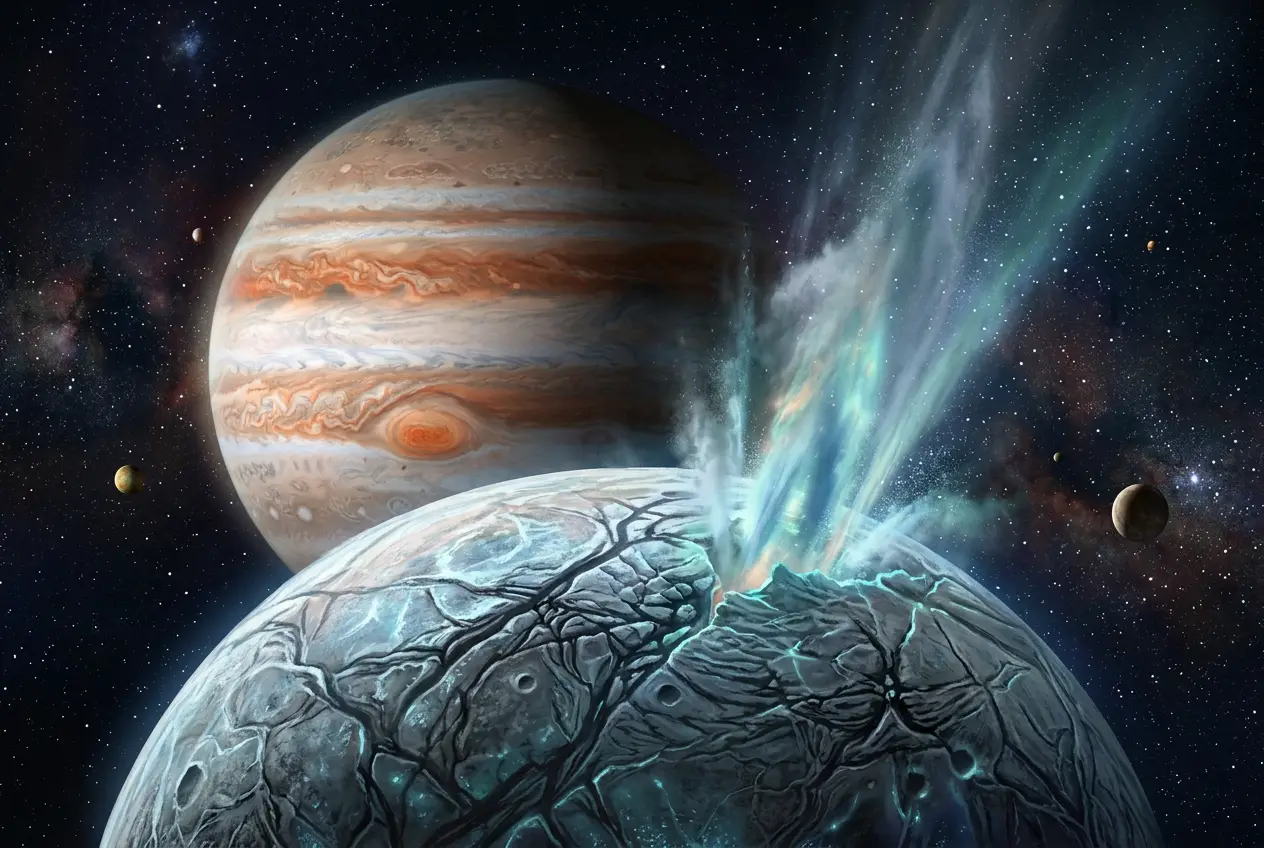
The night sky, for all its dazzling beauty, often hides its most profound secrets in plain sight. For centuries, we’ve looked up at the celestial bodies, imagining distant worlds, but it’s only relatively recently that our instruments have allowed us to peer beneath the glittering surfaces of icy moons, revealing startling possibilities. I often find myself lost in thought, contemplating the sheer audacity of what we’ve discovered—that some of the most promising candidates for extraterrestrial life aren’t scorching desert planets or gaseous giants, but rather frozen worlds where entire oceans might lie hidden beneath miles of solid ice.
It's a concept straight out of science fiction: vast, dark seas teeming with unknown life, warmed by internal forces, completely isolated from the harsh radiation and vacuum of space. And the key to discovering these enigmatic aquatic realms? Cryovolcanoes.
What Exactly are Cryovolcanoes?
When you hear the word "volcano," your mind likely conjures images of fiery mountains erupting molten rock, spewing ash and lava. But out in the cold, dark reaches of our solar system, a different kind of volcanic activity plays out—one that involves ice, water, ammonia, methane, and other volatile substances instead of molten silicates. These are cryovolcanoes, or "ice volcanoes," and they are some of the most spectacular and mysterious geological features we’ve ever observed.
Instead of molten rock, cryovolcanoes erupt slushy water, vapor, and ice particles—sometimes even liquid nitrogen or methane, depending on the moon. The forces that drive these eruptions are also different. While Earth’s volcanoes are powered by tectonic plates and magma convection, cryovolcanoes are often fueled by tidal forces, radioactive decay within the moon’s core, or changes in pressure within a subsurface ocean. Imagine enormous geysers, far grander than anything Yellowstone can produce, blasting plumes of water hundreds or even thousands of kilometers into space.
The Tidal Tug-of-War: Europa and Enceladus
Two of Jupiter’s moons, Europa, and Saturn’s moon, Enceladus, are the poster children for cryovolcanism and the potential for hidden oceans.
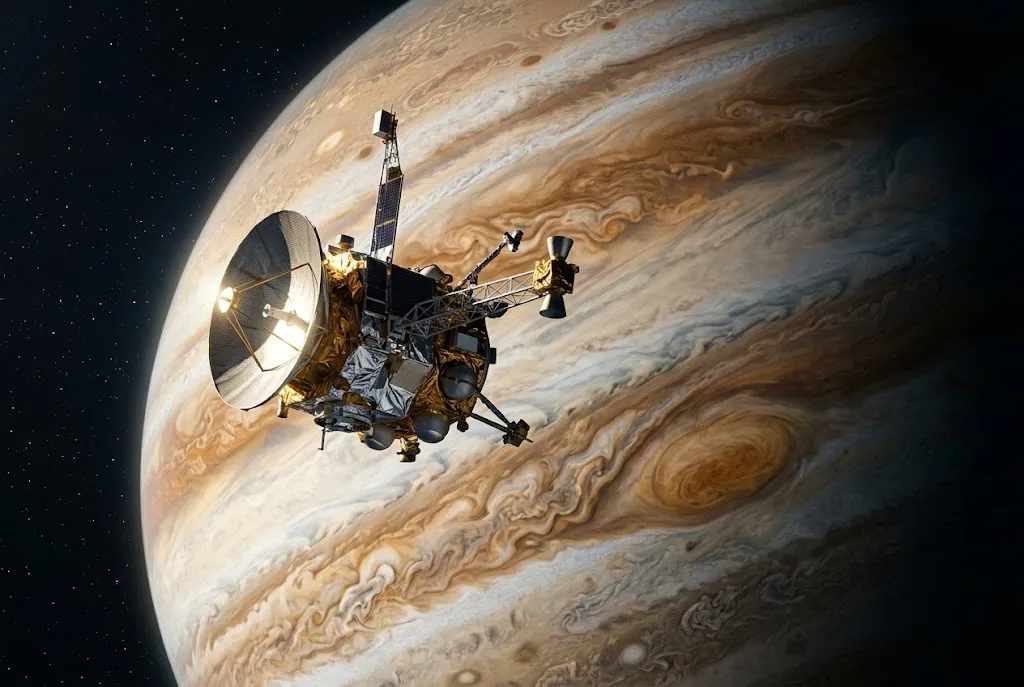
I remember when the images started coming back from the Voyager and Galileo missions—Europa, especially, with its crisscrossing network of cracks and lines, looked like a shattered marble. Scientists hypothesized early on that these cracks weren't just surface features but evidence of a dynamic, underlying liquid ocean. The gravitational tug-of-war with massive Jupiter stretches and squeezes Europa, generating immense internal heat – a process called tidal heating. This heat is thought to be enough to maintain a vast subsurface ocean, potentially twice the volume of all Earth’s oceans combined.
Enceladus, a relatively small moon orbiting Saturn, takes this mystery to an even more dramatic level. In 2005, the Cassini spacecraft made a groundbreaking discovery: enormous geysers erupting from the moon’s south pole. These plumes, originating from distinctive "tiger stripe" fractures, were composed primarily of water vapor, ice particles, and organic compounds. The implications were staggering. If you’re blasting water into space, it almost certainly means there’s a liquid reservoir beneath the surface. This discovery was a monumental moment in astrobiology, practically announcing the presence of a habitable environment. You can read more about these fascinating discoveries on Wikipedia's page about Enceladus (opens in a new tab).
The plumes from Enceladus have been directly sampled by Cassini, revealing not only water but also salts, silica nanoparticles, and methane. These are strong indicators of hydrothermal activity on the seafloor, similar to the black smokers found in Earth’s deep oceans. On Earth, these hydrothermal vents support diverse ecosystems, completely independent of sunlight. This fuels the incredible hypothesis that similar life could be thriving in Enceladus’s dark, subterranean sea. Such a discovery would redefine our understanding of where and how life can emerge in the universe. It brings to mind earlier discussions about whether Earth’s center hides a secret ocean, but on a different scale entirely!
Beyond Europa and Enceladus: Other Icy Worlds
While Europa and Enceladus are prime suspects, they aren't the only ones. Triton, Neptune's largest moon, also exhibits cryovolcanic activity. Voyager 2 observed dark plumes erupting from its surface, though these are thought to be nitrogen-rich rather than water. These plumes, rising several kilometers, suggest a dynamic interior, though whether it harbors a liquid ocean remains an open question. Its extreme cold makes a subsurface ocean of liquid water less likely, but exotic liquid mixtures might exist.
Another intriguing candidate is Titan, Saturn’s largest moon. While it’s famously covered in lakes and rivers of liquid methane and ethane, there’s also strong evidence suggesting a global subsurface ocean of water and ammonia beneath its icy crust. The presence of methane in its atmosphere, which should quickly be destroyed by UV radiation, implies an active geological process, possibly cryovolcanic, replenishing it from below. This complex chemistry could potentially host novel forms of life, perhaps even organisms that leverage alien energy sources.
How Do We Detect These Hidden Oceans?
Detecting these hidden oceans isn't as simple as drilling a hole. Scientists employ a variety of ingenious methods:
- Gravitational Measurements: By carefully tracking the subtle wobble of a moon as it orbits its planet, we can infer its internal structure. If a moon has a liquid layer, its gravitational field will be slightly different than if it were entirely solid.
- Magnetic Field Interactions: If a conductive liquid (like salty water) is present beneath the ice, it interacts with the giant planet’s magnetic field, creating an induced magnetic field that can be detected by orbiting spacecraft.
- Surface Features: The distinctive cracks, ridges, and chaotic terrains on moons like Europa are often interpreted as evidence of a dynamic ice shell overlying a liquid ocean. These features suggest the ice is constantly being fractured, moved, and reformed by the churning water below.
- Cryovolcanic Plumes: As seen with Enceladus, direct observation of plumes erupting from the surface provides undeniable evidence of subsurface liquid reservoirs. Analyzing the composition of these plumes gives us direct clues about the ocean’s chemistry and potential habitability. This is truly where science gets exciting – we're sampling alien water!
- Heat Signatures: Infrared observations can sometimes detect warmer regions on the surface, indicative of heat escaping from the interior, potentially via cryovolcanic vents or cracks.
The Astrobiological Implications: Is There Life Below?
The biggest question, of course, is whether these alien oceans hide life. The conditions seem tantalizingly similar to the environments where life first emerged and thrives on Earth: liquid water, energy sources (tidal heating, hydrothermal vents), and essential chemical building blocks (as evidenced by the plumes).
| Feature | Earth's Oceans (Deep Sea Vents) | Enceladus's Ocean (Inferred) | Europa's Ocean (Inferred) |
|---|---|---|---|
| Liquid Water | Yes | Yes | Yes |
| Energy Source | Hydrothermal, chemical | Hydrothermal, chemical, tidal | Hydrothermal, chemical, tidal |
| Key Elements | C, H, N, O, P, S | Detected in plumes | Inferred |
| Protection | Water column | Ice shell, water column | Ice shell, water column |
| Sunlight Access | No | No | No |
| Habitability | Proven (chemosynthesis) | High potential | High potential |
The presence of an ice shell offers unique protection, shielding any potential life from the harsh radiation of space and micrometeoroid impacts. This isolation could also mean that if life evolved there, it might be profoundly different from anything we know, having developed in unique chemical and energetic environments. It’s a compelling thought that makes one wonder about the origins of life itself, perhaps even considering ideas like panspermia on a smaller, moon-to-moon scale.
Future Missions: The Hunt is On
The scientific community is incredibly excited about these prospects, and future missions are already in the works to explore these worlds more thoroughly.
- Europa Clipper: NASA’s Europa Clipper mission, set to launch soon, will conduct detailed reconnaissance of Europa. It won't land, but it will perform numerous close flybys, gathering data on the moon’s ocean, ice shell, composition, and potential plume activity. Its advanced instruments will help confirm the ocean's existence, measure its depth and salinity, and search for signs of hydrothermal activity.
- Enceladus Orbilander (Proposed): While not yet funded, concepts for an "Orbilander" mission to Enceladus are being developed. This ambitious mission would orbit the moon for an extended period, analyze the plumes, and then land on the surface near the tiger stripes to directly search for signs of life. Such a mission would be a game-changer.
- JUICE (JUpiter ICy Moons Explorer): The European Space Agency's JUICE mission, launched in April 2023, is on its way to Jupiter. It will make multiple flybys of Europa and Callisto before entering orbit around Ganymede. While Ganymede is less likely to have active cryovolcanism, it too is thought to harbor a deep, salty ocean. You can track its journey and learn more about its goals on Wikipedia's JUICE mission page (opens in a new tab).
These missions represent humanity's boldest attempts yet to answer one of life's most profound questions: Are we alone?
Conclusion: A New Frontier for Life
The discovery of cryovolcanoes and the strong evidence for subsurface oceans on icy moons has completely revolutionized our search for extraterrestrial life. These frozen worlds, once thought to be inert chunks of ice, have revealed themselves as dynamic, geologically active bodies with the potential to host environments suitable for life. I feel a profound sense of wonder knowing that beneath those frigid surfaces, oceans of liquid water, warmed by unseen forces, might be churning with alien chemistry, perhaps even life.
The journey to uncover these secrets is just beginning, driven by our insatiable curiosity and ever-advancing technology. The next few decades promise to be some of the most exciting in the history of space exploration as we get closer to unveiling the mysteries hidden within these alien oceans.
Conversation0
No comments yet. Be the first to share a thought — the best questions often become new stories.