



Imagine waking up one morning to find your GPS completely dead. No maps on your phone, no accurate time synchronization for banking, no satellite TV, and certainly no real-time weather forecasts. Sounds like a sci-fi dystopia, right? Yet, this grim scenario could become our reality if the ever-growing problem of space debris continues unchecked, transforming Earth's once pristine orbital highways into a perilous, digital minefield.
Recently, I’ve been diving deep into the complexities of our space infrastructure, and what I’ve found is a stark reminder of our dependence on the orbital environment. It's not just about rockets and astronauts anymore; it's about the invisible network supporting virtually every aspect of modern life. When I consider the sheer volume of junk circling our planet, I can’t help but feel a chilling sense of urgency.
The Invisible Threat: What Exactly is Space Debris?
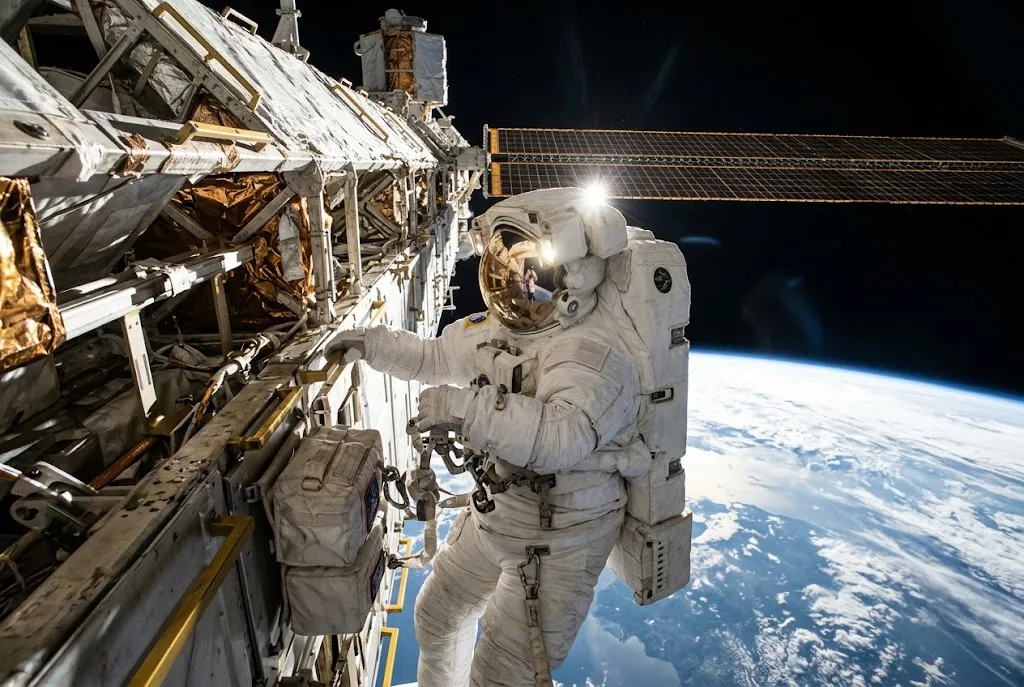
Space debris, often referred to as orbital junk, comprises defunct satellites, spent rocket stages, fragments from collisions, and even flecks of paint from spacecraft. These are not static objects; they hurtle around Earth at incredible speeds – often exceeding 27,000 km/h (17,000 mph) in low Earth orbit. At these velocities, even a tiny bolt can inflict catastrophic damage on an operational satellite, turning it into thousands more pieces of debris.
The problem began with the dawn of the space age. The Sputnik 1 launch in 1957 marked humanity's first venture into space, but it also initiated the accumulation of artificial objects in orbit. Every mission since then, from crewed flights to satellite deployments, has contributed to this cosmic junkyard. Early practices paid little attention to end-of-life planning for satellites, assuming space was vast enough to absorb our refuse. We now know better.
A Growing Heap: The Scale of the Problem
The numbers are staggering. According to the European Space Agency (ESA), there are currently:
- Over 36,500 pieces of debris larger than 10 cm.
- Around 1 million pieces between 1 cm and 10 cm.
- More than 130 million pieces between 1 mm and 1 cm.
While these smaller pieces might sound harmless, remember their velocity. A 1 cm object striking a spacecraft at orbital speeds carries the kinetic energy equivalent to a hand grenade. The larger objects, of course, pose an even greater existential threat. And the number is constantly increasing, thanks to continued launches and, more critically, orbital collisions.
Why the Concern? Satellites at Risk
Our modern world is intricately woven into the fabric of satellite technology. From the precise timing signals that underpin global financial markets to the communication networks that connect continents, satellites are indispensable.
Consider these critical applications:
- Communication: Internet, mobile phone services, satellite TV.
- Navigation: GPS, GLONASS, Galileo, BeiDou – vital for transportation, logistics, and emergency services.
- Weather Forecasting: Predicting hurricanes, monitoring climate change, agricultural planning.
- Earth Observation: Environmental monitoring, disaster management, urban planning.
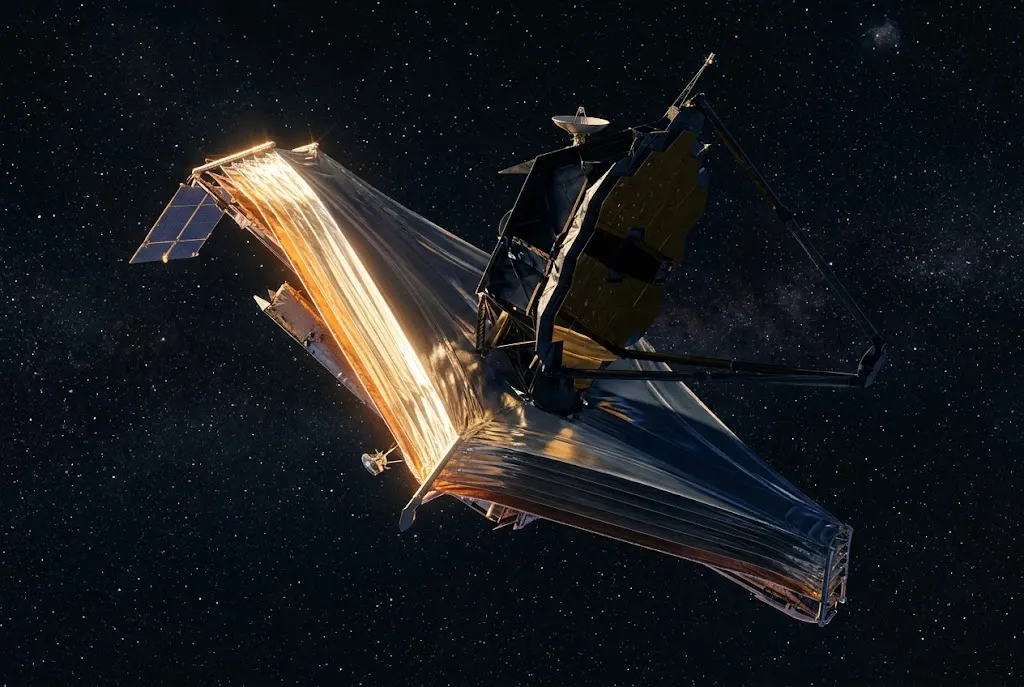
- Scientific Research: Telescopes like Hubble and James Webb, crucial for understanding our universe.
The threat from space debris is not theoretical; it's already a reality. In 2009, a defunct Russian Cosmos satellite collided with an active Iridium communications satellite, creating thousands of new, trackable pieces of debris. This event, known as the Iridium-Cosmos collision, highlighted the critical need for better orbital management and the inherent dangers of our congested orbits. You can learn more about this incident on Wikipedia: 2009 satellite collision (opens in a new tab).
I frequently read about how satellite operators have to perform evasive maneuvers to avoid potential collisions, sometimes several times a week. Each maneuver consumes precious fuel, shortening the operational lifespan of the satellite. It’s a constant, high-stakes game of orbital dodgeball.
The Kessler Syndrome: A Cascading Catastrophe
The concept of a "digital minefield" really comes into sharp focus when we talk about the Kessler Syndrome. Proposed by NASA scientist Donald J. Kessler in 1978, this theory describes a scenario where the density of objects in low Earth orbit (LEO) becomes so high that collisions between objects create an ever-increasing cascade of new space debris. Each collision generates more fragments, increasing the likelihood of further collisions, eventually rendering specific orbital regions—or even LEO entirely—unusable for centuries or even millennia.
This isn't just a concern for future space missions; it could effectively lock us out of space, cutting off all the essential services our current satellites provide. Imagine a world without accurate weather data, no global communication, and no GPS. The economic, social, and even geopolitical consequences would be catastrophic. The implications extend beyond convenience; they touch national security, disaster response, and our global economy. For more on this critical concept, check out Wikipedia: Kessler syndrome (opens in a new tab).
Navigating the Minefield: Tracking and Mitigation
Tracking space debris is a monumental task. Organizations like the U.S. Space Command and ESA's Space Debris Office meticulously track objects larger than 10 cm using ground-based radars and optical telescopes. This data is crucial for predicting potential collisions and issuing warnings to satellite operators. However, tracking the millions of smaller, but still deadly, fragments is impossible with current technology.
Efforts to mitigate the problem are underway, focusing on two main approaches:
-
Prevention:
- Spacecraft Design: Newer satellites are designed with "design for demise" features, ensuring they burn up completely upon atmospheric re-entry.
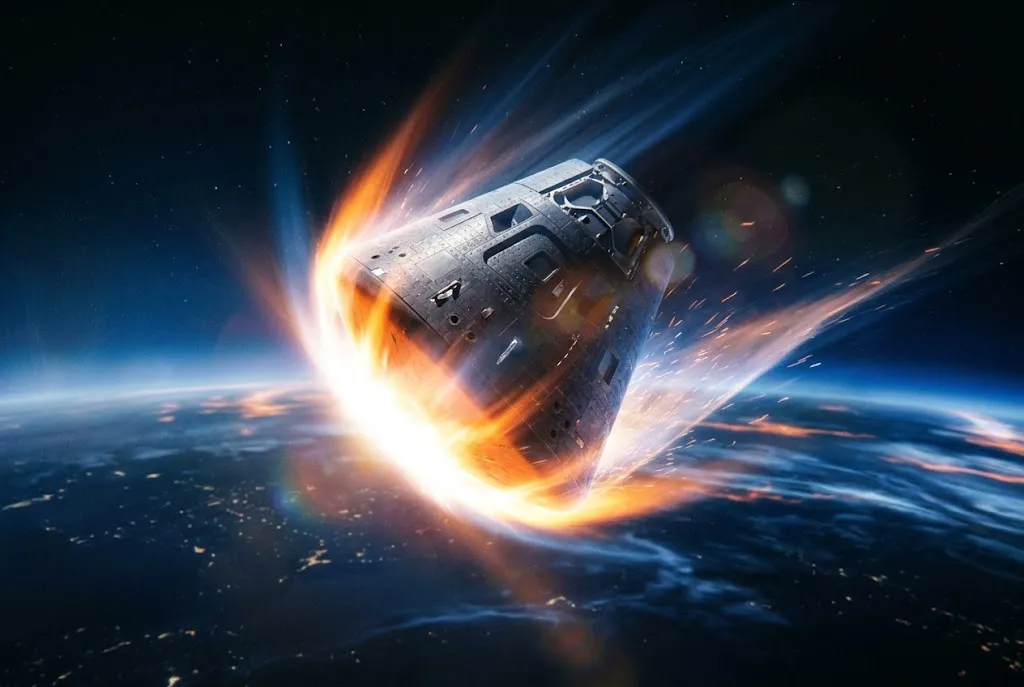
- Deorbiting: Operators are increasingly required to plan for the deorbiting of satellites after their operational life, either by controlled re-entry or by boosting them to "graveyard orbits" far from active operational areas. The 25-year rule, which suggests objects should be deorbited within 25 years of mission completion, is a key guideline, though adherence varies.
- Reducing Fragmentation: Minimizing explosions from leftover fuel in rocket stages is another critical prevention measure.
-
Active Removal: The true challenge lies in removing existing debris. This is where innovation sparks excitement. Various concepts are being explored:
- Capture Nets: Deploying large nets from "chaser" satellites to capture debris.
- Harpoons: Firing a harpoon into larger debris to pull it out of orbit.
- Robotic Arms: Using robotic manipulators to grapple and deorbit larger objects.
- Lasers: Ground-based or space-based lasers could potentially zap smaller debris, nudging them into lower orbits where they would burn up. This exciting technology shows promise for tackling the tiny, untrackable fragments.
- Magnetic Tethers: Using electrodynamic tethers to create drag and deorbit conductive debris.
One promising mission, ClearSpace-1, led by ESA, aims to perform the first capture and deorbit of a piece of space debris in 2025. This mission could pave the way for a dedicated orbital clean-up industry. You can read more about it on Wikipedia: ClearSpace-1 (opens in a new tab).
Our Interconnected Future and the Orbital Frontier
The problem of space debris isn't just a technical challenge; it's a shared global responsibility. As more countries and private companies launch satellites, the need for international cooperation on regulations, tracking, and clean-up efforts becomes paramount. Without it, our reliance on space will become our Achilles' heel.
Our fascination with space, from exploring distant galaxies to building advanced AI systems on Earth, often overlooks the immediate orbital neighborhood. We've written before about the potential of AI to forge new matter or how quantum computers could redefine reality, but none of these advancements matter if we can't even safely launch them into orbit.
The dream of colonizing other planets or setting up bases on the Moon relies on accessible and safe orbital routes. Imagine trying to send supplies to a lunar colony if every launch risks encountering a cloud of high-speed shrapnel. It transforms the very concept of Outer Space from a frontier of opportunity to a barricade of our own making.
The digital minefield isn't just a metaphor; it's a stark warning. The choices we make now regarding orbital stewardship will determine whether future generations inherit a vibrant, accessible space environment or one forever marred by our initial lack of foresight. I believe we have the ingenuity and the technological capability to tackle this challenge, but it demands collective action and a sustained commitment. Let’s clean up our cosmic backyard before it's too late.
If you’re curious about how other cosmic phenomena might impact our technology, delve into "Could Solar Storms Ignite Digital Chaos?" to see another facet of our vulnerability, or explore "Is the Great Filter a Cosmic Tech Trap?" for a broader look at civilizational challenges in the cosmos.
Conversation0
No comments yet. Be the first to share a thought — the best questions often become new stories.