We often perceive light as ephemeral, a fleeting wave or a stream of massless particles illuminating our world, warming our planet, or transmitting information across vast distances. Its nature seems inherently insubstantial, a stark contrast to the tangible matter we interact with daily. Yet, what if this perception is incomplete? What if, under certain extreme conditions or through clever technological manipulation, light itself could be coaxed to *forge* matter, creating something physically substantial from pure energy? The idea sounds like something out of a science fiction novel, a warp drive dream or a starship fabricator, but the deeper I delve into the realms of quantum physics and astrophysics, the more I realize that the line between light and matter is far blurrier than we imagine.
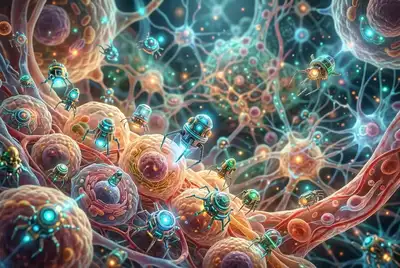
Think about it: the sun’s rays are powerful, capable of pushing solar sails through the vacuum of space, a phenomenon known as **radiation pressure**. This is light exerting a physical force. On a much smaller scale, scientists use **optical tweezers**—highly focused laser beams—to manipulate individual atoms, cells, and even tiny nanobots. It’s a remarkable demonstration of light's ability to interact directly with matter, not just to observe it. But can it *create* it? This is where the universe’s most extreme environments and our most advanced quantum theories offer tantalizing clues.
**The Fundamental Connection: E=mc² and Beyond**
The bedrock of this idea lies in Albert Einstein's famous equation, **E=mc²**, which tells us that energy and mass are interchangeable. While often associated with nuclear reactions where mass is converted into energy, the equation also implies the reverse: energy can be converted into mass. For light, this means photons, the elementary particles of light, could, theoretically, be transformed into particles of matter. However, it's not as simple as pointing a flashlight at empty space and waiting for a rock to appear. Photons themselves are massless. To create mass, you need immense energy densities and specific interactions.
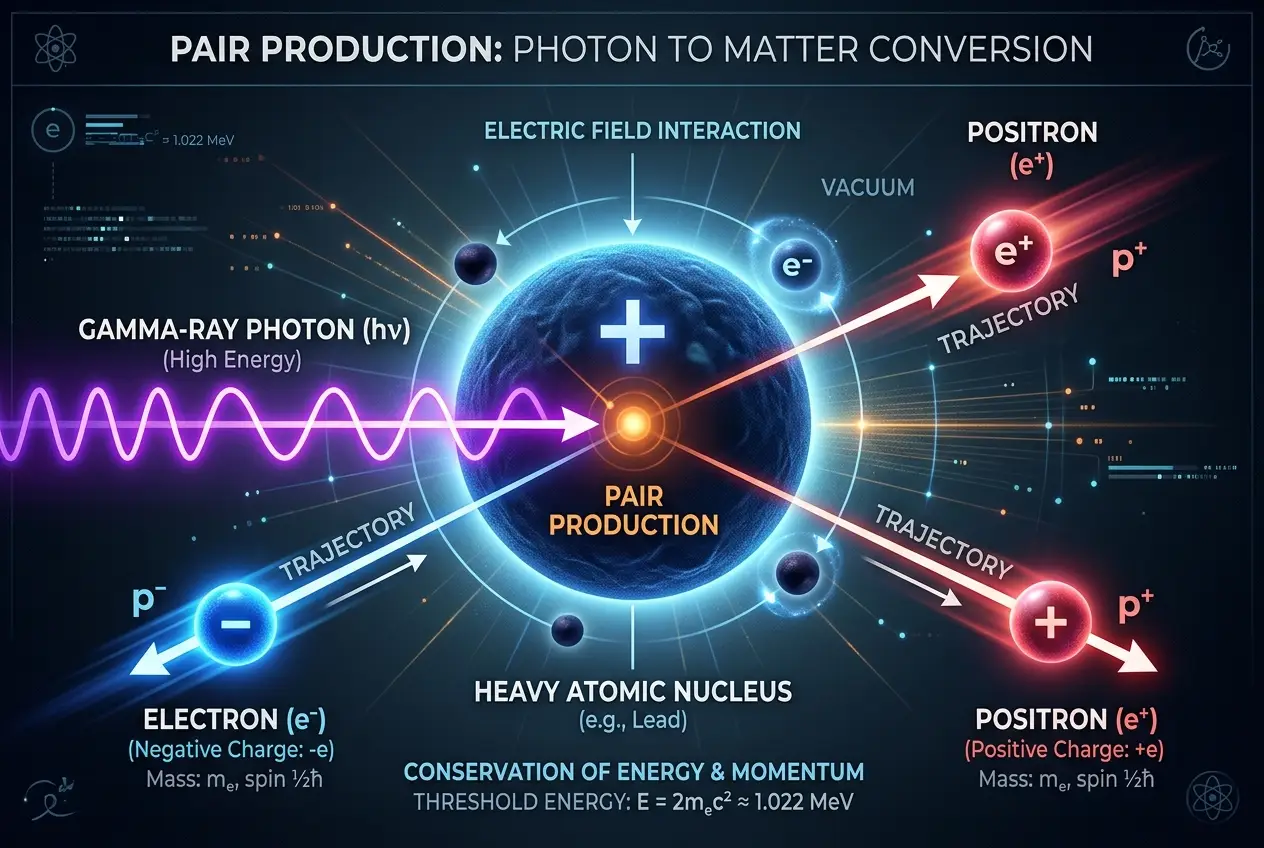
One way photons can interact to create matter is through a process called **pair production**. When a high-energy photon, typically a gamma ray, passes near a heavy atomic nucleus or in the presence of a strong electromagnetic field, it can spontaneously transform into an electron and a positron (the electron's antimatter counterpart). This process directly converts light energy into matter (and antimatter) particles. This isn't just theory; it's observed in particle accelerators and is thought to occur naturally in some of the most violent cosmic events, such as those around **neutron stars** and black holes. You can learn more about this on
Wikipedia's page on Pair Production.
**Light Against Light: A Battle for Substance**
In our everyday experience, light beams pass through each other without interaction. Two flashlight beams simply cross paths. But in the extreme quantum realm, particularly with incredibly high energy photons or in the presence of powerful fields, light *can* interact with light. This phenomenon, known as **photon-photon scattering**, is predicted by **Quantum Electrodynamics (QED)**, the quantum field theory that describes how light and matter interact.
QED suggests that in very strong electromagnetic fields, the vacuum of space isn't truly empty. It’s teeming with **virtual particles** that constantly pop into and out of existence. These virtual particles can mediate interactions between photons, making it possible, though incredibly rare under normal circumstances, for light to "see" and affect other light. Imagine light itself becoming a viscous fluid, where photons can exert pressure on each other. This is crucial for understanding how light might not just manipulate existing matter, but potentially help *form* it. The bizarre world of quantum fluctuations is also explored in our previous post about
Do Quantum Fluctuations Code Our Reality?
**The Lab and Beyond: Creating "Solid Light"**
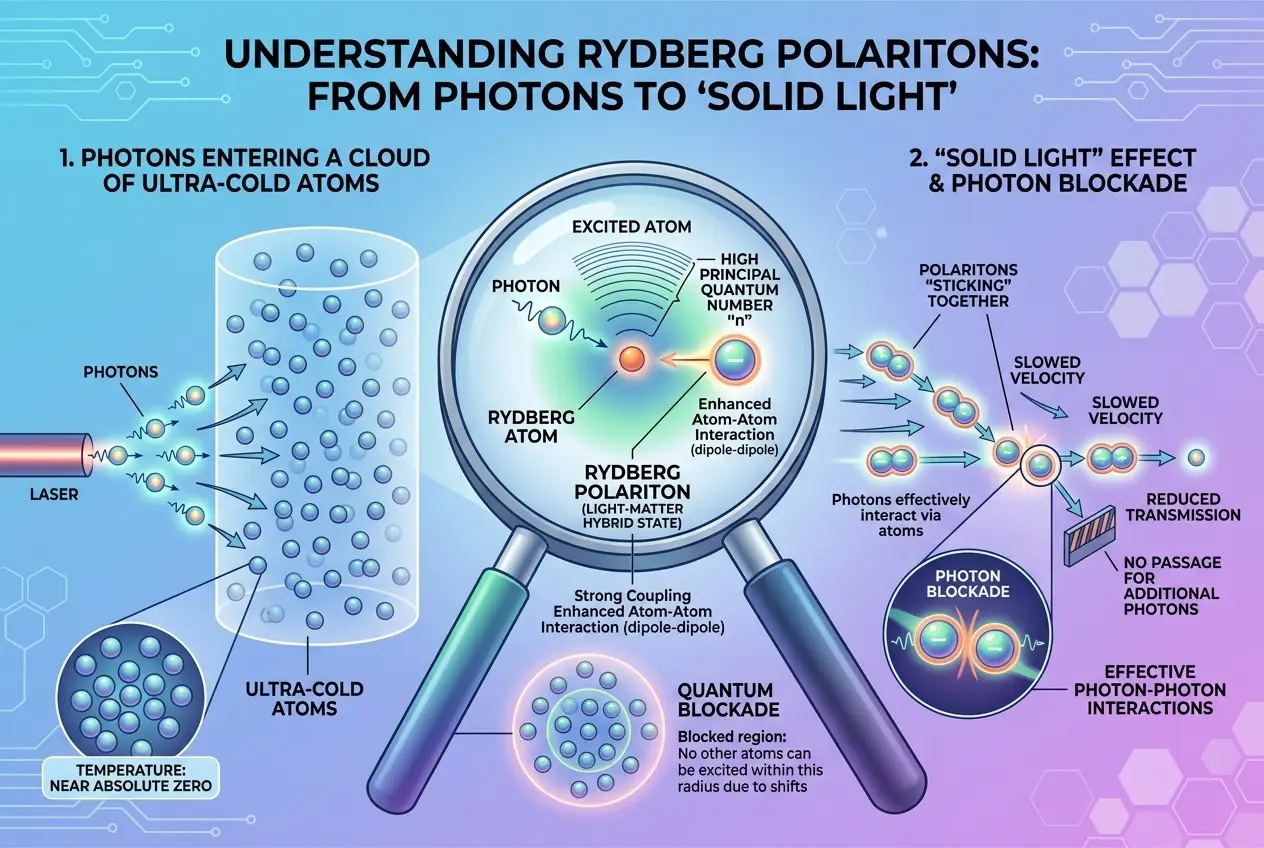
While pair production involves converting light into fundamental particles, scientists have also been exploring ways to make light behave like something solid, or at least to give it properties akin to matter. One fascinating avenue involves **Rydberg polaritons**. In laboratories, researchers have managed to entangle photons with highly excited atoms (Rydberg atoms) in such a way that the light takes on some of the atoms' properties. This creates a quasiparticle known as a Rydberg polariton. These polaritons can interact very strongly with each other – so strongly, in fact, that they can effectively "block" other photons from passing, almost as if they were solid objects.
I recently stumbled upon research where scientists managed to make photons "stick together" and act like molecules, forming a kind of "solid light." This isn't light becoming a brick, but rather light particles behaving as if they have mass and are interacting with a strong force. This "solidification" is achieved by passing photons through a medium of ultra-cold atoms, where the photons essentially borrow some mass from the atoms, slowing down dramatically and gaining interaction capabilities. While these are lab-scale phenomena, they open doors to understanding how light can acquire matter-like properties and potentially lead to new forms of computation or even exotic materials. You can read more about Rydberg atoms and their applications on
Wikipedia's Rydberg atom page.
**Astrophysical Forges: Light and Matter in Cosmic Extremes**
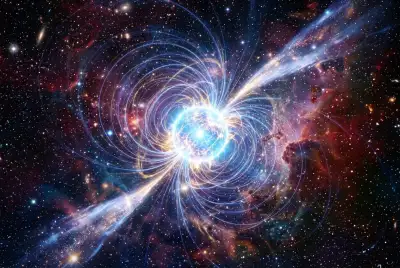
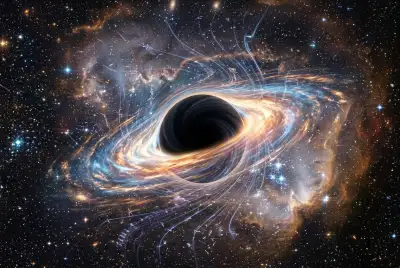
The universe itself provides natural laboratories for light to behave in ways that challenge our conventional understanding. In the vicinity of **neutron stars** and **magnetars**—incredibly dense remnants of collapsed stars with magnetic fields billions of times stronger than Earth’s—light is dramatically affected. These powerful magnetic fields can cause the vacuum itself to become birefringent, meaning light polarized in one direction travels at a different speed than light polarized in another. More dramatically, photons can split and merge, and even trigger cascades of pair production, effectively turning light into a plasma of electrons and positrons. This is truly where light acts as a forge.
Some theories even propose that in the early universe, during the Big Bang's first moments, the entire cosmos was a dense, hot soup of elementary particles and high-energy radiation, constantly converting between light and matter. The conditions were so extreme that photons had enough energy to spontaneously create particle-antiparticle pairs, and vice versa. It was a dynamic, fluctuating state where light wasn't just illuminating matter; it was intrinsically *part* of its creation. The universal code that orchestrates such phenomena might even be present in
Nature's Fractals.
**The Future: From Pure Energy to Tangible Tech?**
The implications of truly harnessing light to forge matter, even in its most rudimentary forms, are profound. Imagine:
* **Advanced Propulsion:** If light can exert pressure, perhaps focused light could be used to directly propel spacecraft without needing traditional fuel, pushing against exotic matter formed by light itself. This might seem like science fiction, but the principles of radiation pressure are already at play with solar sails.
* **Space Fabrication:** Could future space explorers carry light-based "printers" that, in the vacuum of space, could generate materials or components from pure energy? This would revolutionize space colonization and exploration, making resupply missions obsolete for basic materials.
* **Energy Storage:** If light can be temporarily "solidified" or made to exhibit mass-like properties, could it be a novel way to store energy or create new forms of matter with unique properties?
* **Exotic Materials:** The ability to manipulate light to form new states of matter could lead to materials with properties we can only dream of today, potentially impacting everything from computing to superconductivity. The bizarre properties of
Time Crystals also offer a glimpse into such possibilities.
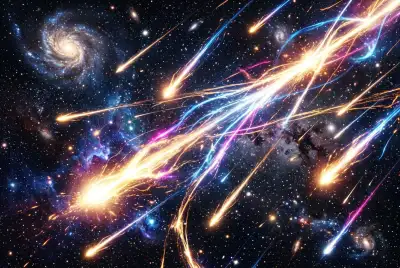
While the dream of turning a beam of light into a spaceship or a moonbase remains firmly in the realm of speculative fiction for now, the underlying science points to a universe where light is far more potent and dynamic than we often give it credit for. From the subtle push of radiation pressure to the dramatic birth of matter in the heart of a gamma-ray burst, light is a fundamental architect of reality, constantly blurring the lines between energy and substance. I find it absolutely mind-bending to consider that the very photons streaming from a distant star might, in the right cosmic crucible, hold the blueprints for new worlds. As our understanding of quantum mechanics deepens, the impossible often becomes merely improbable, then eventually, reality.

Ultimately, the quest to understand if light can truly forge matter in deep space is a journey into the deepest questions of existence, pushing the boundaries of physics and sparking our imagination about the universe's ultimate capabilities. It reminds me how much there is still to discover about the very fabric of our reality, and how much power lies within the seemingly simplest phenomena.
 Join Us


 Unknown Author















Leave a Reply
Comments (0)