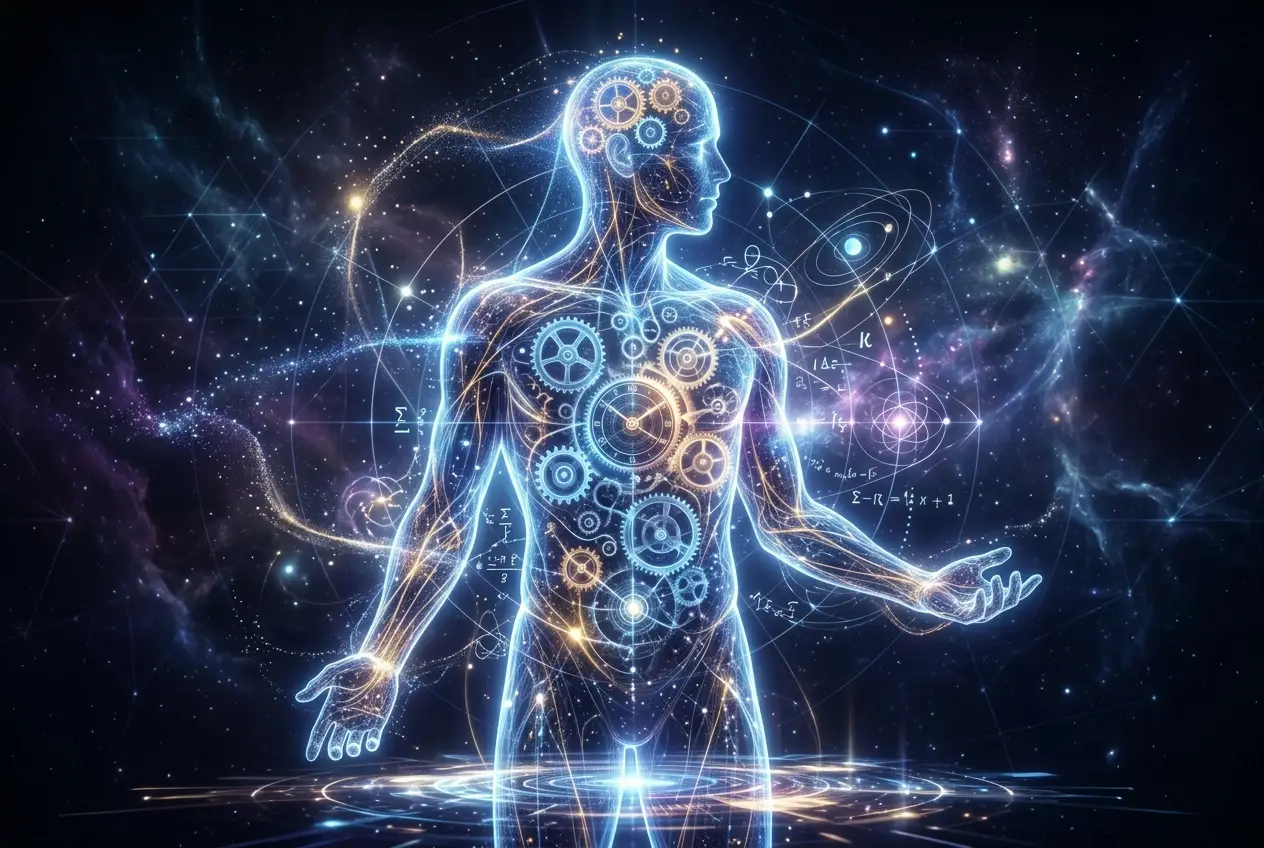
I’ve often wondered about the incredible precision of life. How do migratory birds navigate thousands of miles with uncanny accuracy? How do trees know when to bud, or our own bodies perfectly orchestrate sleep and wake cycles, hunger, and cell division? It's as if an invisible, highly accurate clock ticks within every living thing, maintaining a delicate rhythm. We talk about "biological clocks," but what if these aren't just simple molecular timers? What if, at their very core, they tap into something far more fundamental, something... quantum?
The idea that our bodies might harbor "quantum clocks" might sound like science fiction, but I find it increasingly compelling as researchers delve into the mysterious realm of quantum biology. This emerging field explores how quantum mechanics—the physics of the ultra-small—might be at play in biological processes, lending a level of precision and efficiency that classical physics struggles to explain.
## The Symphony of Time Within Us: Beyond the Obvious
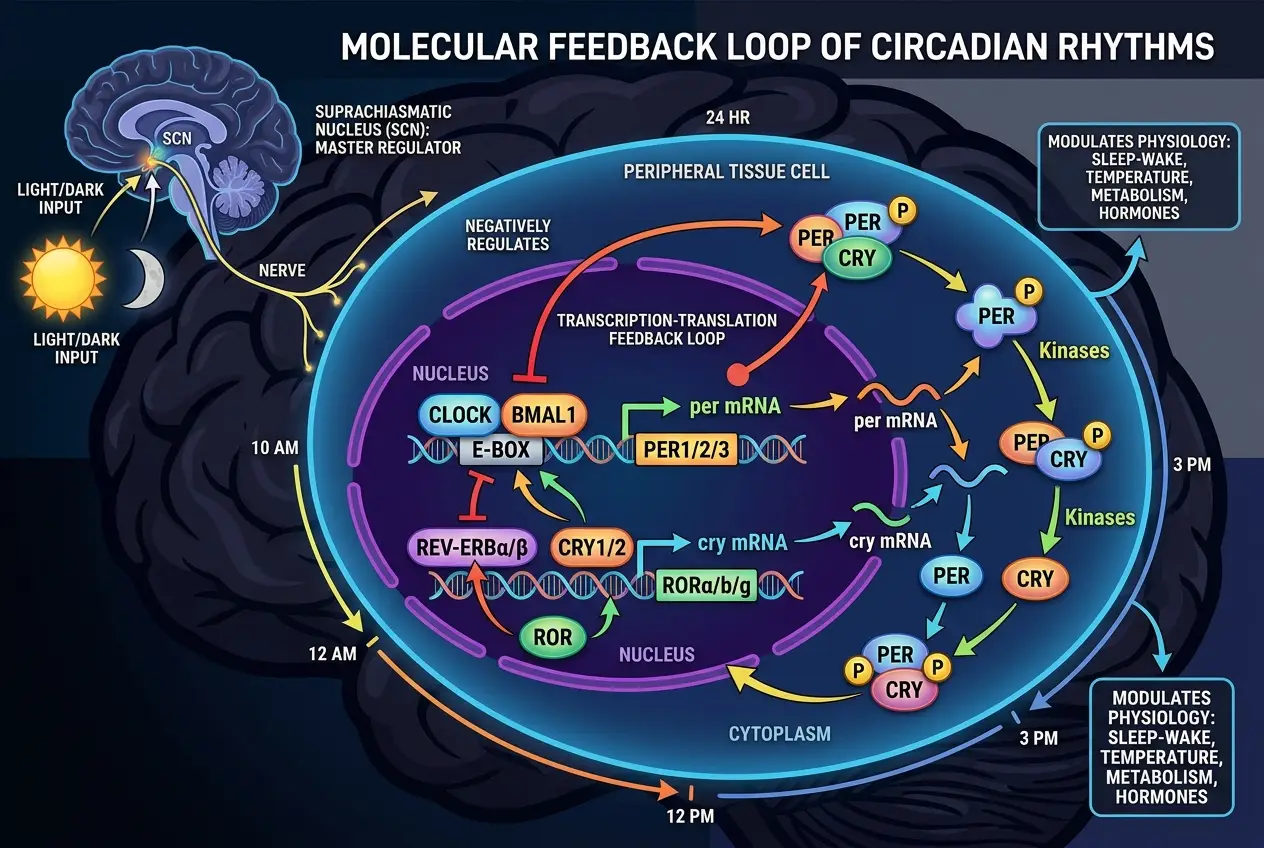
Every living organism, from bacteria to blue whales, operates on internal rhythms. The most famous is the **circadian rhythm**, a roughly 24-hour cycle that governs sleep-wake patterns, hormone release, body temperature, and metabolism. I've personally experienced the disruption of this intricate system during long-haul flights, suffering from jet lag, which makes me appreciate its subtle power even more. These rhythms are not just passive responses to daylight; they are actively generated by a complex network of genes and proteins known as the "clock genes."
In humans, the master clock resides in the suprachiasmatic nucleus (SCN) of the hypothalamus, deep within the brain. This tiny region receives light cues from the eyes, but it continues to keep time even in constant darkness. The molecular machinery behind this clock involves a feedback loop where certain proteins are produced, accumulate, and then inhibit their own production, only for the cycle to restart. This mechanism, while elegant, still leaves me asking: how does it achieve such remarkable accuracy and stability across varying temperatures and metabolic states? How can it stay synchronized despite external noise? This is where the quantum hypothesis steps in.
## What is a Quantum Clock, Really?
To understand a potential biological quantum clock, let's first consider artificial quantum clocks. The most precise timekeeping devices ever invented are **atomic clocks**. These marvels of engineering exploit the quantum properties of atoms, specifically the precise frequencies at which electrons transition between energy levels. For instance, a caesium atomic clock measures time by counting the oscillations of caesium atoms, which "tick" with incredible regularity—billions of times per second. This unparalleled stability is due to the inherent quantum nature of these atomic transitions, which are fundamentally immune to many environmental disturbances that would affect classical mechanical clocks.
So, a "quantum clock" isn't necessarily a device made of quantum computers, but rather a system that leverages quantum mechanical phenomena—like **quantum coherence** (where particles exist in multiple states simultaneously) or **quantum entanglement** (where particles become interconnected, sharing properties no matter the distance)—to achieve extraordinary precision and robustness in timekeeping.
## The Quantum Leap in Biological Timing
The field of quantum biology posits that life might have evolved to utilize subtle quantum effects for a variety of processes, not just timekeeping. We've seen evidence suggesting quantum mechanics at play in:
* **Photosynthesis:** The highly efficient transfer of energy in plants and bacteria might involve quantum coherence, allowing energy to explore multiple pathways simultaneously to find the most efficient one.
* **Olfaction:** Some theories suggest that our sense of smell could involve quantum tunneling, where molecules are identified not just by their shape, but by their vibrational frequencies.
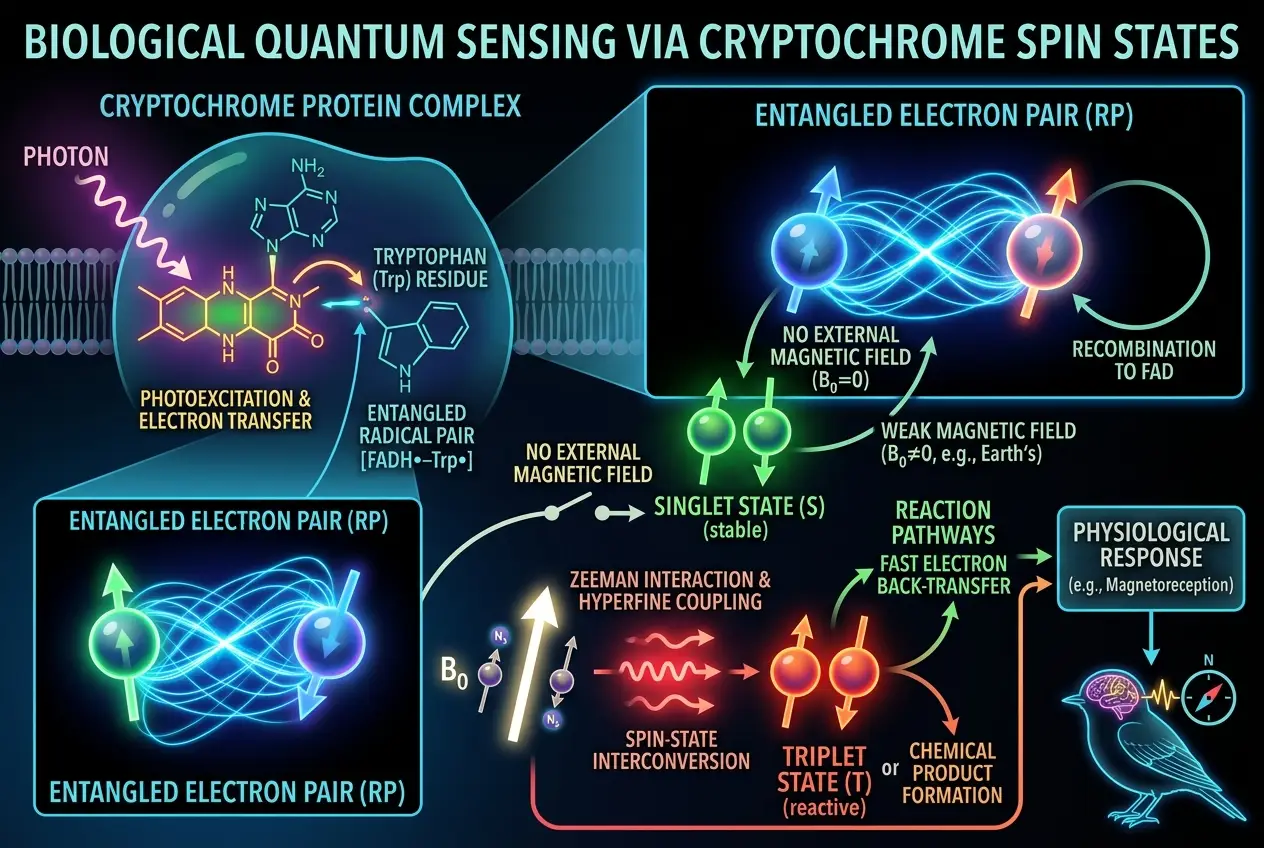
* **Bird Navigation:** Perhaps the most compelling case for quantum biology, some birds are believed to navigate using Earth's magnetic field through a mechanism involving **cryptochromes** – proteins whose electron spins become entangled, creating a "magnetic compass" in their eyes. (I've previously explored related ideas in "Does Earth's Magnetic Field Affect Our Minds?" and "Can Our Bodies Sense Unseen Cosmic Signals?").
If nature can harness these delicate quantum phenomena for energy transfer, sensation, and navigation, why not for timekeeping? The astonishing precision and resilience of biological clocks, even under varying conditions, could be a hallmark of a quantum-assisted mechanism.
## The Body's Atomic Precision: Hypothesizing Quantum Clocks
So, if quantum clocks exist within us, what would they look like? It's unlikely we have tiny caesium atoms ticking away. Instead, researchers are looking at biomolecules capable of maintaining quantum coherence for long enough to influence biological processes.
One prominent candidate involves **electron spin states** within certain proteins, similar to the mechanism proposed for bird magnetoreception. Cryptochromes, found in plants and animals (including humans), are light-sensitive proteins known to play a role in circadian rhythms. The interaction of light with these proteins can generate radical pairs—molecules with unpaired electrons. The spins of these electrons are highly sensitive to weak magnetic fields and can remain in a coherent entangled state for surprisingly long durations in biological environments.
Could these entangled electron spins, influenced by magnetic fields or other subtle energy interactions, provide a highly stable, "quantum tick" that underpins the molecular clock? Imagine a network of such radical pairs throughout the body, providing an internal reference frame for time that is far more stable than chemical reactions alone. This would offer a robust, almost self-calibrating, system against thermal noise and other environmental fluctuations.
Another area of speculation involves **vibrational modes** of molecules. Certain molecules have specific vibrational frequencies, which are inherently quantum. If biological systems could "tune into" or utilize these precise vibrations, they could act as tiny, exquisitely accurate resonators for timekeeping. This concept ties into the broader discussions around quantum coherence in biological systems, which is also explored in the context of "Could Quantum Biology Unlock Life's Deepest Secrets?".
## Implications and Future Frontiers
The implications of discovering hidden quantum clocks in our bodies are profound.
* **Medicine and Health:** Understanding how biological clocks maintain their precision could revolutionize our approach to treating sleep disorders, metabolic diseases, and even aging. Many diseases are linked to circadian rhythm disruption. If we can understand the quantum underpinnings, we might develop therapies that "reset" or stabilize these internal clocks with unprecedented accuracy.
* **Understanding Consciousness:** Time perception is a cornerstone of consciousness. If our subjective experience of time is linked to underlying quantum processes, it could open new avenues for understanding the brain's deepest workings. (This resonates with ideas about "Is Human DNA a Cosmic Antenna?" and how fundamental biological structures might interact with external forces).
* **Bio-inspired Technology:** If nature has already figured out how to build miniature, robust quantum clocks at room temperature, it could inspire a new generation of incredibly precise and energy-efficient sensors, computing devices, and even new forms of quantum technology. Just as we look to **quantum sensors** to reshape our reality perception, perhaps our own biology holds the blueprint for even more advanced systems.
The journey to confirm the existence of quantum clocks within us is just beginning. It requires pushing the boundaries of physics, biology, and chemistry. Yet, the possibility that our bodies are far more sophisticated than we imagine, quietly leveraging the bizarre rules of the quantum world, is undeniably thrilling. I believe it offers a truly captivating frontier for scientific exploration, urging us to look beyond the classical and embrace the quantum mysteries that might be ticking away inside us right now.
Frequently Asked Questions
Quantum biology is an interdisciplinary field that investigates how quantum mechanical phenomena—like superposition, entanglement, and tunneling—might play a role in biological processes, providing explanations for efficiencies and precision not easily explained by classical physics.
Classically, biological clocks (like circadian rhythms) are understood as molecular feedback loops. Specific clock genes produce proteins that accumulate and then inhibit their own gene expression, creating a cyclical rise and fall of protein levels over approximately 24 hours. The master clock in mammals is the SCN in the brain.
A biological clock would be considered 'quantum' if its fundamental mechanism for maintaining precision and stability relies on quantum mechanical properties, such as electron spin coherence, quantum entanglement in proteins (like cryptochromes), or specific quantum vibrational modes within molecules, rather than purely classical chemical reactions.
Yes, cryptochromes are a leading candidate. These light-sensitive proteins, known to be involved in circadian rhythms and bird magnetoreception, are hypothesized to use entangled electron spins whose quantum states are highly sensitive to subtle magnetic fields, potentially acting as a quantum 'tick' for biological timing.
Understanding biological quantum clocks could lead to new medical treatments for rhythm-related disorders and aging, provide deeper insights into consciousness, and inspire the development of novel, highly precise, and energy-efficient quantum technologies based on nature's designs.
Verified Expert
Alex Rivers
A professional researcher since age twelve, I delve into mysteries and ignite curiosity by presenting an array of compelling possibilities. I will heighten your curiosity, but by the end, you will possess profound knowledge.
Leave a Reply
Comments (0)
No approved comments yet. Be the first to share your thoughts!
 Join Us
 Unknown Author











Leave a Reply
Comments (0)