


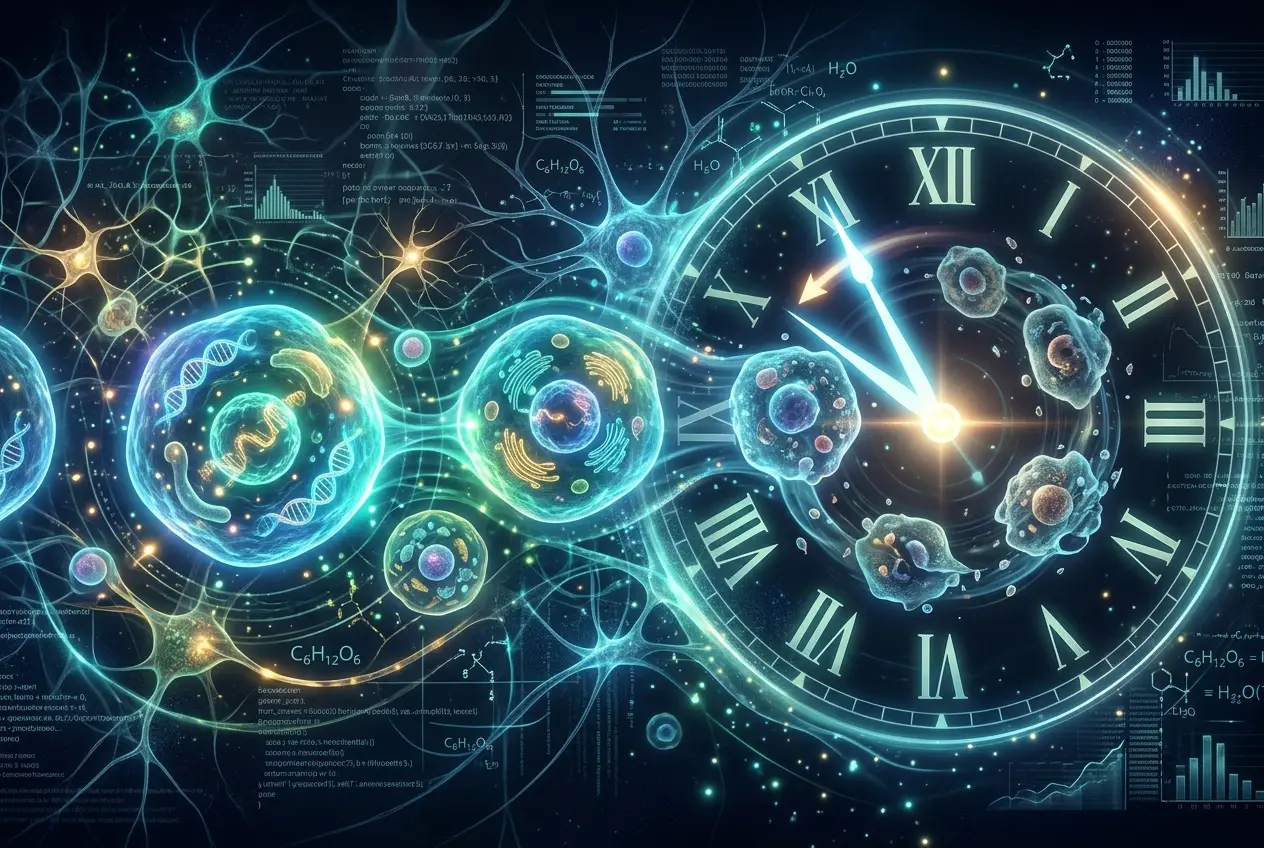
I recently found myself scrolling through a documentary on deep-sea longevity – jellyfish that can effectively reverse their aging process. It wasn't the first time I'd pondered the seemingly universal law of aging, but seeing an organism defy it so effortlessly sparked a profound question: what if we could do that? What if the relentless march of time, etched into every wrinkle and creak of the joints, wasn't an inescapable destiny but a scientific challenge waiting to be overcome? For centuries, humans have dreamed of eternal youth, weaving tales of elixirs and fountains of life. Today, however, that dream is rapidly transitioning from myth to the very forefront of cutting-edge scientific research.
The quest to halt aging isn't about mere vanity; it’s about conquering the leading risk factor for nearly all chronic diseases, from cancer and heart disease to neurodegeneration. Imagine a world where the human lifespan isn't just extended, but the years added are vibrant, healthy ones, free from the debilitating effects of age. This isn't just science fiction anymore; it’s the goal of a rapidly expanding field known as biogerontology, and the advancements we’re witnessing are nothing short of revolutionary.
The Unpacking of Aging: More Than Just Time
Before we can hope to halt aging, we first need to understand what it actually is. It’s far more complex than a simple clock ticking down. Scientists have identified several fundamental biological processes, often referred to as the "hallmarks of aging," that contribute to cellular and organismal decline. These include:- Genomic Instability: Our DNA accumulates damage over time, leading to mutations that can disrupt cell function.
- Telomere Attrition: The protective caps at the ends of our chromosomes, telomeres, shorten with each cell division. Once they become too short, cells stop dividing or die.
- Epigenetic Alterations: Changes in gene expression occur without altering the underlying DNA sequence, affecting how cells read their genetic blueprint.
- Loss of Proteostasis: The body's ability to maintain a healthy balance of proteins declines, leading to misfolded proteins that accumulate and impair cellular function.
- Deregulated Nutrient Sensing: Pathways that sense nutrient availability (like mTOR and AMPK) become dysregulated, affecting metabolism and cellular repair.
- Mitochondrial Dysfunction: The "powerhouses" of our cells become less efficient, producing less energy and more damaging reactive oxygen species.
- Cellular Senescence: Cells enter a state of irreversible growth arrest, but instead of dying, they secrete inflammatory molecules that harm surrounding tissues. These are often called "zombie cells."
- Stem Cell Exhaustion: Our stem cells, responsible for repairing and regenerating tissues, become less numerous and less effective.
- Altered Intercellular Communication: The signals between cells become distorted, impacting tissue function and repair.
Understanding these hallmarks is crucial because they provide specific targets for intervention. We're not just vaguely aiming to "reverse age"; we're developing precise tools to address these fundamental mechanisms of decay.
Cutting-Edge Science: The New Anti-Aging Arsenal
The field of anti-aging research is booming, with multiple avenues of investigation showing promising results, often leveraging advanced technologies.1. Senolytics and Senomorphics: Targeting Zombie Cells
One of the most exciting breakthroughs has been the development of **senolytics** – drugs that selectively destroy senescent cells. By clearing these "zombie cells" from the body, researchers have seen remarkable improvements in age-related conditions in animal models, from increased lifespan and reduced frailty to improved heart function and cognitive ability. Senomorphics, on the other hand, aim to alter the behavior of senescent cells, making them less harmful. Early human trials are underway, and the potential impact is immense.2. Reprogramming and Gene Therapy: Rewriting the Code of Life
The ability to directly manipulate our genetic code offers another powerful approach. Gene therapies are being explored to boost the activity of genes associated with longevity, such as those involved in DNA repair or antioxidant production. Perhaps even more groundbreaking is the concept of **cellular reprogramming**. Pioneering work by Shinya Yamanaka showed that mature cells can be reverted to an embryonic-like state using specific "Yamanaka factors." Applying this *in vivo* to partially reset the epigenetic clock without causing uncontrolled growth is a frontier that could fundamentally rejuvenate tissues and organs. Learn more about gene editing technologies on [Wikipedia's CRISPR page](https://en.wikipedia.org/wiki/CRISPR).3. Pharmaceutical Interventions: Repurposing Existing Drugs
Some existing drugs, originally developed for other conditions, are showing surprising anti-aging properties. **Rapamycin**, an immunosuppressant, has consistently extended lifespan in various organisms by modulating the mTOR pathway, which plays a key role in nutrient sensing and cell growth. **Metformin**, a common diabetes drug, is also under investigation for its potential to slow aging by affecting metabolic pathways and reducing inflammation. These drugs offer a potential shortcut, as their safety profiles are already well-established.4. Advanced Diagnostics and AI: Predicting and Preventing
The future of anti-aging will heavily rely on **precision medicine** – tailoring interventions to an individual's unique biological makeup. Advanced diagnostics, including sophisticated epigenetic clocks that can accurately measure biological age, are becoming invaluable tools. Artificial intelligence is playing a pivotal role here, analyzing vast datasets of genetic, proteomic, and lifestyle information to identify novel aging biomarkers and predict personalized interventions. AI can accelerate drug discovery, pinpoint optimal lifestyle changes, and even help us understand the complex interplay of aging hallmarks. Curious about how AI drives discovery? Read our blog: [Can AI Predict Humanity's Next Big Leap?](/blogs/can-ai-predict-humanitys-next-big-leap-2672).The Ethical Quandary and Societal Impact
The prospect of significantly extending healthy human lifespan naturally raises profound ethical and societal questions. Who would have access to these treatments? Would it exacerbate existing inequalities, creating a divide between the "haves" (the long-livers) and the "have-nots"? What would be the impact on global population, resource allocation, and social structures like retirement and family planning?"The prolongation of healthy life is a worthy scientific goal, but the social implications demand careful consideration," notes Dr. Elizabeth Blackburn, Nobel laureate for her work on telomeres. "We must ensure these advancements benefit all of humanity, not just a select few."
These are not trivial concerns, and they must be addressed in tandem with scientific progress. The goal, many argue, should not be simply to live longer, but to live healthier for longer, reducing the burden of age-related disease on individuals and healthcare systems.
Beyond the Horizon: Nanobots and Regenerative Medicine
Looking further into the future, the integration of nanotechnology and advanced regenerative medicine offers even more audacious possibilities. Imagine nanobots patrolling your bloodstream, detecting and repairing cellular damage in real-time, clearing out protein aggregates, or even delivering targeted gene therapies directly to aging cells. This concept aligns with ideas explored in our previous post: Could Nanobots Repair Our Bodies From Within?.Organ regeneration, growing new organs from a patient's own cells to replace failing ones, could become commonplace. While still largely in experimental stages, the science of growing tissues and organs outside the body and using advanced stem cell therapies to repair damaged ones is progressing at an incredible pace. These technologies hold the promise of not just extending lifespan, but truly restoring youthful vitality.



Conversation0
No comments yet. Be the first to share a thought — the best questions often become new stories.