The cosmos, I've often thought, is a symphony of unseen forces. We gaze at stars, marvel at nebulae, and study the intricate dance of galaxies, yet beneath the visible spectacle, there’s a persistent hum, a whisper of cosmic energies that few truly perceive. Recently, I found myself pondering an idea that might sound like science fiction: **Do planets themselves emit secret frequencies, a kind of planetary heartbeat or hidden language?** It’s a concept that tickles the imagination, blurring the lines between pure science and profound wonder.
When I first delved into the idea, it felt like stepping into a vast, silent library where every book vibrated with a unique story. We know planets have magnetic fields, atmospheres, and seismic activity. But what if these weren't just isolated phenomena, but components of a grander, resonant system, continuously broadcasting signals we're only just beginning to decode?
### The Earth's Own Hum: Schumann Resonances
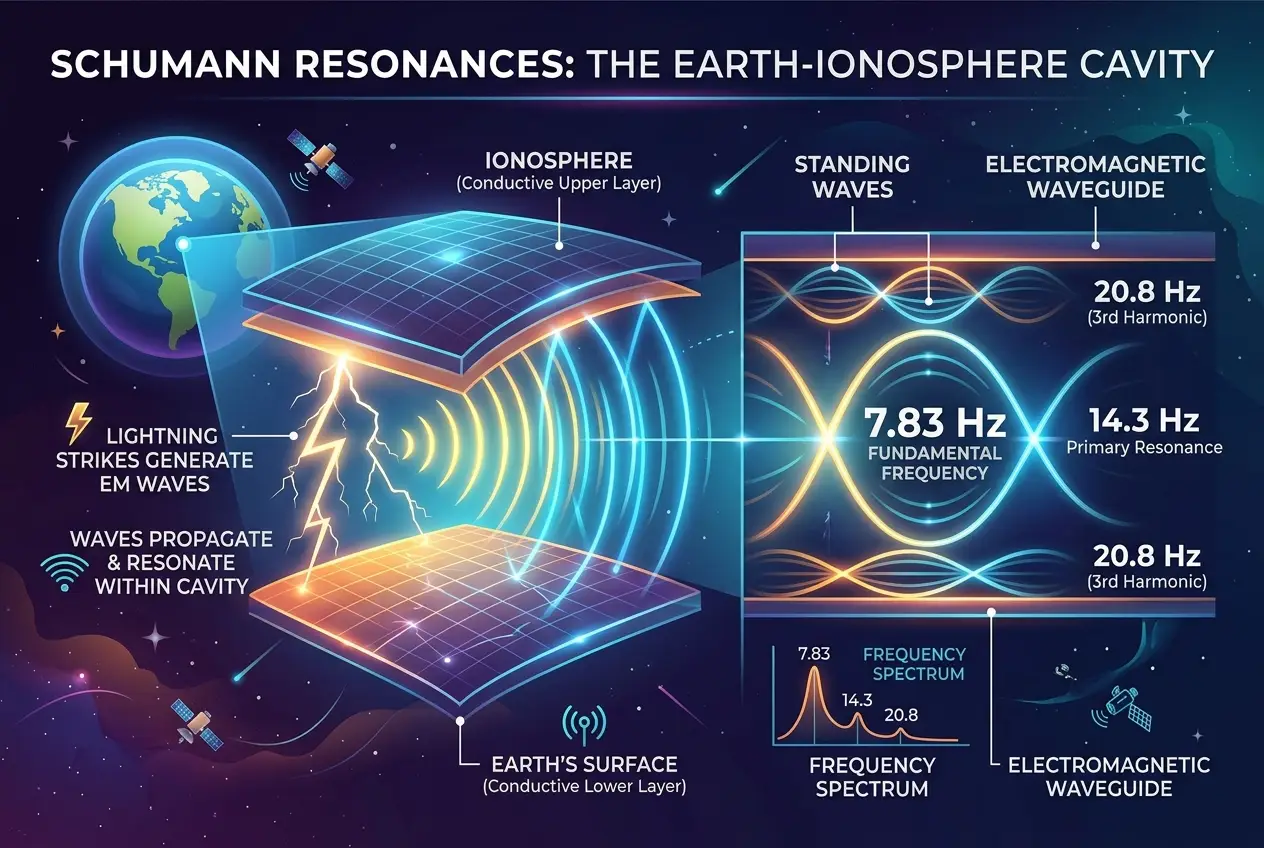
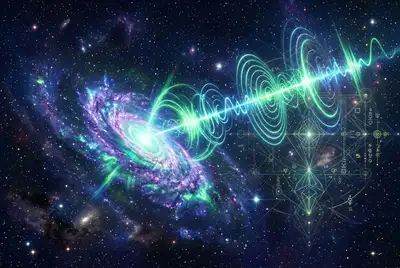
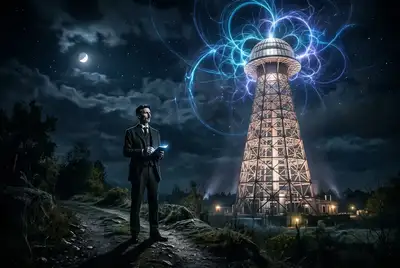
Our own planet, Earth, offers a compelling starting point for this exploration with something known as the **Schumann Resonances**. Imagine the Earth's surface and the ionosphere (a layer of charged particles in the upper atmosphere) acting like two conductive plates of a giant capacitor. Lightning strikes within thunderstorms create electromagnetic waves that bounce between these two "plates," traveling around the planet. When these waves align perfectly with the circumference of the Earth, they create standing waves at specific, very low frequencies.
The primary Schumann Resonance typically hovers around **7.83 Hz**, often referred to as Earth’s "heartbeat." This frequency is incredibly stable, almost as if the Earth itself is emitting a fundamental tone. For years, I believed it was simply an interesting geophysical phenomenon. But the more I read, the more I realized its profound implications. These resonances are influenced by solar activity, atmospheric conditions, and even geological events. It’s a dynamic signature, constantly changing, yet always returning to its fundamental rhythm. Could this be one of Earth's "secret frequencies"? You can read more about its discovery and characteristics on [Wikipedia](https://en.wikipedia.org/wiki/Schumann_resonances).
### Beyond Earth: Planetary Magnetospheres and Radio Emissions
The concept of planets emitting signals extends far beyond our home world. Every planet with a significant magnetic field, like Jupiter and Saturn, generates incredibly powerful radio emissions. These aren't just random static; they are structured, modulated signals that can be quite distinct.
**Jupiter**, for instance, is famous for its decametric radio emissions (DAM) and decimetric emissions (DIM), which are directly linked to its strong magnetic field and interactions with its moon Io. NASA’s Juno spacecraft has provided stunning audio recordings of these emissions, transforming them from abstract data into an eerie, almost musical cosmic chorus. Saturn, too, has its own unique radio signature, often described as sounding like ocean waves or whistling. These are phenomena generated by complex plasma physics within their magnetospheres, where charged particles are accelerated and interact with magnetic field lines.
When I listen to these recordings, I can’t help but wonder if we're hearing more than just electromagnetic noise. Are these vast planetary systems inadvertently "broadcasting" information about their internal dynamics, their weather, or even more profound geological processes? This isn’t a stretch into alien communication, but rather a scientific curiosity about the richness of natural planetary signals. Could understanding these signals better provide insights into other planets or even help us in our quest for exoplanet habitability? Dive deeper into planetary radio emissions on [Wikipedia](https://en.wikipedia.org/wiki/Planetary_radio_emission).
### Gravitational Resonances: The Cosmic Orchestration
Beyond electromagnetic frequencies, there's another, more fundamental layer of planetary interaction: **gravitational resonances**. These are the subtle, yet powerful, gravitational tugs that planets exert on each other, often leading to synchronized orbits and stable long-term configurations. For example, Jupiter's Galilean moons—Io, Europa, and Ganymede—are locked in a fascinating 1:2:4 orbital resonance. For every orbit Ganymede makes, Europa completes two, and Io completes four. This isn't a coincidence; it's a stable, resonant dance that has profound implications for their geological activity, particularly Io’s intense volcanism.
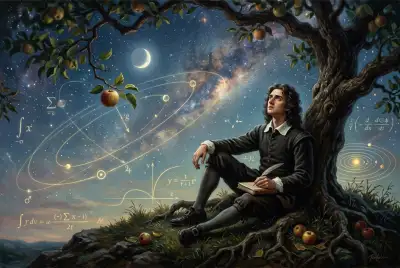
These gravitational interactions can be thought of as a form of "cosmic tuning," where planets and moons settle into stable "frequencies" of motion. If you’ve ever seen a simulation of the solar system, I think you’d agree that the clockwork precision of these orbits feels almost intentional, a testament to the universe’s underlying order. These resonances dictate everything from the stability of planetary systems to the formation of asteroid belts. I often reflect on how this cosmic ballet, though silent to our ears, could be considered a form of planetary communication—a constant, gravitational "handshake" between celestial bodies. This phenomenon is critical in understanding our solar system's dynamics, and you can explore more about orbital resonance on [Wikipedia](https://en.wikipedia.org/wiki/Orbital_resonance).
### Seismic Waves: The Inner Tremors
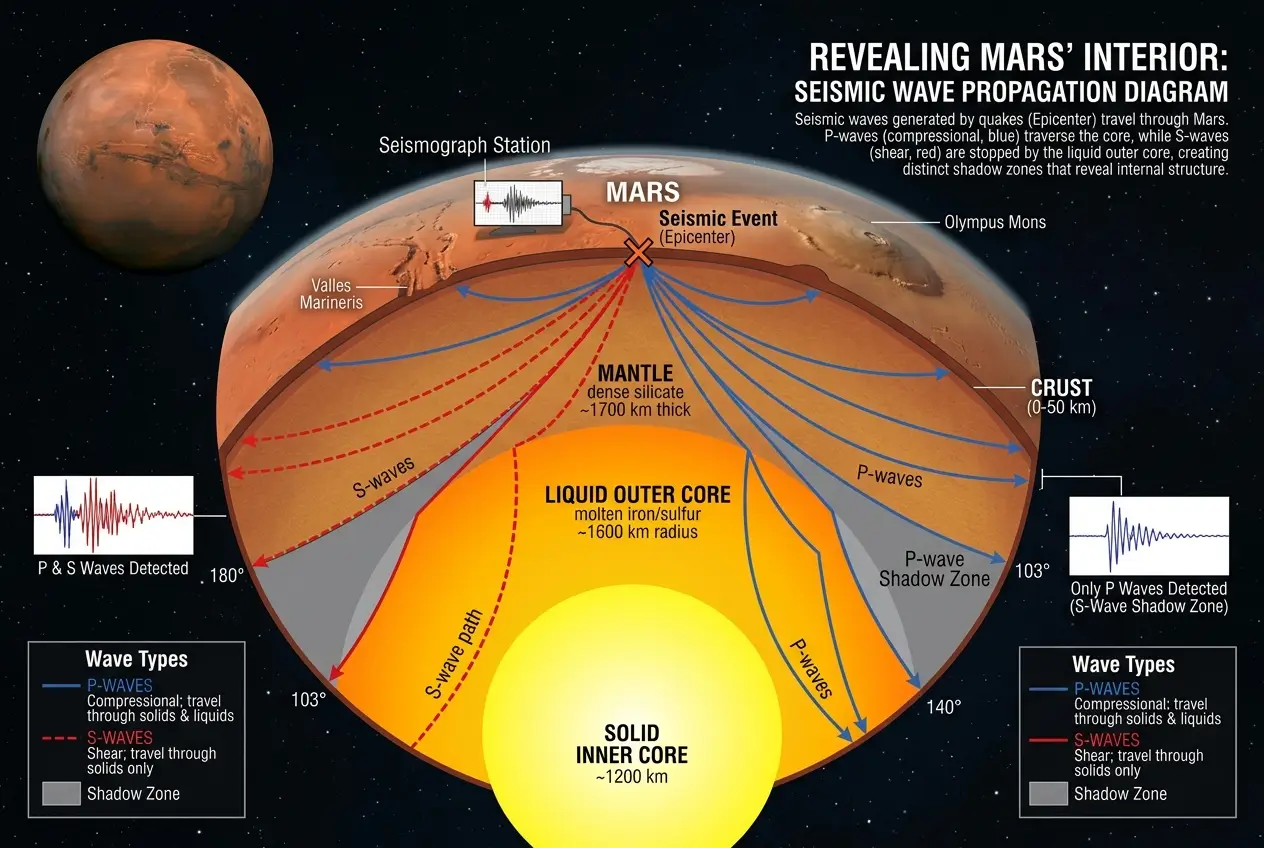
Even the internal activity of planets creates frequencies. Earthquakes on our planet generate seismic waves that travel through the Earth's interior, providing critical information about its composition and structure. These waves have distinct frequencies and propagation patterns. Analogously, "marsquakes" detected by NASA's InSight lander on Mars reveal the Red Planet's internal structure through its own seismic "heartbeat."
For me, the idea that a planet's deep interior, its molten core, and shifting mantle can communicate its state through these vibrations is another form of a "secret frequency." Could these internal frequencies, perhaps, be influenced by external factors in ways we don't yet fully grasp? The ongoing study of planetary seismology is revealing these intricate internal communications, offering a profound understanding of how worlds are built and evolve.
### Could These Frequencies Hold Information?
This is where the idea of "secret frequencies" truly sparks my curiosity. If planets are constantly emitting these diverse forms of resonant energy—electromagnetic, gravitational, seismic—could these emissions carry information in a way we haven't yet learned to decipher?
Consider the concept of a natural "planetary computer." If the intricate interplay of a planet's magnetic field, atmospheric layers, and geological activity creates stable, repeating patterns and modulated signals, could these patterns function as a vast, albeit unintentional, data storage or transmission system? Perhaps we’re not looking for a "computer" in the human sense, but rather a dynamic information system.
For example, shifts in a planet's magnetic field might be "recorded" in its radio emissions, or changes in its internal core dynamics could be subtly echoed in its gravitational influence on other bodies. Decoding these could be the ultimate frontier of planetary science, allowing us to reconstruct ancient planetary histories or predict future geological events with unprecedented accuracy. I've often thought about the implications of such discoveries – how it might reshape our understanding of planetary evolution and even impact future interstellar travel by informing us about dynamic, living planets. If you're fascinated by how planetary processes could encode information, you might enjoy reading about [Did Ancient Sites Process Cosmic Data?]( /blogs/did-ancient-sites-process-cosmic-data-4975) or [Do Cosmic Rays Secretly Glitch Our Tech?]( /blogs/do-cosmic-rays-secretly-glitch-our-tech-3330).
The challenge, of course, lies in developing the technology and the theoretical frameworks to interpret such complex natural signals. It would require a multidisciplinary approach, combining astrophysics, geophysics, quantum physics, and even advanced AI algorithms to filter noise from potential signal. It's a colossal task, but one that promises to unlock an entirely new dimension of cosmic understanding.
### The Future of Cosmic Listening
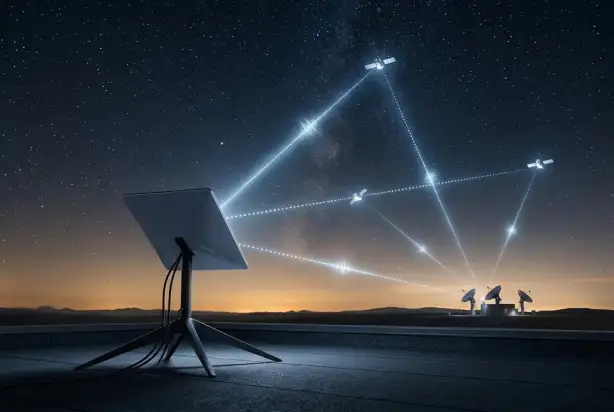
As our technology advances, our ability to "listen" to the cosmos becomes ever more sophisticated. From dedicated observatories to advanced spacecraft, we are constantly refining our instruments to detect fainter signals and analyze more complex data. The next generation of telescopes and planetary probes might not just observe planets; they might actively "eavesdrop" on their natural frequencies, mapping out their energetic landscapes in unprecedented detail.
Perhaps one day, we will develop a universal "Rosetta Stone" for cosmic resonances, allowing us to translate the subtle whispers of planets into a coherent narrative. Until then, the idea that worlds might be sending out secret frequencies, patiently waiting for us to tune in, remains a captivating mystery. It's a reminder that the universe still holds countless secrets, hidden in plain sight, just waiting for our curiosity to unlock them.
Could understanding these planetary frequencies even lead to new forms of energy harvesting or communication technologies here on Earth? Imagine if we could tap into the natural resonant frequencies of our planet for clean, sustainable power, or if we could use these subtle cosmic vibrations as a backdrop for advanced communication systems. The possibilities, I believe, are as boundless as the cosmos itself. Another interesting read on this topic is [Is the Universe a Giant Neural Network?]( /blogs/is-the-universe-a-giant-neural-network-2907)
**In conclusion,** while the concept of planets emitting "secret frequencies" may sound speculative, it is deeply rooted in observed scientific phenomena, from Schumann Resonances to planetary radio emissions and gravitational dynamics. The real mystery isn't whether planets emit frequencies, but rather how much information these frequencies carry, and whether humanity possesses the ingenuity to one day decode their hidden language. I truly believe that the cosmos is a far more interactive and communicative place than we currently perceive.
Frequently Asked Questions
Schumann Resonances are a set of global electromagnetic resonances in the Earth-ionosphere cavity. They are generated by lightning discharges and create standing waves at extremely low frequencies, primarily around 7.83 Hz. They're called Earth's 'heartbeat' due to their consistent, fundamental frequency and pervasive presence.
Gas giants like Jupiter and Saturn possess powerful magnetic fields. As charged particles from the solar wind and their moons (like Io for Jupiter) interact with these magnetospheres, they are accelerated and emit intense radio waves across a wide range of frequencies, detectable by spacecraft and radio telescopes.
Gravitational resonances describe specific orbital configurations where the gravitational pull between celestial bodies creates stable, synchronized motions. While not 'communication' in the sentient sense, they are a fundamental way planets and moons interact and influence each other's dynamics, creating observable patterns and effects over cosmic timescales.
Yes, seismic waves generated by quakes (like earthquakes or marsquakes) propagate through a planet's interior at specific frequencies and speeds. By studying these waves, scientists can deduce the internal structure, composition, and geological activity of a planet, effectively 'listening' to its inner workings. They carry vital information about a world's hidden depths.
Scientists speculate that these frequencies could encode data about a planet's atmospheric conditions, magnetic field strength, internal geological processes, tectonic activity, and even its long-term evolutionary history. Decoding such complex natural signals could provide unprecedented insights into planetary science and exoplanet characteristics.
Advanced AI could be instrumental in processing vast amounts of complex data from planetary emissions, identifying subtle patterns, filtering out noise, and correlating different types of frequencies to reveal underlying information. Machine learning algorithms could help recognize signatures that human analysis might miss, accelerating our understanding of these natural signals.
Verified Expert
Alex Rivers
A professional researcher since age twelve, I delve into mysteries and ignite curiosity by presenting an array of compelling possibilities. I will heighten your curiosity, but by the end, you will possess profound knowledge.
Leave a Reply
Comments (0)
No approved comments yet. Be the first to share your thoughts!
 Join Us


 Unknown Author














Leave a Reply
Comments (0)