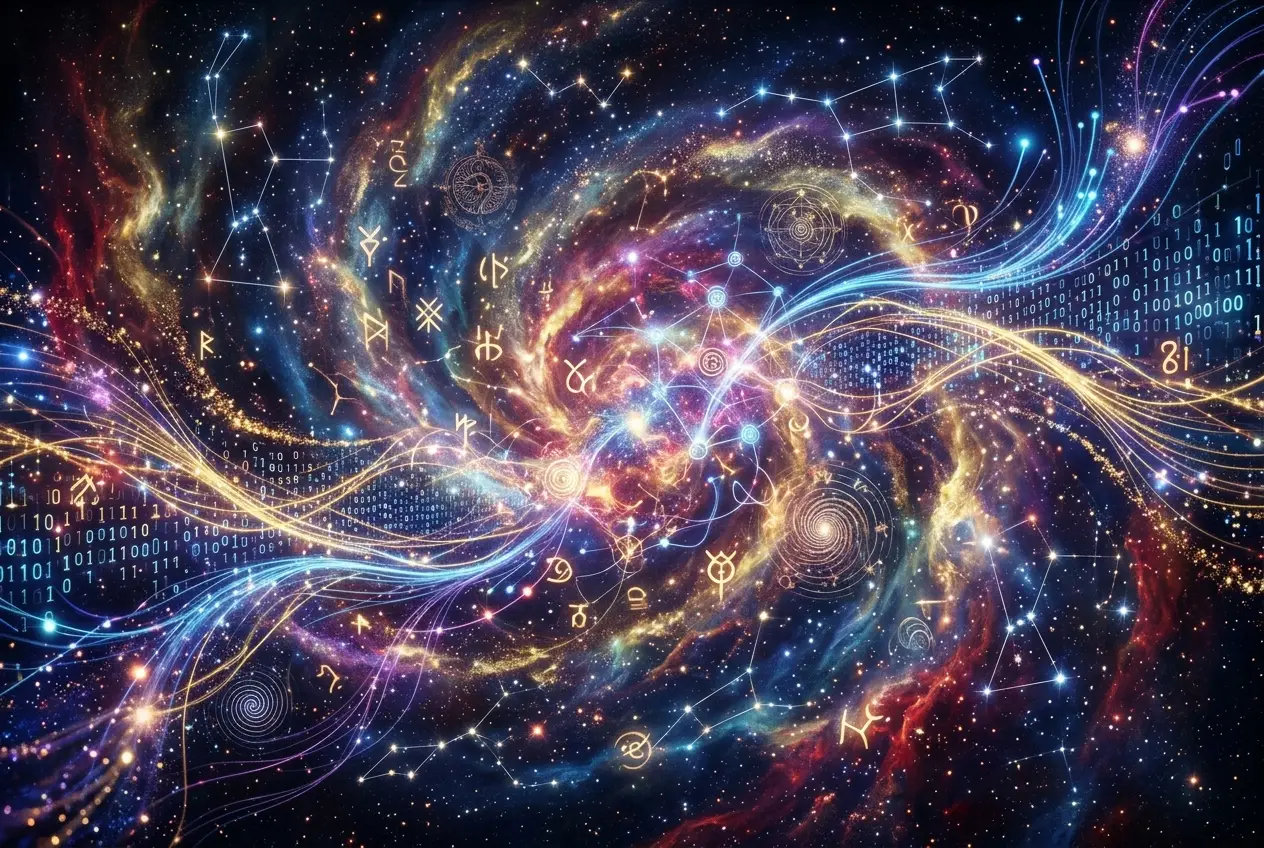
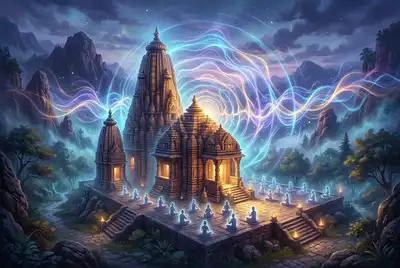
I’ll never forget the first time I truly questioned a story I thought I knew. It was a lazy afternoon, and I was reading a collection of Norse myths – tales of gods, giants, and cosmic trees. As a kid, I devoured them as pure fantasy. But that day, something clicked. The detailed descriptions of cosmic cycles, the movements of celestial bodies, and the very structure of their world tree, Yggdrasil, felt… too precise for mere storytelling. It made me wonder: **could these ancient narratives be more than just folklore?** Could they be sophisticated data packets, disguised as fantastical adventures, passed down through generations?
This isn't a new thought, but it's one that continues to intrigue researchers across various fields. The idea that pre-scientific civilizations, lacking telescopes or quantum physics, might have embedded complex astronomical, geological, or even cosmological information within their myths and legends is a captivating notion. It challenges our assumptions about how knowledge was created, preserved, and transmitted in antiquity.
### The Curious Case of Cosmic Storytelling
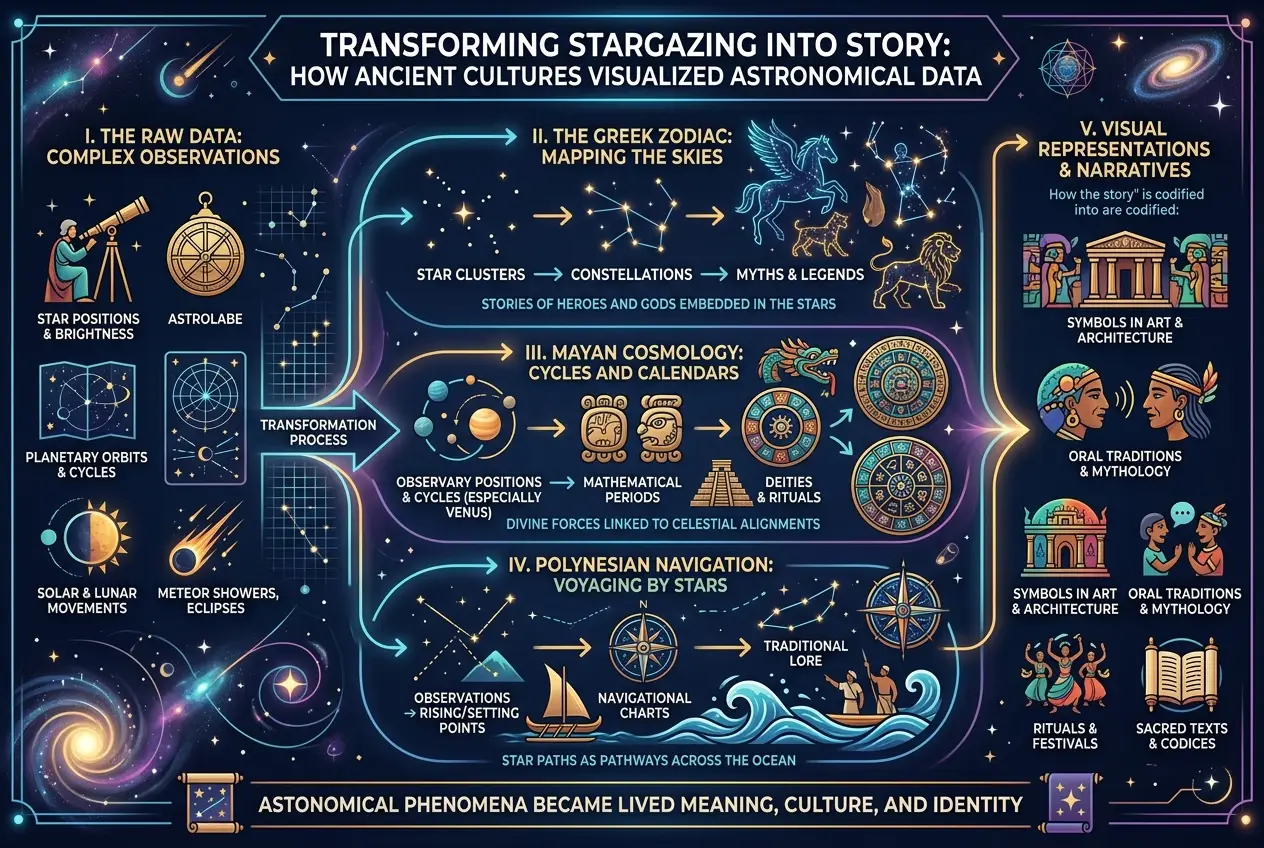
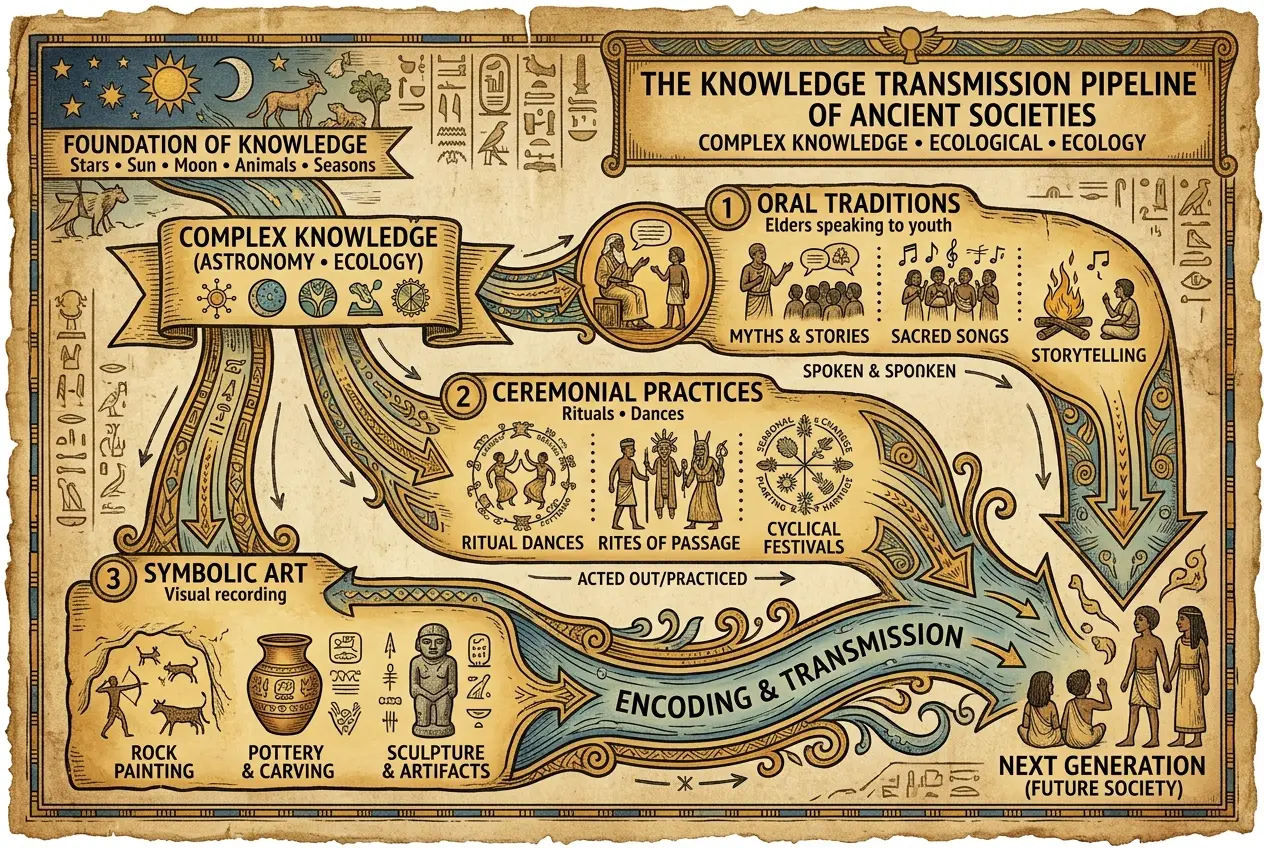
For millennia, before the advent of written language, and even long after, oral traditions were the primary means of knowledge transfer. Stories, songs, and rituals were not just entertainment; they were encyclopedias, textbooks, and scientific journals rolled into one. If you wanted to remember intricate details about star movements, seasonal changes, or even complex ethical codes, wrapping them in an engaging, memorable narrative was a brilliant strategy.
But how much advanced data could truly survive this process? Think about playing a game of "telephone" – information gets distorted. Yet, some myths exhibit an uncanny accuracy, suggesting a deliberate and sophisticated encoding process.
### When Folklore Meets Astronomy: Specific Examples
The evidence for embedded cosmic data isn't universal, nor is it always easy to decipher. Yet, several compelling cases suggest a deeper layer of meaning:
**1. The Dogon and Sirius B: An Unseen Companion**
One of the most famous and debated examples comes from the **Dogon people of Mali, West Africa**. For centuries, their cosmology has revolved around Sirius, the brightest star in our night sky. What’s truly remarkable is their detailed knowledge of Sirius B, a white dwarf star that is invisible to the naked eye and requires powerful telescopes to observe. The Dogon describe a tiny, incredibly dense companion star, "Po Tolo," which they say is made of a metal heavier than iron and orbits Sirius every 50 years. This description aligns astonishingly with modern astronomical facts about Sirius B, which was only "discovered" by Western science in 1862 and confirmed as a white dwarf in 1915.
How could the Dogon possess such precise information? Scholars like Marcel Griaule documented their knowledge in the 1930s, long before widespread cultural exchange could explain it. Critics suggest potential contamination from later interactions, but the consistency and depth of their traditions remain perplexing. It begs the question: **were these cosmic facts encoded within their myths, perhaps observed by an earlier, forgotten technology, or passed down through an unknown lineage of observers?** For more on their complex system, I often refer to the comprehensive article on [Dogon cosmology and astronomical knowledge on Wikipedia](https://en.wikipedia.org/wiki/Dogon_cosmology).
**2. Aboriginal Australian Sky Stories: Living Star Maps**
Across vast stretches of Australia, Aboriginal cultures hold some of the world’s oldest continuous astronomical traditions. Their "Dreamtime" stories are not mere allegories; they are often **highly accurate celestial charts**. They describe the movements of stars, planets, and even phenomena like eclipses, linking them to landforms, seasons, and social laws. For instance, the Yolngu people of Arnhem Land have oral traditions that describe tidal cycles directly influenced by the moon, along with observations of lunar eclipses.
I find it particularly striking how certain constellations, like the "Emu in the Sky" (formed by the dark lanes of the Milky Way, not just bright stars), are central to their narratives and ceremonial calendars. These dark constellations, as opposed to the bright ones, require a deep, nuanced understanding of the night sky that goes beyond casual observation. The longevity and accuracy of these oral traditions suggest a sophisticated system of astronomical knowledge, meticulously preserved. You can delve deeper into this fascinating topic through articles like [Aboriginal astronomy on Wikipedia](https://en.wikipedia.org/wiki/Aboriginal_astronomy).
**3. Mesoamerican Calendars: Precision Beyond Perception**
The Maya, Aztec, and other Mesoamerican civilizations developed incredibly complex and accurate calendar systems. Their Long Count Calendar, for example, could track time over millions of years with an astonishing degree of precision, requiring sophisticated mathematical and astronomical understanding. Their myths and religious texts often intertwine with these calendars, describing cycles of creation, destruction, and the movements of deities that mirror planetary alignments and celestial events.
While we often focus on their physical observatories, the narrative elements within their codices and oral traditions are equally important. They describe Venus's heliacal rise and set, its synodic period, and even complex lunar cycles, all embedded within stories of gods like Kukulkan. This wasn't just practical timekeeping; it was a deeply ingrained cosmic understanding, passed down through generations, often expressed in a symbolic language. The intricate relationship between their mythology and their scientific achievements is a testament to how ancient cultures integrated knowledge. If you're curious about how ancient cultures might have tracked complex celestial phenomena, you might enjoy our blog post on [/blogs/did-ancient-star-maps-predict-cosmic-events-9973](blogs/did-ancient-star-maps-predict-cosmic-events-9973).
### The Mechanics of Encoding: Why Stories?
Why would ancient peoples "hide" scientific data in myths? There are several compelling reasons:
* **Memorability:** Stories are inherently easier to remember and transmit accurately across generations than dry facts or numerical data, especially in non-literate societies.
* **Cultural Context:** Embedding knowledge within a cultural framework – connecting it to deities, heroes, and moral lessons – ensures its importance and relevance to the community.
* **Protection of Knowledge:** Complex or sacred knowledge might have been intentionally encoded to be understood only by initiates or those with the proper interpretive keys, thus protecting it from misuse or misinterpretation by the uninitiated.
* **Holistic Understanding:** Ancient cultures often didn't separate science, religion, and philosophy as distinctly as we do today. Their myths offered a holistic worldview that encompassed all aspects of existence.
### Decoding the Narrative Layers
Deciphering the scientific data within ancient myths requires a multidisciplinary approach, blending anthropology, archaeology, linguistics, and astronomy. It's not about taking every fantastical element literally, but rather looking for consistent patterns, precise measurements (even if expressed symbolically), and correlations with observable phenomena.
I often think about the work of archaeoastronomers who analyze ancient structures for their celestial alignments, which reveals a profound observational science. Could myths be the oral equivalent of these megalithic observatories? If you've ever wondered about the sophisticated celestial observations of ancient peoples, you might find our article fascinating: [/blogs/were-ancient-observatories-also-cosmic-clocks-8259](blogs/were-ancient-observatories-also-cosmic-clocks-8259). Similarly, the very patterns in how myths are structured might hold clues, akin to the idea discussed in [/blogs/do-sacred-geometry-patterns-encode-cosmic-constants-8466](blogs/do-sacred-geometry-patterns-encode-cosmic-constants-8466).
One interesting theory is that certain "impossible" elements in myths, like flying chariots or talking animals, might serve as mnemonic devices, exaggerated elements designed to make a core piece of information stick in the listener's mind. The challenge for us is to peel back these narrative layers and uncover the kernels of scientific truth.
### The Ongoing Quest
The study of encoded cosmic data in ancient myths is a field brimming with both tantalizing possibilities and significant challenges. We must be careful not to project our modern scientific understanding onto ancient peoples without solid evidence. Confirmation bias is a constant threat. However, to dismiss all such claims as mere coincidence or romantic fantasy would be to potentially ignore a vast reservoir of human ingenuity and knowledge.
The more we learn about ancient civilizations, the more we realize the depth of their observational skills and intellectual capabilities. From the precise mapping of invisible skies (a concept we explored in [/blogs/did-ancient-cultures-map-invisible-skies-7497](blogs/did-ancient-cultures-map-invisible-skies-7497)) to the complex understanding of natural cycles, our ancestors were far from primitive.
I believe the true value in exploring this question lies not just in confirming past knowledge, but in understanding the diverse ways humanity has sought to comprehend and transmit its place in the cosmos. Perhaps by listening more closely to the whispers of ancient stories, we can uncover not just forgotten facts, but also forgotten ways of thinking about our universe. The cosmic computer, in this sense, might not have been a machine, but the collective mind of humanity, painstakingly coding its observations into the fabric of its shared identity.
Frequently Asked Questions
The key distinction lies in the verifiable accuracy and consistency of specific details within the narrative that align with advanced scientific or astronomical facts, even if presented symbolically or fantastically. Regular folklore, while culturally rich, often lacks this precise, verifiable core of information.
Verification involves cross-referencing mythological details with known astronomical data (star charts, planetary movements), archaeological evidence (observatories, artifacts), linguistic analysis for specific terms, and anthropological studies of oral traditions. It requires a multidisciplinary approach and careful avoidance of confirmation bias.
While coincidence and misinterpretation are always possibilities, particularly striking examples like the Dogon’s knowledge of Sirius B, or the precision of certain Aboriginal astronomical traditions, suggest a deliberate encoding. Researchers apply rigorous methodologies to minimize misinterpretation, looking for consistent patterns over isolated instances.
Yes, beyond astronomy, some theories suggest myths might encode geological events (like tsunamis or volcanic eruptions), ecological knowledge (migration patterns, plant properties), or even early understandings of physics or biology, often expressed through allegories or the actions of gods and heroes. Examples are often harder to definitively prove than astronomical ones.
This is a complex question. Knowledge transmission might have been exclusive to certain groups, susceptible to societal collapse, or simply not prioritized for technological application in the same way modern societies do. The goal might have been understanding and harmony with the cosmos, rather than exploitation through technology. The form of storage (oral tradition) also makes it vulnerable to loss.
Verified Expert
Alex Rivers
A professional researcher since age twelve, I delve into mysteries and ignite curiosity by presenting an array of compelling possibilities. I will heighten your curiosity, but by the end, you will possess profound knowledge.
Leave a Reply
Comments (0)
No approved comments yet. Be the first to share your thoughts!
 Join Us
 Unknown Author















Leave a Reply
Comments (0)