


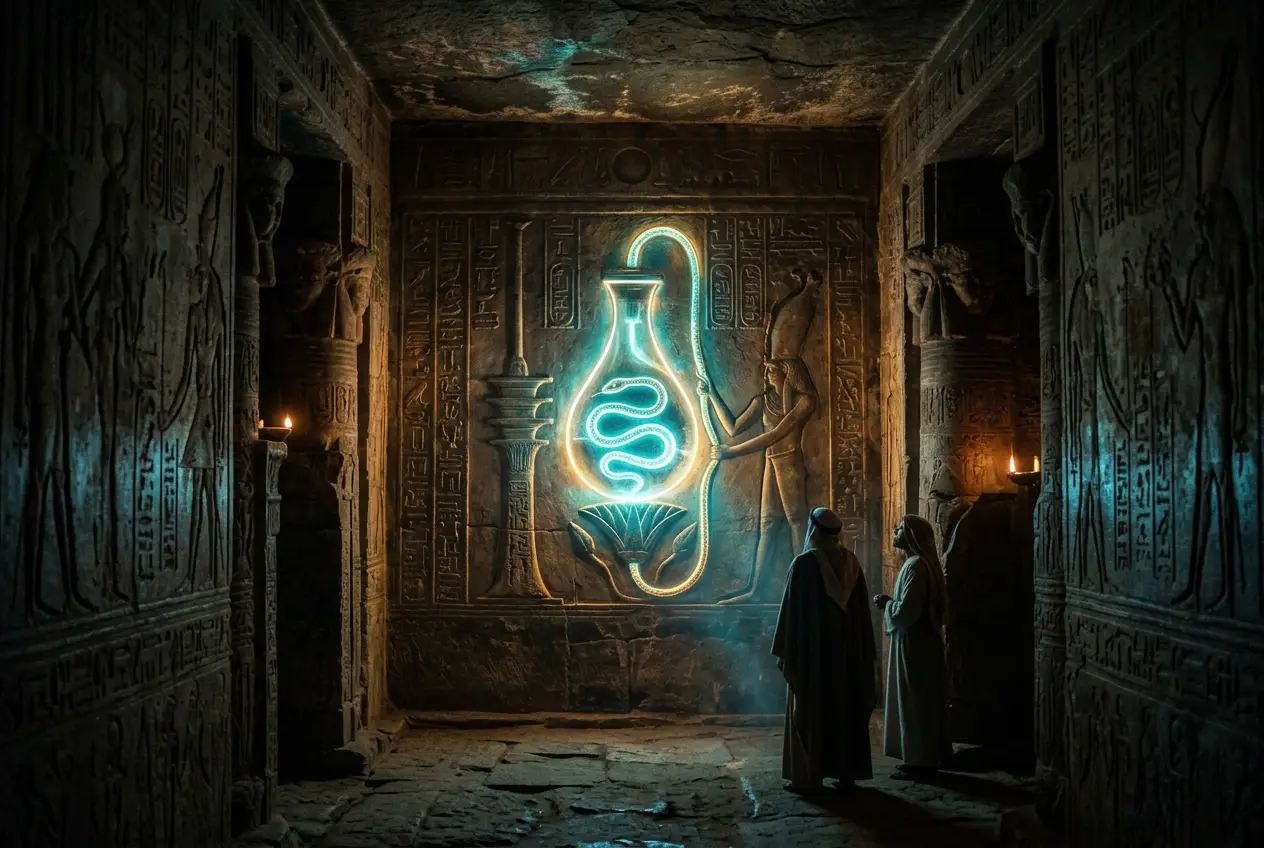
I remember the first time I saw images of the Dendera Light. It wasn't in a dry history book, but in a documentary that dared to ask bold questions about ancient civilizations. My initial reaction was a mix of fascination and skepticism. Here was a relief, etched into stone over two millennia ago, depicting something strikingly similar to a modern light bulb, complete with a filament-like serpent, a cable, and what looked like an insulator. Could it be? Could the ancient Egyptians, known for their pyramids and hieroglyphs, have possessed a forgotten understanding of electricity?
This question, I've found, is one that sparks endless debate among historians, archaeologists, and enthusiasts alike. It’s a classic "tech mystery" that perfectly blends history, science, and the allure of untold knowledge. Today, I want to dive deep into the enigmatic "Dendera Light" and explore both the conventional and the more adventurous interpretations of this unique ancient anomaly.
The Enigmatic Relief: A Glimpse into Ancient Ingenuity?
The so-called "Dendera Light" is a series of reliefs found in the Hathor Temple at Dendera, specifically in a crypt below the main temple structure. The Dendera Temple, one of the best-preserved temple complexes in Egypt, is renowned for its elaborate astronomical ceilings and intricate carvings. But it’s in the dark, cramped crypts that this particular mystery hides, far from the daylight.
The most famous depiction shows what appears to be a large, bulb-like object, often described as an "Egyptian light bulb." Inside this 'bulb,' a serpent undulates, extending from a lotus flower. A long cable seems to connect the bulb to a box-like apparatus, interpreted by some as a power source. Supporting the bulb is a Djed pillar, an ancient Egyptian symbol of stability often associated with Osiris. What makes this scene even more compelling for proponents of the "ancient tech" theory is the presence of human figures, seemingly performing tasks around this apparatus.
For centuries, these reliefs were simply considered symbolic, part of the rich tapestry of Egyptian mythology and cosmology. But as technology advanced, particularly with the advent of electric lighting and plasma physics in the 19th and 20th centuries, some began to see something more in these ancient carvings.
The "Ancient Electricity" Hypothesis
The core of the "ancient electricity" theory rests on several fascinating points:
- Visual Resemblance: The bulb shape, the internal "filament" (serpent), and the "cable" bear a striking resemblance to early electric lighting devices, such as the Crookes tube or Geissler tube, which predate modern incandescent bulbs. These tubes produce light through a discharge of gas, creating a plasma effect. You can read more about Crookes tubes on Wikipedia (opens in a new tab).
- The Djed Pillar as an Insulator: The Djed pillar, usually a symbol of stability and the backbone of Osiris, is interpreted by some as a high-voltage insulator, akin to a stack of ceramic discs used in modern electrical engineering. It's positioned directly beneath the "bulb."
- Lack of Soot in Tombs: A common argument is the absence of soot marks in many elaborate Egyptian tombs and underground passages, which would be expected if torches or oil lamps were the primary light source for artists and builders working in dark, confined spaces. This, they argue, suggests a smokeless, clean light source, such as electricity.
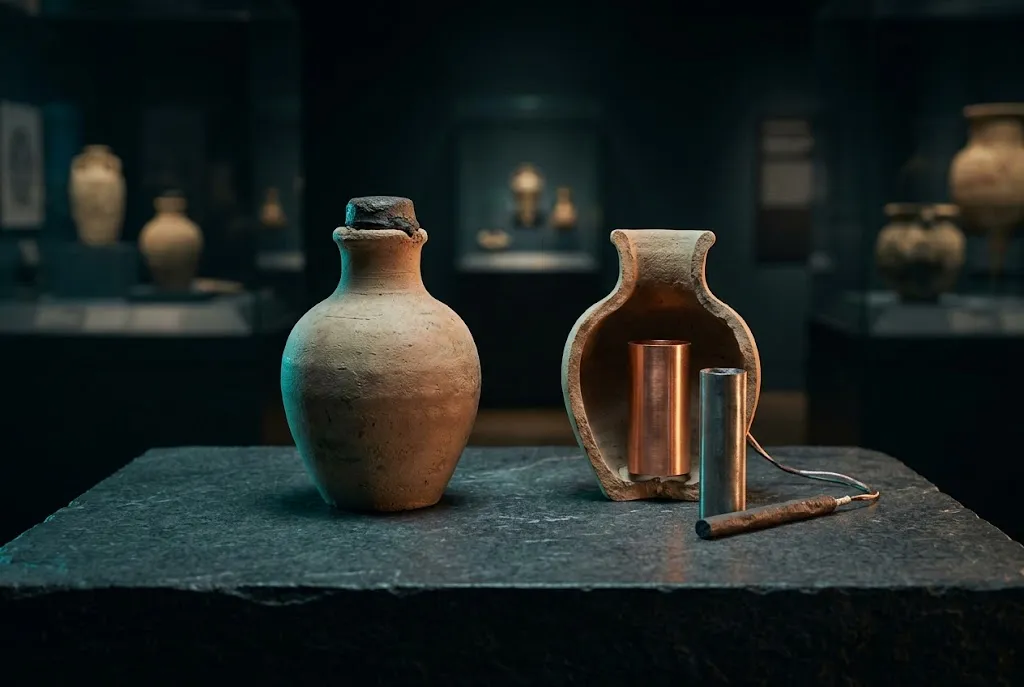
- The Baghdad Battery Connection: While not directly linked to Dendera, the discovery of the Baghdad Battery (which I explored in a previous post, The Baghdad Battery: Did Ancient Iraqis Power a Lost Civilization?) demonstrates that ancient civilizations were capable of rudimentary electrochemistry. This lends credibility to the idea that other forms of electrical understanding might have existed.
Those who advocate for this theory suggest that the Egyptians might have harnessed some form of static electricity, piezoelectricity, or even developed a primitive form of arc or plasma lamp. The reliefs, in this view, serve as a kind of schematic or record of this lost technology.
The Conventional View: Symbolism and Mythology
While the "ancient electricity" theory is certainly captivating, mainstream Egyptology offers a very different, and widely accepted, interpretation. For most scholars, the Dendera Light reliefs are purely symbolic, deeply rooted in Egyptian religious beliefs and creation myths.
Decoding the Symbols:
- The Lotus Flower: In ancient Egypt, the lotus flower was a powerful symbol of creation, rebirth, and the sun. It often depicted the sun god emerging from the primeval waters.
- The Serpent: Serpents frequently represented divinity, fertility, and the life-giving force of the Nile. They were also associated with the sun god Ra and the cycle of death and rebirth.
- The Djed Pillar: As mentioned, the Djed pillar symbolized stability and endurance. In the context of creation myths, it could represent the backbone of Osiris, rising from the primordial chaos to bring order. You can learn more about its significance on Wikipedia (opens in a new tab).
- The "Bulb" and "Cable": The entire scene is seen as a representation of the heavens and the sun god’s daily rebirth, emerging from the cosmic lotus. The "bulb" could be the cosmic egg or the womb of the sky goddess Nut, from which the sun (the serpent) is born. The "cable" could be the umbilical cord, or simply a stylized depiction of the life-giving flow of energy.
From this perspective, the relief is a complex mythological narrative rather than a technical diagram. Egyptologists point to the fact that similar symbolic representations are found throughout Egyptian art and literature, and there is no accompanying archaeological evidence—no wires, no power generators, no remnants of glass tubes—to support the electrical interpretation. The detailed study of the Dendera Temple complex (opens in a new tab) by Egyptologists provides extensive context for these symbolic interpretations.
The Allure of Lost Technology
Why does the "ancient electricity" theory, despite its lack of concrete archaeological proof, continue to resonate with so many? I believe it taps into a fundamental human curiosity: the idea that our ancestors were far more advanced than we give them credit for, and that we might have lost vital knowledge over time. It's a narrative that fuels wonder and challenges conventional timelines of technological progress.
The absence of soot is a compelling point, and while mainstream explanations suggest the use of well-ventilated oil lamps or even simple mirrors to reflect sunlight (a technique possibly used, as seen in my exploration of Ancient Lenses: Did Ancients Reveal Hidden Worlds?), the idea of a lost, smokeless light source remains intriguing.
However, I find it crucial to approach such claims with a balanced perspective. While it's exciting to imagine ancient Egyptians wiring up plasma lamps, the burden of proof lies with archaeological evidence. Until such evidence emerges, the symbolic interpretation, backed by centuries of Egyptological research, remains the most scientifically grounded.
Could the Egyptians have had some understanding of natural phenomena related to electricity, perhaps static electricity or even biological electricity (like from electric fish)? It's not impossible, but interpreting the Dendera relief as a direct depiction of a functioning electrical device goes a step further than current evidence allows. Perhaps they observed natural phenomena and incorporated them into their mythology, leading to depictions that happen to resemble modern tech.
Conclusion: A Mystery That Continues to Spark Debate
The Dendera Light remains one of ancient Egypt's most enduring and fascinating mysteries. Whether it's a profound mythological allegory or a tantalizing hint at a lost electrical technology, its power to provoke thought and discussion is undeniable. As an admirer of both science and history, I believe these discussions are vital. They push us to reconsider our assumptions about the past, to look closer at the details, and to keep an open mind while still demanding rigorous evidence.
Ultimately, the "Dendera Light" reminds us that history is not a static collection of facts, but a dynamic field where new interpretations and discoveries can constantly reshape our understanding of humanity's incredible journey. Perhaps one day, a discovery will definitively tip the scales, but until then, the mystery continues to glow.



Conversation0
No comments yet. Be the first to share a thought — the best questions often become new stories.