I often find myself musing about the intricate dance between the cosmos and our planet. We build these incredible digital empires, extending our reach with satellites and global networks, believing we’ve conquered the elements. But what if the greatest threat to our hyper-connected world isn't a cyberattack or a rogue asteroid, but an invisible storm brewing 93 million miles away? Recently, I’ve been delving into the chilling potential of solar storms to ignite a cascading digital chaos, and the implications are far more profound than most realize. It makes me wonder just how fragile our modern existence truly is.
Imagine a world where your smartphone is a brick, the internet is down globally, GPS signals vanish, and power grids flicker into silence. This isn't a scene from a dystopian movie; it's a very real scenario that could be triggered by extreme space weather – a massive solar storm. While often dismissed as niche scientific phenomena, these colossal eruptions from our Sun have the power to unravel the very fabric of our technologically dependent society.
### What are Solar Storms, Anyway?
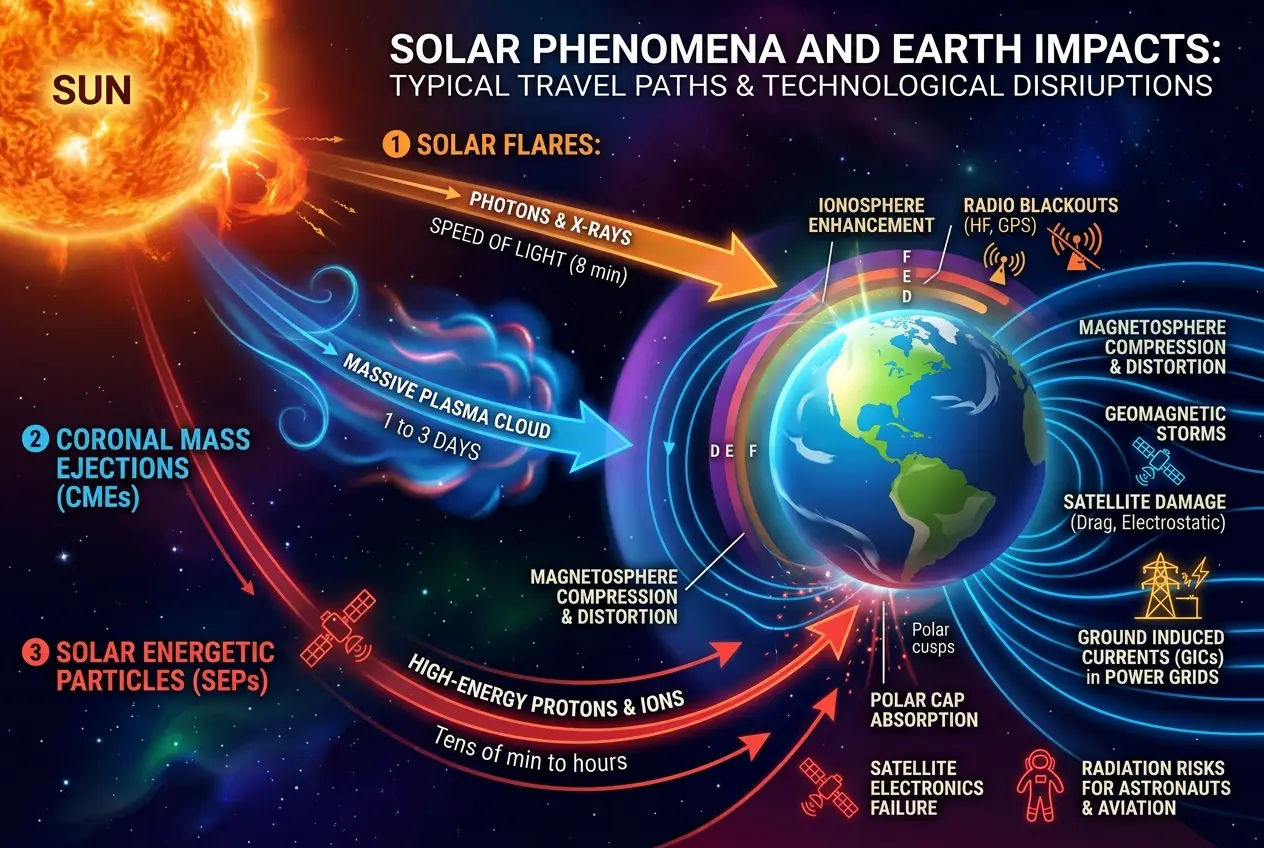
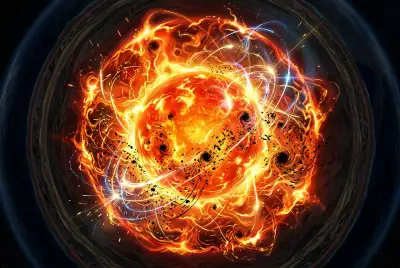
Before we dive into the potential havoc, let’s demystify these celestial events. Solar storms are essentially violent outbursts from the Sun's atmosphere, driven by its intense magnetic activity. There are three main types, often occurring in conjunction:
1. **Solar Flares:** These are intense bursts of radiation (X-rays, UV light) from the Sun's surface. They travel at the speed of light, reaching Earth in about eight minutes. While they don't directly impact ground-based infrastructure, they can ionize Earth's upper atmosphere, causing **radio blackouts** and disrupting high-frequency radio communications and GPS signals. I’ve read about how critical these short-wave communications are for aviation and emergency services, and a sudden blackout could have immediate, dangerous consequences. You can learn more about solar flares on [Wikipedia's Solar Flare page](https://en.wikipedia.org/wiki/Solar_flare).
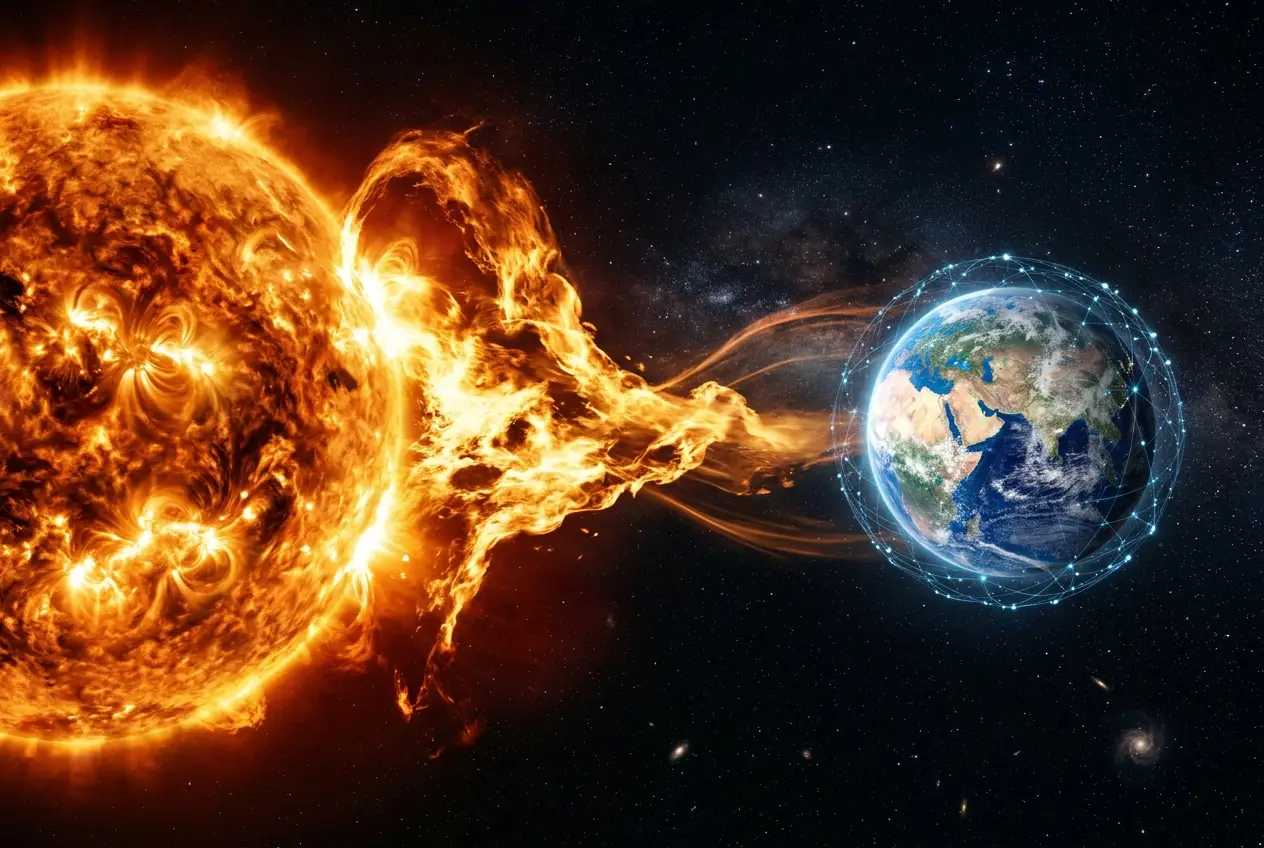
2. **Coronal Mass Ejections (CMEs):** These are gigantic bubbles of plasma (superheated gas and magnetic fields) expelled from the Sun. Unlike flares, CMEs are slower, taking anywhere from 1-3 days to reach Earth. When a powerful CME slams into Earth's magnetic field, it causes a **geomagnetic storm**. This is where the real potential for "digital chaos" lies. For a deeper understanding of these events, check out [Wikipedia's Coronal Mass Ejection page](https://en.wikipedia.org/wiki/Coronal_mass_ejection).
3. **Solar Energetic Particles (SEPs):** These are high-energy protons and electrons accelerated by flares or CMEs. They can reach Earth relatively quickly and pose a radiation hazard to astronauts and spacecraft.
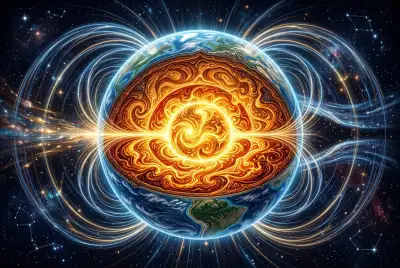
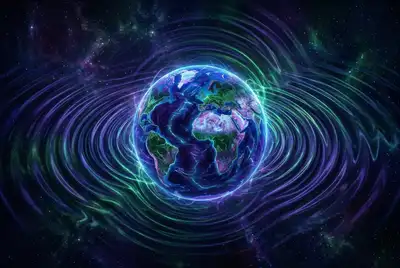
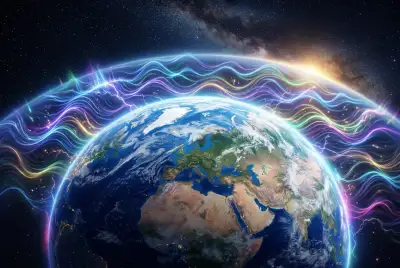
It’s the geomagnetic storms, born from powerful CMEs, that concern scientists and infrastructure managers the most. Our planet’s magnetic field, while a fantastic shield, isn't impenetrable. When it gets pummeled by a CME, it flexes and deforms, generating electrical currents within Earth itself – and that’s where the trouble begins for our intricate networks.
### The Looming Threat to Our Interconnected World
Our modern civilization is built on a delicate foundation of electricity and digital communication. A severe geomagnetic storm could shake this foundation to its core.
#### Power Grids: The Achilles' Heel
The most significant and immediate threat is to our electrical power grids. When a geomagnetic storm occurs, the rapidly changing magnetic fields induce electrical currents – known as **Geomagnetically Induced Currents (GICs)** – in long conductors like power lines. These GICs can flow through transformers, which are crucial components in transmitting electricity.
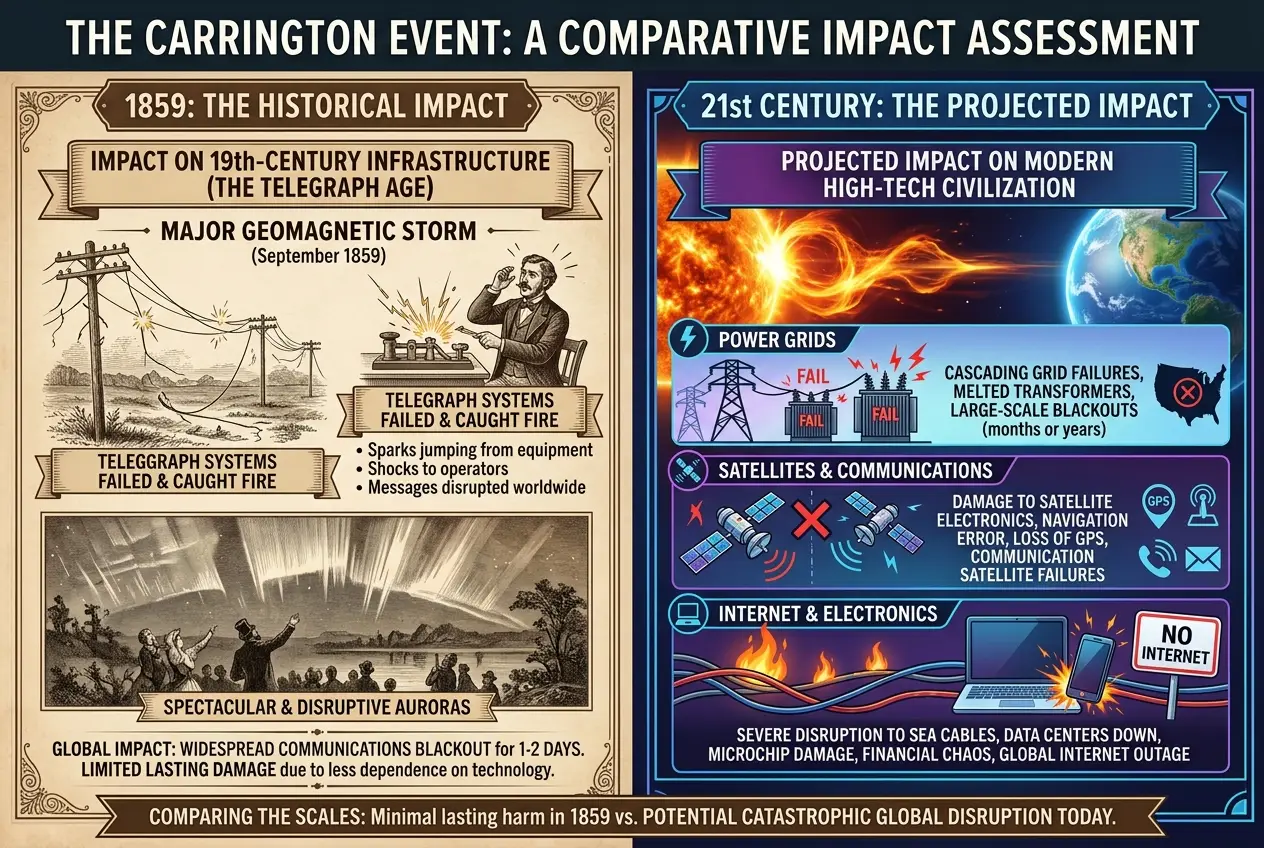
"The greatest known natural threat to the world’s electrical power grid is a severe geomagnetic storm," warns a report by the National Research Council. If these induced currents overwhelm the transformers, they can cause them to overheat, trip safety systems, or even melt, leading to widespread power outages. Recovering from such an event is not like simply flipping a switch; replacing large transformers can take months or even years, plunging vast regions into darkness for extended periods.
I often think about how deeply we rely on electricity for everything from heating and cooling to banking and food supply. The thought of a prolonged, large-scale blackout makes me realize just how vulnerable our comfortable lives are. You can delve into the science behind these currents on [Wikipedia's Geomagnetically Induced Current page](https://en.wikipedia.org/wiki/Geomagnetically_induced_current).
#### Satellites: The Eyes and Ears of Our World
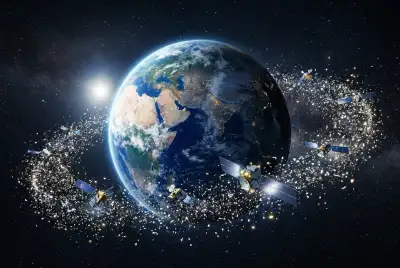
Our orbit around Earth is a busy place, filled with thousands of satellites that power GPS, weather forecasting, telecommunications, and even the internet itself. Solar storms pose multiple threats to these critical assets:
* **Radiation Damage:** High-energy particles can bombard satellite electronics, causing "single event upsets" (temporary glitches) or even permanent damage.
* **Atmospheric Drag:** Solar heating expands Earth's upper atmosphere, increasing drag on low-orbiting satellites and potentially pulling them out of orbit.
* **Communication Disruptions:** The ionized atmosphere can scramble satellite signals, leading to GPS inaccuracies or complete communication blackouts.
It's unsettling to think that the very tools we use to navigate and communicate could be rendered useless by an invisible force from space. In fact, our networks are always susceptible to cosmic influences, as explored in the article, [Do Cosmic Rays Secretly Glitch Our Tech?](https://www.curiositydiaries.com/blogs/do-cosmic-rays-secretly-glitch-our-tech-3330).
#### Internet and Communication Networks
While the internet mostly runs on fiber optic cables immune to GICs, the crucial components are the **repeaters** and **amplifiers** that boost signals along long-distance submarine cables. These components require power, making them vulnerable to power grid failures during a severe solar storm. A widespread grid collapse could mean the internet itself goes dark, severing global communication and commerce. Beyond this, terrestrial radio and microwave links, which rely on the ionosphere, would also suffer significant disruption.
#### Aviation and Navigation
Pilots rely heavily on GPS for navigation and high-frequency radio for communication, especially on transatlantic routes. A strong solar storm could cause navigation errors, communication loss, and increased radiation exposure for passengers and crew at high altitudes.
### Historical Whispers: The Carrington Event and Beyond
This isn't just theoretical speculation. History offers stark warnings.
#### The Carrington Event (1859)
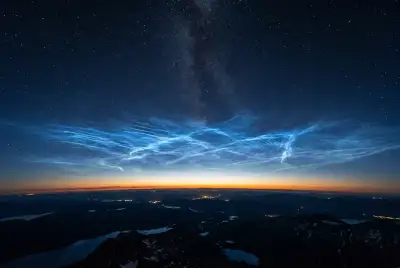
The most famous extreme solar storm is the **Carrington Event** of 1859. This superstorm was so powerful that telegraph systems around the world failed, sparking fires, and operators reported receiving electric shocks. Aurorae, usually confined to polar regions, were visible near the equator, so bright that some thought it was dawn and began their morning routines. At the time, our technological infrastructure was rudimentary. Can you imagine the scale of disruption if such an event occurred today? It's a sobering thought, and you can read more about it on [Wikipedia's Carrington Event page](https://en.wikipedia.org/wiki/Carrington_Event).
#### The Quebec Blackout (1989)
A more recent, though less severe, example is the **Quebec Blackout of 1989**. A moderate solar storm caused Hydro-Québec's power grid to collapse in just 90 seconds, leaving six million people without electricity for up to nine hours. It was a stark reminder of our modern vulnerability. This event is detailed on [Wikipedia's March 1989 Geomagnetic Storm page](https://en.wikipedia.org/wiki/March_1989_geomagnetic_storm).
### Preparing for the Unseen Storm
So, are we simply at the mercy of the Sun? Not entirely. Scientists and engineers are working to understand and mitigate these risks.
* **Space Weather Monitoring:** Agencies like NASA, NOAA, and ESA constantly monitor the Sun for signs of solar activity, providing early warnings (often 1-3 days in advance for CMEs). This allows power companies to take protective measures like temporarily shutting down parts of the grid.
* **Grid Hardening:** Efforts are underway to make power grids more resilient, including installing devices that block GICs and improving transformer designs.
* **Satellite Protection:** Satellites are built with radiation-hardened components, and operators can put them into "safe mode" during severe events.
* **International Cooperation:** Since space weather impacts us globally, international collaboration is crucial for monitoring, research, and developing coordinated responses.
It's a complex challenge because predicting the exact timing and intensity of a solar storm, and its precise impact on Earth, is incredibly difficult. The very magnetic field that shields us is also the medium through which the storm's energy can wreak havoc. This dance between Earth's magnetic field and cosmic phenomena is a field of ongoing study, and its deeper effects on life, as discussed in [Does Earth's Magnetic Field Affect Our Minds?](https://www.curiositydiaries.com/blogs/does-earths-magnetic-field-affect-our-minds-6923), highlight how much more there is to learn about our planet's interaction with space.
### Conclusion: A Reminder of Our Place in the Cosmos
The potential for solar storms to ignite digital chaos serves as a powerful reminder of our planet's humble place in the cosmos. While we innovate at breakneck speed, creating increasingly complex and interconnected technologies, we remain inherently tied to the rhythms and furies of our nearest star. The Sun, our life-giver, also holds the power to plunge us into a new dark age of technological silence.
I find it both humbling and inspiring to consider these cosmic forces. It urges us not only to build better defenses but also to cultivate a deeper respect for the natural phenomena that shape our existence. Understanding and preparing for these "unseen storms" isn't just a matter of scientific curiosity; it's a critical component of ensuring the resilience and longevity of our modern civilization. Just like with other mysterious phenomena that baffle scientists globally, as discussed in [Why Does the Hum Baffle Scientists Globally?](https://www.curiositydiaries.com/blogs/why-does-the-hum-baffle-scientists-globally-2236), space weather compels us to keep probing the unknown. The next great solar storm is not a question of if, but when. Are we ready for it?
Frequently Asked Questions
While minor solar events are common, extreme solar storms capable of causing significant widespread damage to modern infrastructure are relatively rare, occurring perhaps once or twice a century. However, less severe but still disruptive events happen more often, such as the one that caused the Quebec blackout in 1989.
In a worst-case scenario, the complete failure and replacement of large, specialized transformers in a power grid could take several months to over a year. This duration would depend on the extent of the damage, the availability of spare parts, and the logistical challenges of deploying new equipment.
On Earth's surface, the atmosphere and magnetic field largely protect humans from harmful radiation during solar storms. However, astronauts in space or passengers and crew on high-altitude flights may experience increased radiation exposure. There's no conclusive evidence of direct health impacts on people at ground level.
For most consumer electronics, direct damage from a solar storm at ground level is highly unlikely. The main risk comes from widespread power outages, which would render devices unusable. Protective measures focus on infrastructure (grids, satellites) rather than individual gadgets.
The best preparation mirrors general emergency preparedness: have an emergency kit with non-perishable food and water, flashlights, batteries, a hand-crank radio, and a way to charge essential devices without grid power. Ensure you have a family communication plan and know how to access information without internet or phone services.
Verified Expert
Alex Rivers
A professional researcher since age twelve, I delve into mysteries and ignite curiosity by presenting an array of compelling possibilities. I will heighten your curiosity, but by the end, you will possess profound knowledge.
Leave a Reply
Comments (0)
No approved comments yet. Be the first to share your thoughts!
 Join Us
 Unknown Author








Leave a Reply
Comments (0)