I often find myself contemplating the boundaries of what we define as "computation." For decades, our technological progress has been inextricably linked to silicon chips, the bedrock of the digital revolution. From the supercomputers crunching complex simulations to the smartphones in our pockets, it all boils down to electrons flowing through transistors. But what if the next leap in computing doesn't come from ever-smaller silicon pathways, but from something far older, far more intricate, and inherently alive? What if the future of computation lies not in inorganic semiconductors, but in **biological organisms** themselves?
This isn't a scene ripped from a science fiction novel; it's the burgeoning field of biocomputing, where scientists are exploring the astonishing possibility of using living systems – from DNA molecules to entire microbial colonies – to perform calculations, store data, and even solve problems that conventional computers struggle with. It’s a concept that promises to redefine our understanding of what a "computer" can be, moving us from the sterile logic gates of microchips to the dynamic, self-organizing complexity of life itself.
### The Unseen Power of Biological Processors
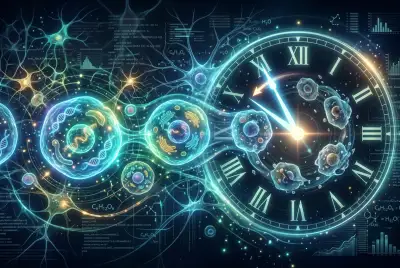
At its core, computation is about processing information. Our digital devices represent data as binary 0s and 1s. Biological systems, however, process information constantly through a dazzling array of molecular interactions, chemical reactions, and physical changes. Every living cell, in its own way, is a sophisticated information processing unit, interpreting genetic code, responding to environmental cues, and orchestrating complex metabolic pathways.
I find it fascinating to consider how nature has already perfected certain forms of "computing" over billions of years. Think about how a plant calculates the optimal angle to maximize sunlight absorption, or how a single-celled organism navigates a chemical gradient to find food. These aren't just simple reactions; they involve complex decision-making processes, memory (short-term and long-term), and adaptability – all hallmarks of advanced computation. The challenge for scientists is to harness these natural capabilities for human-defined computational tasks.
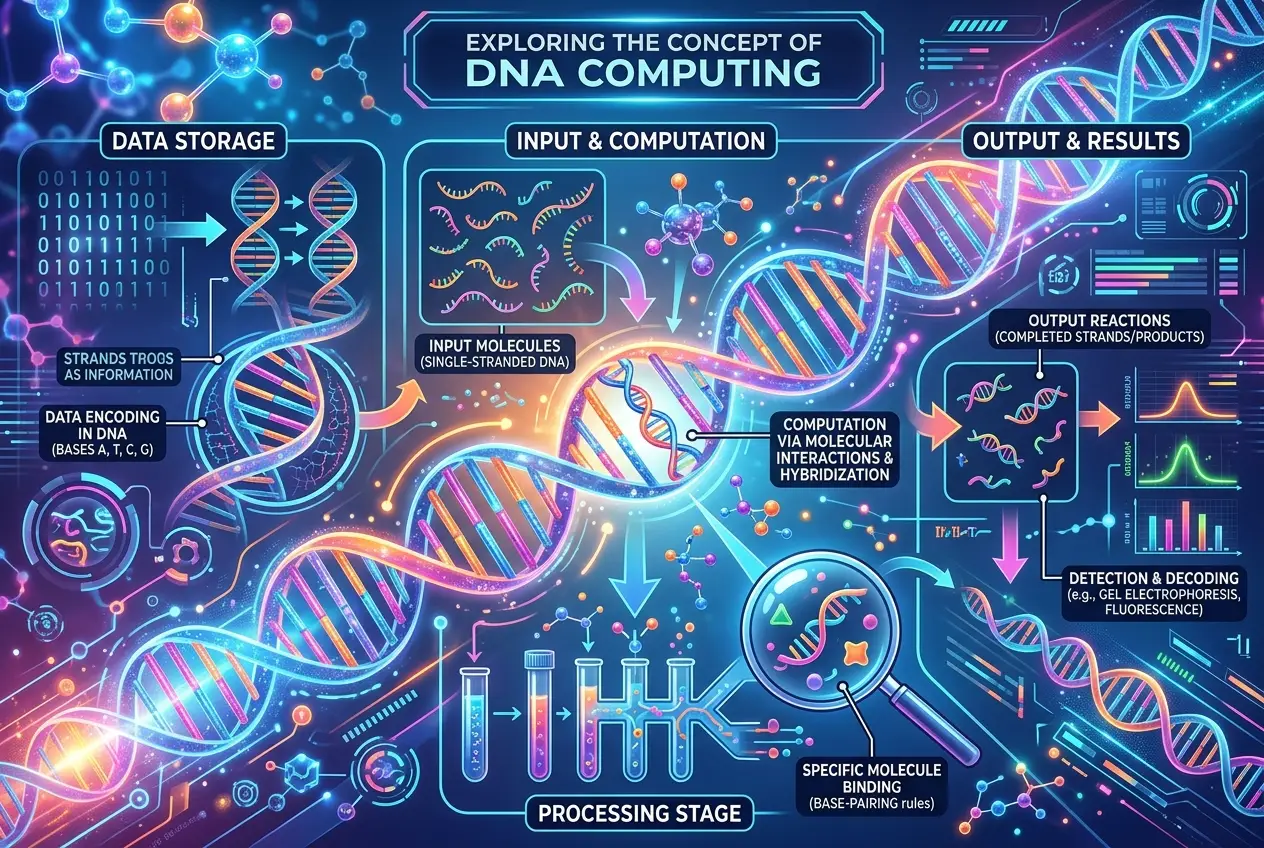
### DNA Computing: The Molecular Microprocessor
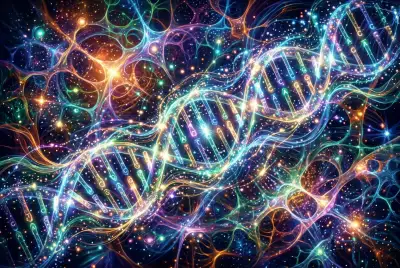
One of the most promising avenues in biocomputing is **DNA computing**. First proposed by Leonard Adleman in 1994, this approach uses DNA strands to encode information and molecular biology techniques to perform operations. The beauty of DNA is its inherent ability to store vast amounts of information in its base sequences (Adenine, Thymine, Guanine, Cytosine) and its natural "computing" properties like complementary base pairing and enzyme-driven reactions.
Imagine each base pair as a bit of information. A single gram of DNA can theoretically store more data than all the world's digital data combined. Furthermore, DNA computing excels at massively parallel processing. While a traditional computer processes tasks sequentially or in limited parallel, a DNA computer can perform billions of operations simultaneously, as countless DNA molecules react in solution.
Adleman famously used DNA to solve a small instance of the "Hamiltonian path problem," a notoriously difficult computational challenge. By designing specific DNA strands to represent cities and paths, and allowing them to self-assemble, he demonstrated that DNA could "find" the solution through biochemical reactions. The potential here is staggering for problems requiring brute-force search or complex optimization, areas where current silicon-based systems often hit computational bottlenecks. For more on the foundational work in DNA computing, you can refer to its entry on [Wikipedia](https://en.wikipedia.org/wiki/DNA_computing).
### Beyond DNA: Microbial Computers and Brain-Inspired Wetware
While DNA computing focuses on molecular interactions, other forms of biocomputing leverage entire living organisms or biologically inspired architectures.
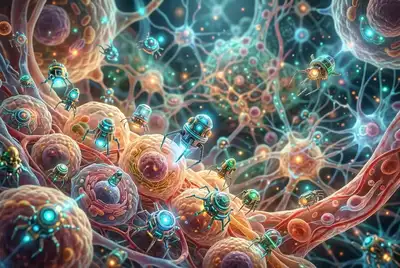
**Microbial Computers:** Researchers are engineering bacteria, yeast, and other microbes to act as tiny computational units. By manipulating genetic circuits within these cells, scientists can create biological logic gates (AND, OR, NOT) that respond to specific chemical inputs and produce detectable outputs. For instance, a colony of bacteria could be programmed to detect a combination of toxins in water and then glow green as an alarm signal. These "living sensors" are essentially performing complex environmental computation. The advantage is that these systems are self-replicating, energy-efficient, and can operate in environments where electronic circuits might fail.
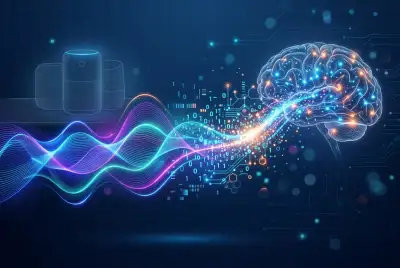
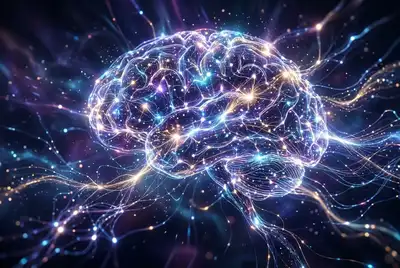
**Brain-Inspired Wetware:** This is perhaps the most audacious frontier. Our own brains are the ultimate biological computers, capable of unparalleled learning, creativity, and problem-solving with remarkable energy efficiency. Scientists are attempting to build "wetware" – computing systems that mimic the structure and function of biological neural networks, often using actual living neurons. Projects like Brain-on-a-Chip technologies aim to grow functional neural circuits in vitro, observing how they process information. While far from replicating a full brain, these efforts are yielding insights into how biological intelligence works and could lead to new forms of AI that learn and adapt in ways silicon models cannot. This intersects fascinatingly with discussions about consciousness in AI, as explored in articles like [Can AI Truly Feel? Decoding Digital Empathy](/blogs/can-ai-truly-feel-decoding-digital-empathy-8008).
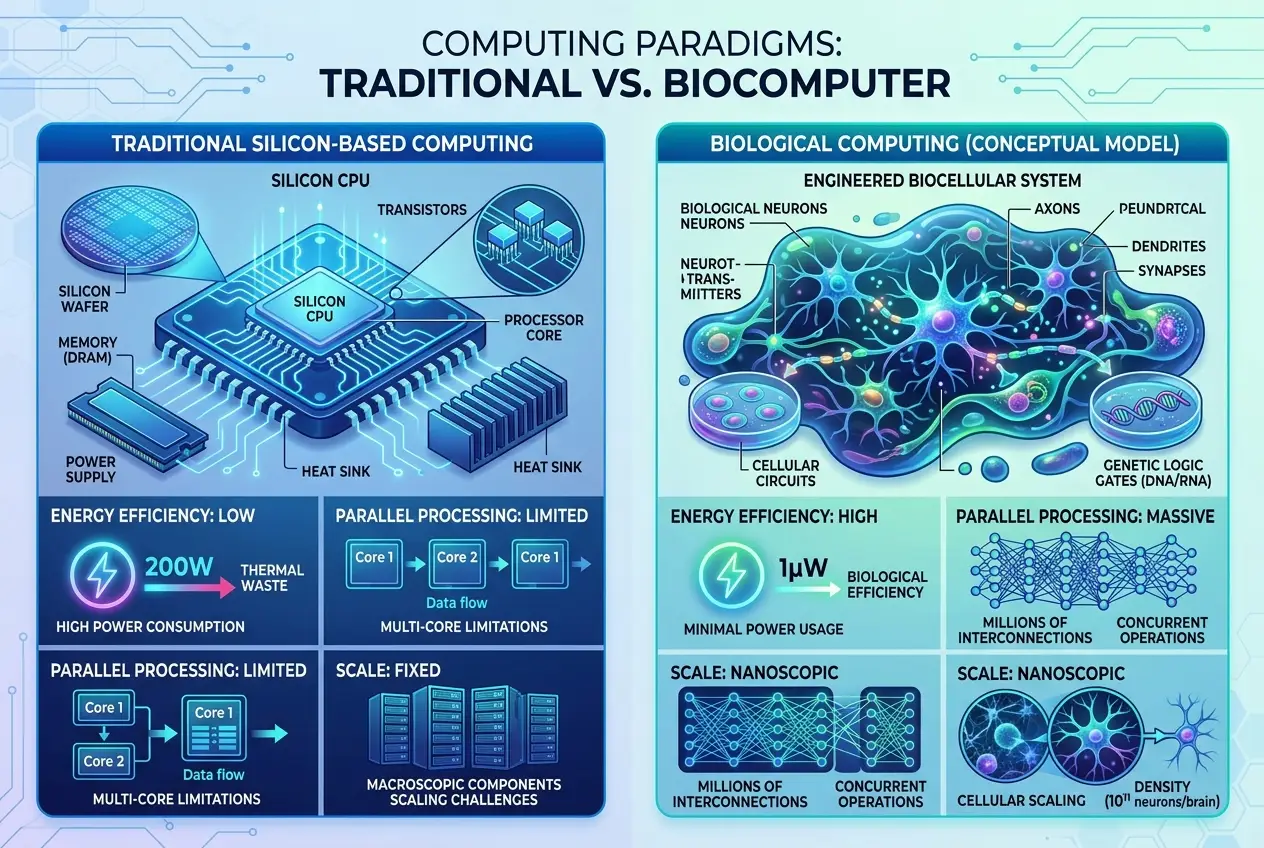
### The Promises and Perils of Biocomputing
The allure of biocomputing is multifaceted:
* **Massive Parallelism:** As seen with DNA, biological reactions can occur simultaneously across countless molecules, offering computational power orders of magnitude beyond conventional processors for certain problems.
* **Energy Efficiency:** Living systems operate at extremely low power compared to silicon chips, which generate considerable heat. Biocomputers could lead to dramatically more sustainable computation.
* **Miniaturization & Density:** Imagine computing power packed into a space the size of a single cell, operating within a living body for diagnostics or targeted drug delivery.
* **Adaptability & Self-Repair:** Living systems are inherently dynamic and can adapt to changing conditions, even self-repairing damage – qualities largely absent in current hardware. This resonates with the idea of self-healing materials discussed in [Why Do Some Metals Heal Themselves? Unpacking Self-Repairing Tech](/blogs/why-do-some-metals-heal-themselves-unpacking-self-repairing-tech-7402).
* **Solving Intractable Problems:** Biocomputers might excel at problems that are "NP-hard" for conventional computers, such as complex drug discovery, materials design, and artificial intelligence development.
However, the field is not without its significant challenges and ethical considerations.
* **Speed and Control:** While parallel, biochemical reactions are generally slower than electronic signals. Controlling and reading outputs from biological systems can also be difficult and error-prone.
* **Scalability:** Moving from laboratory proofs-of-concept to robust, large-scale biocomputers is a monumental engineering feat.
* **Ethical Implications:** The creation of "living computers" raises profound questions about synthetic life, biological warfare, and the very definition of intelligence. We must consider the implications of designing organisms with specific computational functions, especially as they grow more complex. This also touches upon the ongoing debate around creating self-aware AI, as pondered in blogs like [Are AI’s Neural Networks Self-Aware?](/blogs/are-ais-neural-networks-self-aware-7667).
According to a review published in *Nature Reviews Materials*, "Biological computing holds immense promise for low-power, massively parallel information processing... overcoming current limitations in silicon-based architectures." This underscores the scientific community's belief in its potential, despite the hurdles.
### The Road Ahead
Biocomputing is still in its nascent stages, a fascinating blend of biology, computer science, and engineering. We're witnessing the dawn of a new era where the line between "life" and "machine" becomes increasingly blurred. From manipulating individual molecules to engineering entire cellular networks, I believe the quest to make living organisms compute is one of the most exciting and transformative journeys of our time. It compels us to rethink everything we know about computation, intelligence, and even life itself.
As we continue to unravel the complex algorithms embedded within biological systems, we might just discover that the most powerful computer isn't a device we build, but a system we learn to understand and guide. The implications for medicine, environmental monitoring, and artificial intelligence could be truly revolutionary, opening doors to solutions we can barely imagine today.
### Conclusion
The idea of living organisms performing computations might sound like a fantastical concept, but the scientific advancements in DNA computing, synthetic biology, and neuro-inspired wetware are bringing this future closer to reality. While silicon chips will undoubtedly remain crucial for the foreseeable future, the parallel universe of biocomputing offers a glimpse into an era where life itself might become our most potent computational tool. The journey is complex, filled with both awe-inspiring potential and significant ethical questions, but one thing is clear: the future of computing is likely to be far more organic than we ever anticipated.
Frequently Asked Questions
Biocomputing primarily utilizes DNA molecules, RNA, proteins, and even entire living cells like bacteria or neurons. These components are engineered to perform logic operations, store data, and process information using their natural biochemical properties.
Traditional computing relies on electrical signals flowing through inorganic semiconductors (silicon). Biocomputing, however, uses biochemical reactions and molecular interactions within organic, living systems. Key differences include massive parallelism, lower energy consumption, and inherent adaptability in biological systems versus the speed and precise control of electronic circuits.
Potential applications include ultra-dense data storage, solving complex optimization problems (e.g., drug discovery, logistics), creating highly sensitive bio-sensors for environmental monitoring or medical diagnostics, and developing novel forms of artificial intelligence that mimic biological learning processes.
Yes, significant ethical concerns exist, particularly regarding the creation of synthetic life forms, potential misuse in bio-weaponry, unintended ecological impacts from engineered organisms, and the broader philosophical implications of blurring the lines between living entities and computational machines.
Biocomputing is an active and rapidly evolving field. While many applications are still in the conceptual or laboratory proof-of-concept stages, researchers have successfully demonstrated DNA-based logic gates, molecular computers capable of solving simple problems, and engineered microbial systems for specific tasks. Significant advancements are needed for practical, scalable applications.
Verified Expert
Alex Rivers
A professional researcher since age twelve, I delve into mysteries and ignite curiosity by presenting an array of compelling possibilities. I will heighten your curiosity, but by the end, you will possess profound knowledge.
Leave a Reply
Comments (0)
No approved comments yet. Be the first to share your thoughts!
 Join Us


 Unknown Author



























Leave a Reply
Comments (0)