


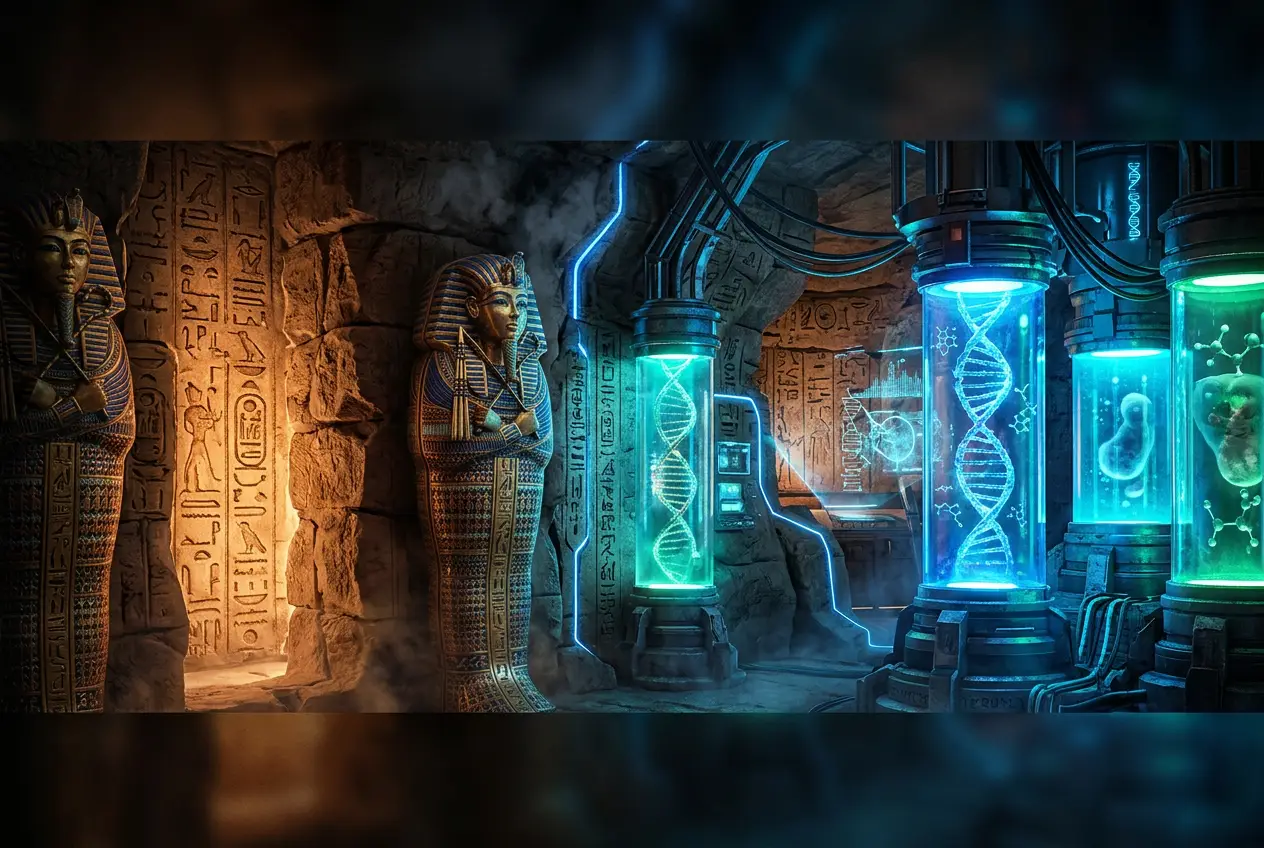
I’ve always been fascinated by the human quest for longevity. The idea of extending life, defying decay, and perhaps even cheating death itself resonates deeply with our intrinsic desire to be. Recently, I found myself pondering the ultimate ancient answer to this very quest: mummification. When we think of ancient Egypt, we picture pyramids, pharaohs, and those remarkably preserved bodies that have endured millennia. But what if their sophisticated art of mummification wasn't just a spiritual rite for the afterlife, but held tangible scientific secrets for bio-preservation that we are only now beginning to uncover? Could the methods of these ancient embalmers truly offer keys to understanding, and perhaps even achieving, a form of immortality?
The Ancient Art of Eternal Preservation: A Glimpse into Egyptian Mastery
The process of mummification in ancient Egypt was far more than a simple ritual; it was a complex, meticulous scientific endeavor perfected over thousands of years. From roughly 3500 BC, the Egyptians began experimenting with preserving bodies, evolving their techniques to an astonishing degree by the New Kingdom period (c. 1550–1070 BC). The goal was not merely to prevent decay, but to maintain the deceased’s physical form as a vessel for their ka and ba (soul components) in the afterlife. What resulted was an unintentional masterclass in bio-preservation.
I've learned that the core of their technique involved several critical steps. First, the brain was often removed through the nostrils using specialized hooks – a surprisingly delicate procedure. Then, an incision was made on the left side of the abdomen to remove internal organs like the stomach, intestines, liver, and lungs. The heart, considered the seat of intelligence and emotion, was typically left in place. These removed organs were then carefully preserved, often dried and placed in canopic jars, ensuring every part of the individual was ready for the journey to the underworld.
Ancient Chemistry, Modern Clues: Unpacking Natron's Power
The real star of the mummification show was natron. This naturally occurring salt, a mixture of sodium carbonate decahydrate, sodium bicarbonate, sodium chloride, and sodium sulfate, was sourced from dry lakebeds like Wadi El Natrun. The embalmers would pack the body cavity and cover the entire body with natron for around 40 to 70 days. This powerful desiccant rapidly dehydrated the tissues, preventing bacterial growth and decomposition.
But was it merely desiccation? Modern scientific analysis suggests there might be more to natron’s magic. The specific alkaline properties of natron could have had a profound impact on cellular structures, potentially cross-linking proteins and stabilizing cell membranes in ways we’re still trying to fully understand. This wasn’t just drying; it was a form of chemical preservation. Dr. Stephen Buckley, a research fellow at the University of York, suggests that the sophisticated use of resins, oils, and other chemicals went beyond simple drying, creating an antibacterial and preservative environment that effectively "pickled" the body (Source: Wikipedia - Mummification (opens in a new tab)).
Think about it: how did they intuitively know the right mixture, the correct application, and the optimal duration to achieve results that lasted thousands of years? This isn't just ritual; it's empirical science developed through generations of trial and error. The level of observational and practical knowledge possessed by ancient Egyptian embalmers was extraordinary, demonstrating a deep understanding of human anatomy and chemistry, far beyond what we typically attribute to their era.
Beyond Decay: What Mummification Preserves
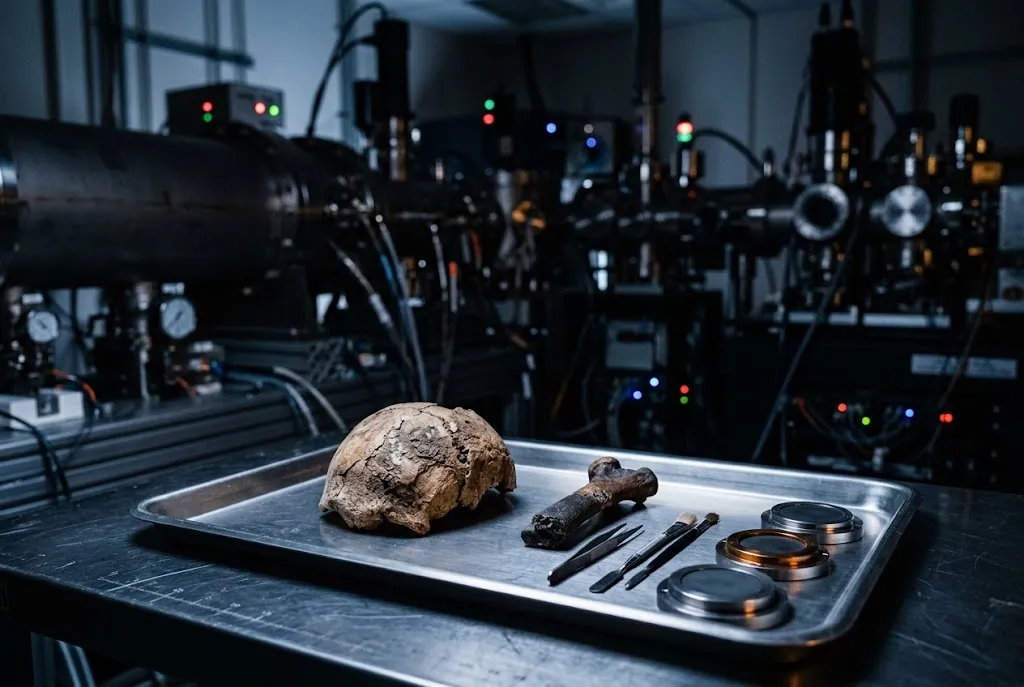
The sheer longevity of Egyptian mummies is astounding. We can still examine ancient tissues, hair, and even blood vessels with remarkable clarity. Scientists have used advanced imaging techniques, like CT scans and X-rays, to peer inside mummies without damaging them, revealing details about diet, disease, and even surgical procedures. For instance, studies on mummies have offered insights into ancient diseases like atherosclerosis, a condition previously thought to be primarily a modern ailment (Source: Wikipedia - Ancient Egyptian medicine (opens in a new tab)).
What’s truly fascinating is the cellular integrity occasionally found. While not perfectly preserved as if alive, certain cellular structures, especially in harder tissues like bone and even some connective tissues, retain a surprising amount of detail. This raises questions: could specific aspects of their methods stabilize biological material at a cellular level in ways modern techniques sometimes struggle with? I recall reading about the discovery of ancient DNA from mummified remains, allowing geneticists to trace lineages and populations over millennia, a testament to the preservation power of mummification. For more on how our genetic information is safeguarded, you might find this article interesting: Did Ancient Egypt Code Life: Unveiling Bio-Tech's Secret Dawn.
Modern Bio-Preservation: A Comparative Look
Today, our quest for radical life extension often focuses on cryonics – the low-temperature preservation of humans and animals with the hope that future medical technology can restore them to full health. Cryonics relies on vitrification, a process that converts tissue into a glass-like state, preventing ice crystal formation that would damage cells. Other modern techniques include plastination, where water and lipids are replaced by plastics, and sophisticated tissue banking for organs and cells.
Here's where the comparison with ancient mummification becomes intriguing. While cryonics aims for reversible preservation, mummification was designed for permanent physical preservation, with no intention of revival in the earthly sense. However, the underlying challenge is similar: how to halt decay and maintain structural integrity. Could the ancients' understanding of natural desiccants and resins inform better cryoprotectants or vitrification solutions? Perhaps there are stable chemical modifications that could be induced in tissues that improve long-term viability without requiring extreme cold.
For example, the natural resin used in mummification, often a mixture of plant gums, beeswax, and animal fats, acted as a sealant and antibacterial agent. We use synthetic polymers and waxes for similar protective purposes today. Are there specific compounds in these ancient resins that offer superior long-term stability or cellular protection that current materials lack? This is a ripe area for research, connecting historical materials science with cutting-edge biotechnology.
The Immortality Question: Science vs. Speculation
So, did ancient mummification truly hold the keys to immortality? In the literal sense of "waking up" thousands of years later, probably not. The cellular damage from desiccation, while preventing decay, is generally considered irreversible with current technology. However, if we define "immortality" more broadly as the indefinite preservation of biological information or even the potential for future restoration, then the ancients certainly took a significant, albeit different, step.
The wisdom of the embalmers, passed down through generations, created a remarkably stable form of biological archiving. The insights gained from studying mummies continue to inform our understanding of ancient health, disease, and even the natural processes of decay and preservation. Who knows, perhaps hidden within the complex chemistry of their unguents and balms are compounds that, once isolated and understood, could lead to breakthroughs in modern bio-preservation, tissue engineering, or even radical life extension.
As I reflect on this, it's a humbling thought: our ancestors, without microscopes or advanced labs, intuited and perfected a complex bio-technical process that still baffles and inspires us today. They remind us that the line between ancient mystery and modern science is often thinner than we imagine, hinting at possibilities that transcend time itself. The quest for immortality, it seems, began long ago, and its ancient chapters might still hold vital clues for our future.



Conversation0
No comments yet. Be the first to share a thought — the best questions often become new stories.