


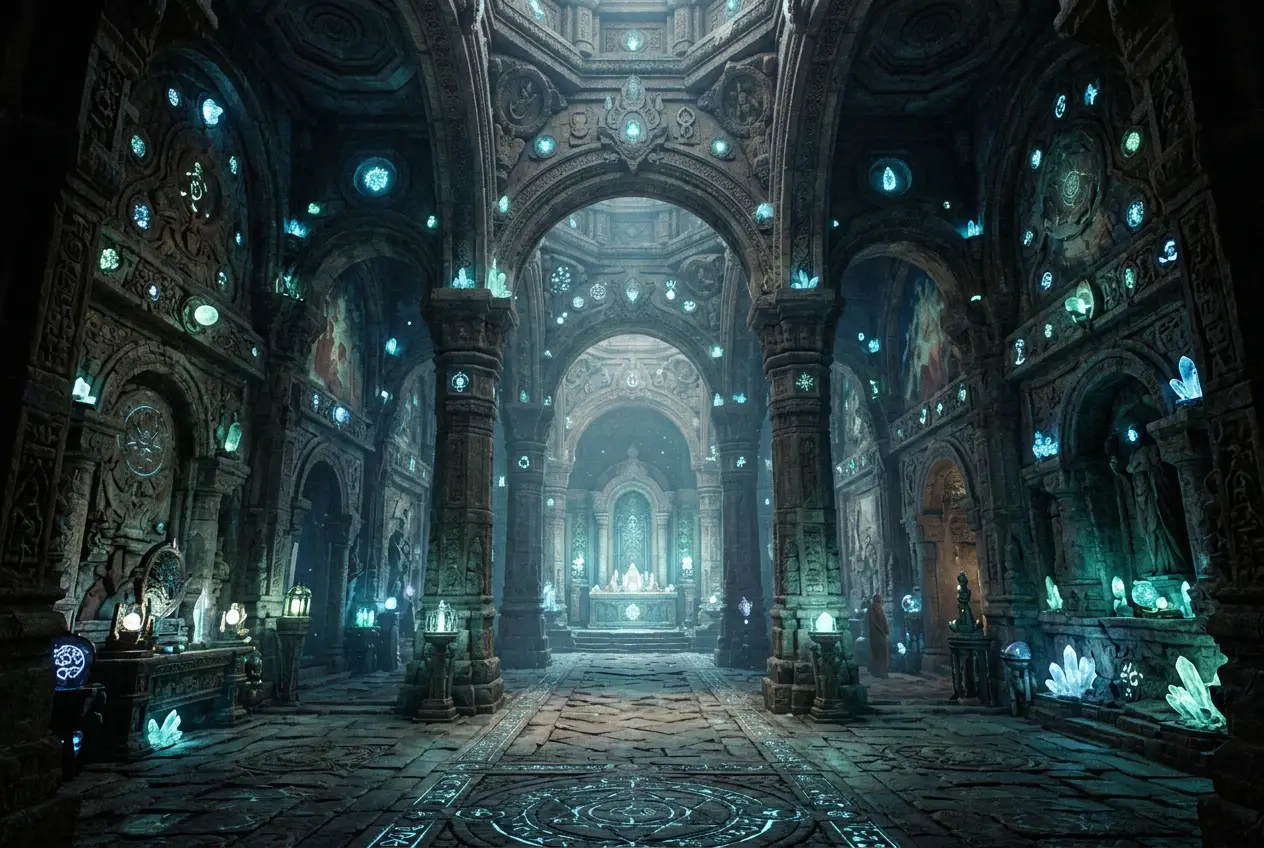
I remember walking through a bustling night market in Southeast Asia a few years ago. The air was thick with the scent of spices and sizzling food, illuminated by the harsh, efficient glow of modern LED string lights. It made me wonder: how did our ancestors experience the night? For millennia, humanity relied on fire — flickering torches, smoky oil lamps, and candles that cast dancing shadows. These sources provided warmth and light, but always at a cost: heat, fuel consumption, and the ever-present danger of fire. But what if, just what if, some ancient civilizations had stumbled upon a different secret, a way to generate light without heat?
It sounds like something out of a science fiction novel, or perhaps an alchemist’s dream. Yet, scattered through history, myths, and even some cryptic texts, are tantalizing hints of "perpetual lamps" and mysterious glows that challenge our understanding of ancient technology. Were these mere legends, or echoes of a lost scientific art?
The Enduring Mystery of Perpetual Lamps
The concept of a lamp burning indefinitely, without fuel or human intervention, has fascinated thinkers for centuries. Roman historian Plutarch, writing in the 1st century AD, mentioned a lamp in the Temple of Jupiter Ammon that priests claimed had burned for several centuries without replenishment. Similar accounts appear in various cultures: a lamp in the tomb of Tullia, Cicero’s daughter, supposedly extinguished upon its discovery 1,550 years later; tales of lamps lighting subterranean passages in Egypt, India, and China for thousands of years.
While most modern historians dismiss these as myths, perhaps embellished to add mystique to religious sites or burial places, I find myself asking: What inspired these stories? Could they be distorted memories of phenomena that appeared to defy conventional lighting methods? The ancients were keen observers of nature, and the world around them offered plenty of instances of light without combustion.
Nature’s Own Cold Light: Bioluminescence
Before humans even conceived of electricity, nature had mastered cold light. Bioluminescence — the production and emission of light by a living organism — is a common phenomenon. Think of the enchanting flicker of fireflies on a summer night, the eerie glow of certain fungi in a dark forest, or the spectacular, otherworldly displays of deep-sea creatures.
I've personally witnessed the magical glow of bioluminescent plankton on a moonless beach, and it’s an unforgettable experience. It’s light generated through a chemical reaction within the organism, typically involving a light-emitting molecule (luciferin) and an enzyme (luciferase). This reaction releases energy as light, with very little heat.
Did ancient peoples observe these natural marvels? Absolutely. Cultures worldwide have stories and folklore related to glowing insects, plants, and marine life. In parts of ancient Egypt, glowing fungi might have been visible in damp tombs, appearing as if the walls themselves emitted a faint light. Sailors would have encountered bioluminescent plankton, seeing "fiery seas" that seemed to glow from within. Could these observations have sparked the imagination, leading some to seek ways to replicate nature's secret?
The Dawn of Chemical Enlightenment?
Beyond direct biological sources, the possibility of ancient chemiluminescence is an intriguing thought. Chemiluminescence involves a chemical reaction that produces light without significant heat. Modern examples include glow sticks. But could ancient civilizations have accidentally or intentionally harnessed simpler versions of this?
Consider early alchemists or skilled artisans working with unusual minerals. One notable candidate is phosphorus. Discovered in 1669 by Hennig Brand, elemental white phosphorus glows spontaneously in the dark as it oxidizes in air, a process called chemiluminescence. While its discovery is attributed to the 17th century, I wonder if certain ancient cultures, experimenting with various substances, might have stumbled upon compounds containing phosphorus or other naturally occurring chemiluminescent materials. For instance, some mineral deposits, when crushed or mixed with certain liquids, can exhibit a faint glow.
Early forms of metallurgy, glass-making, or even pottery could involve chemical processes that produce unexpected luminous effects. The careful observation and documentation of such "anomalous" glows might have been kept as closely guarded secrets by priests or alchemists, adding to their perceived mystical power. For a deeper dive into ancient material science, one could explore how innovations like that discussed in Ancient Geopolymer Tech: Did Lost Concrete Build Pyramids? hint at sophisticated understandings we're only now rediscovering.
Ancient Lore and Scientific Scrutiny
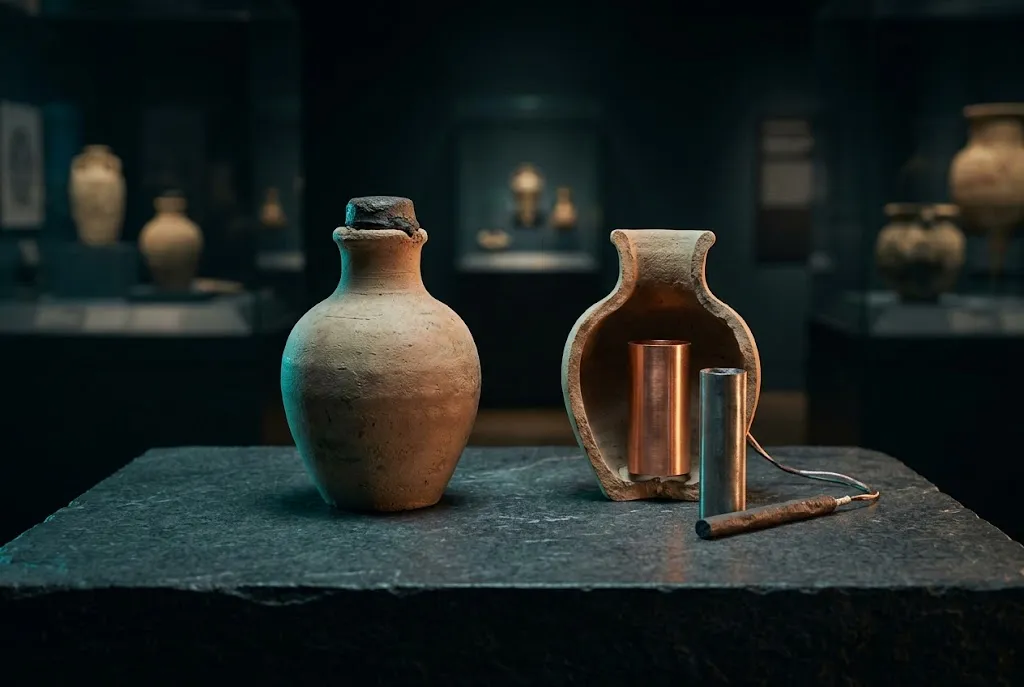
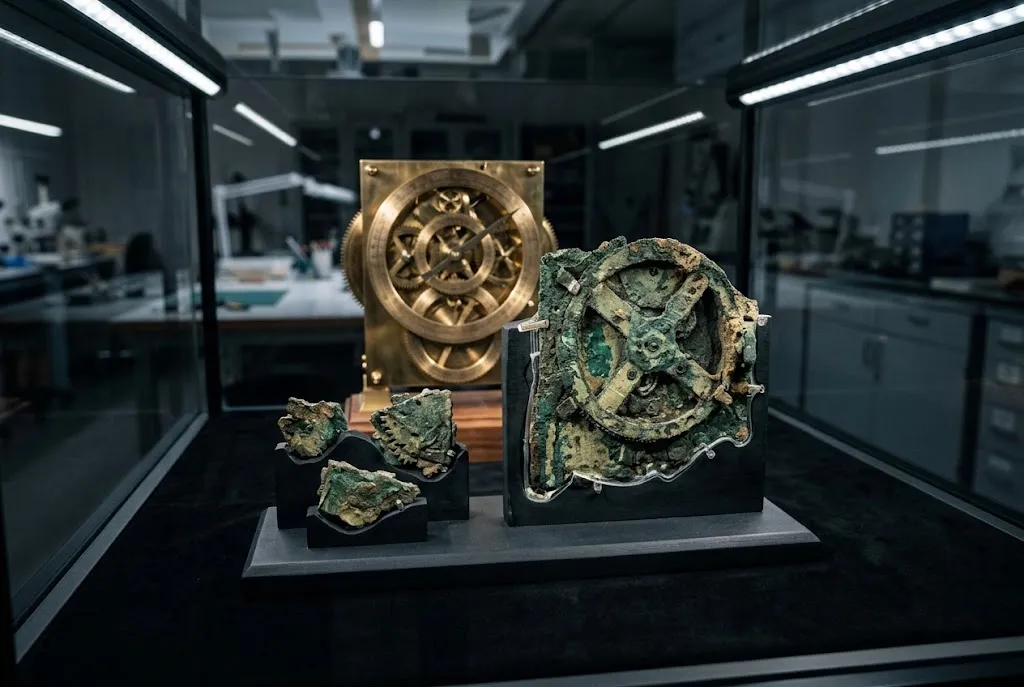
The legends surrounding "perpetual lamps" often describe them as containing mysterious substances, sometimes identified as a "liquid fire" or a unique composition that defied decay. Could these descriptions be vague references to compounds that reacted slowly to emit light? While concrete archaeological evidence for deliberately engineered chemiluminescent devices in antiquity is scarce, the absence of proof is not necessarily proof of absence. Many ancient technologies and materials have been lost to time, or their functions misinterpreted. For instance, the Phaistos Disc, a mysterious artifact from Minoan Crete, still baffles researchers about its true purpose, as detailed in Phaistos Disc: Ancient Data or Lost Code?. It underscores how much ancient ingenuity remains undeciphered.
One of the challenges is that if such a technology existed, it would likely be rare, fragile, or leave no direct physical trace. Unlike a pottery shard or a bronze tool, a chemiluminescent mixture might simply degrade, leaving behind inert dust.
Bridging the Past and Future of Light
Today, the concept of cold light is commonplace. From energy-efficient LEDs that dominate our homes and cities to the specialized glow sticks used in emergencies, we've mastered generating light with minimal heat. Modern research even explores bioluminescent engineering, integrating nature’s light-producing mechanisms into various applications, from diagnostic tools to glowing plants that could someday illuminate our streets without electricity. You can read more about the cutting edge of biological computing and potential future tech in posts like Can Fungi Build Computers? Mycelial Tech Power, which explores similar bio-inspired innovations.
This scientific progress sheds a new light on ancient possibilities. Could the "perpetual lamps" be an exaggerated memory of something that genuinely glowed for an extended period, perhaps a substance carefully prepared and shielded from rapid decay? Could isolated instances of discovering naturally occurring chemiluminescent minerals have been interpreted as divine gifts or magical artifacts?
"The most beautiful thing we can experience is the mysterious. It is the source of all true art and science," Albert Einstein once said. This perfectly encapsulates the allure of ancient cold light. The mysteries of the past, even when rooted in myth, often inspire us to look closer, to question our assumptions, and to explore the boundaries of what was truly possible.
While we may never unearth a definitive "ancient glow stick" or a fully functional "perpetual lamp" that stands up to modern scientific scrutiny, the persistent legends remind us of humanity's enduring quest for light, and perhaps, a deeper, forgotten understanding of the natural world. It encourages us to keep exploring the "impossible artifacts" that truly hint at lost ancient technologies.
Conclusion
The idea of ancient civilizations harnessing light without heat remains a captivating blend of myth and scientific intrigue. While the precise mechanisms of legendary perpetual lamps are likely beyond our current historical grasp, the natural world provided ample inspiration through bioluminescence. The possibility of early, accidental discoveries of chemiluminescent substances by ancient alchemists or artisans adds a layer of scientific plausibility to these wondrous tales. As modern science continues to unravel the secrets of light, we gain a renewed appreciation for the ingenuity of our ancestors and the enduring mysteries that still challenge our understanding of history.



Conversation0
No comments yet. Be the first to share a thought — the best questions often become new stories.