Recently, I found myself gazing at the night sky, overwhelmed by the sheer, terrifying scale of it all. The stars, countless pinpricks of light, each potentially a sun to its own worlds. And then, the thought struck me: how could we ever talk to anyone out there? The distances are mind-boggling, light-years spanning the void. Even light, our fastest messenger, takes years, decades, or even millennia to cross these cosmic gulfs. This communication delay isn't just an inconvenience; it’s a fundamental barrier to any real-time interaction with extraterrestrial intelligence, or even our own future space colonies. But what if there was a loophole? A cosmic shortcut that defies our conventional understanding of space and time?
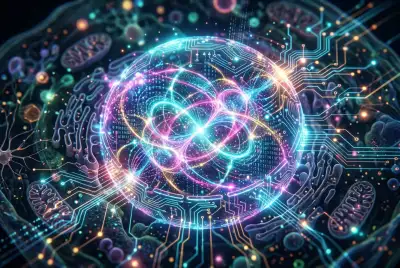
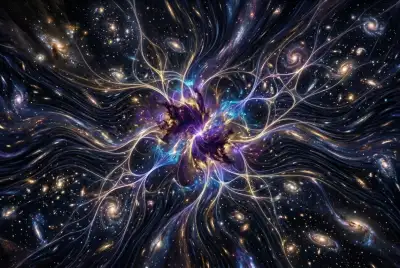
This is where the mind-bending concept of **quantum entanglement** steps onto the interstellar stage. Imagine a connection so profound that two particles, no matter how far apart, instantly mirror each other's state. Change one, and the other instantly responds, seemingly faster than light. Albert Einstein famously dismissed it as "spooky action at a distance," a phenomenon he found deeply unsettling. But modern physics has repeatedly confirmed its reality, pushing us to rethink the very fabric of our universe and, perhaps, our methods for communicating across it.
## The Quantum Web: Spooky Action Explained
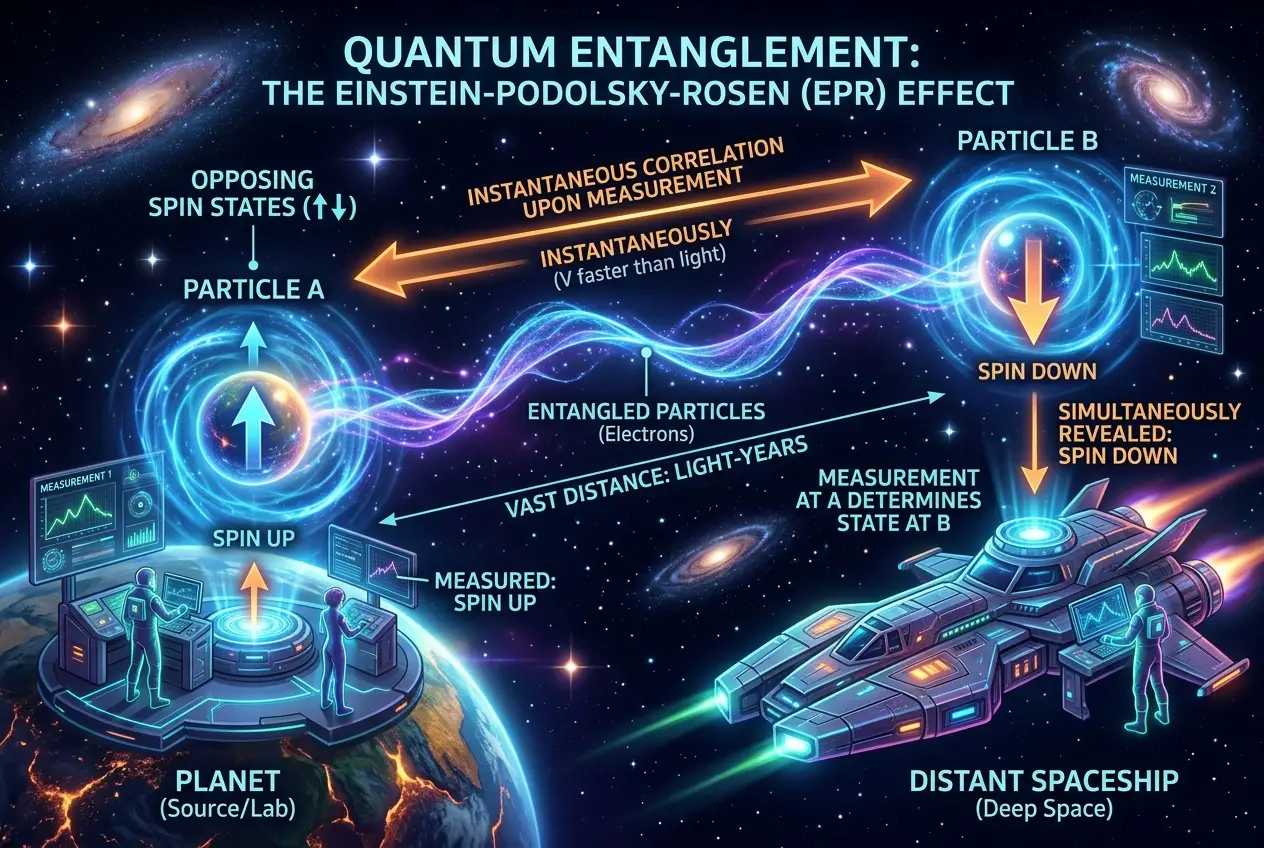
At its core, quantum entanglement describes a peculiar bond between two or more quantum particles. Once entangled, they lose their individual identities and become part of a shared, interconnected system. If you measure a property of one particle – say, its spin – the other entangled particle will instantly assume a correlated state, regardless of the distance separating them. It’s like having two coins that, when flipped, always land on opposite sides, even if one is on Earth and the other is light-years away on Mars. The key is that their states are determined *at the moment of measurement*, and they are always perfectly correlated.
**Why this matters for interstellar communication?** The "instantaneous" correlation is the tantalizing hook. If information could somehow be encoded into one entangled particle and instantly accessed by its partner across the galaxy, we might have a way to bypass the light-speed limit that shackles traditional radio or laser signals. No more agonizing decades waiting for a reply from Kepler-186f. We could, in theory, chat with alien civilizations or distant human outposts as easily as making a phone call.
## The Dream: A Quantum Internet Across the Cosmos
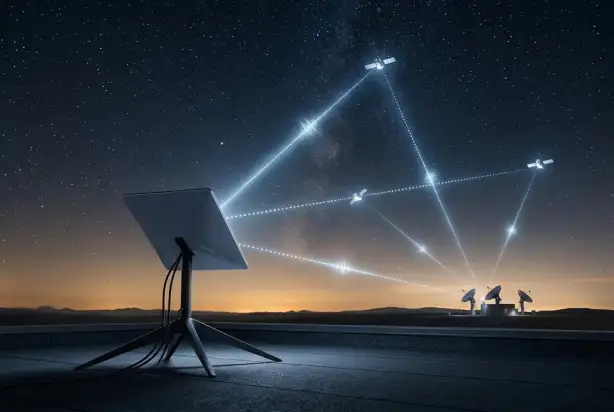
The vision is truly grand: a **quantum internet** that spans the stars. Instead of transmitting classical bits (0s and 1s), we would be sharing quantum bits, or *qubits*, which can exist in a superposition of both 0 and 1 simultaneously. When these qubits are entangled, their shared destiny could be the backbone of instantaneous communication.
Here’s a simplified concept of how it *might* work:
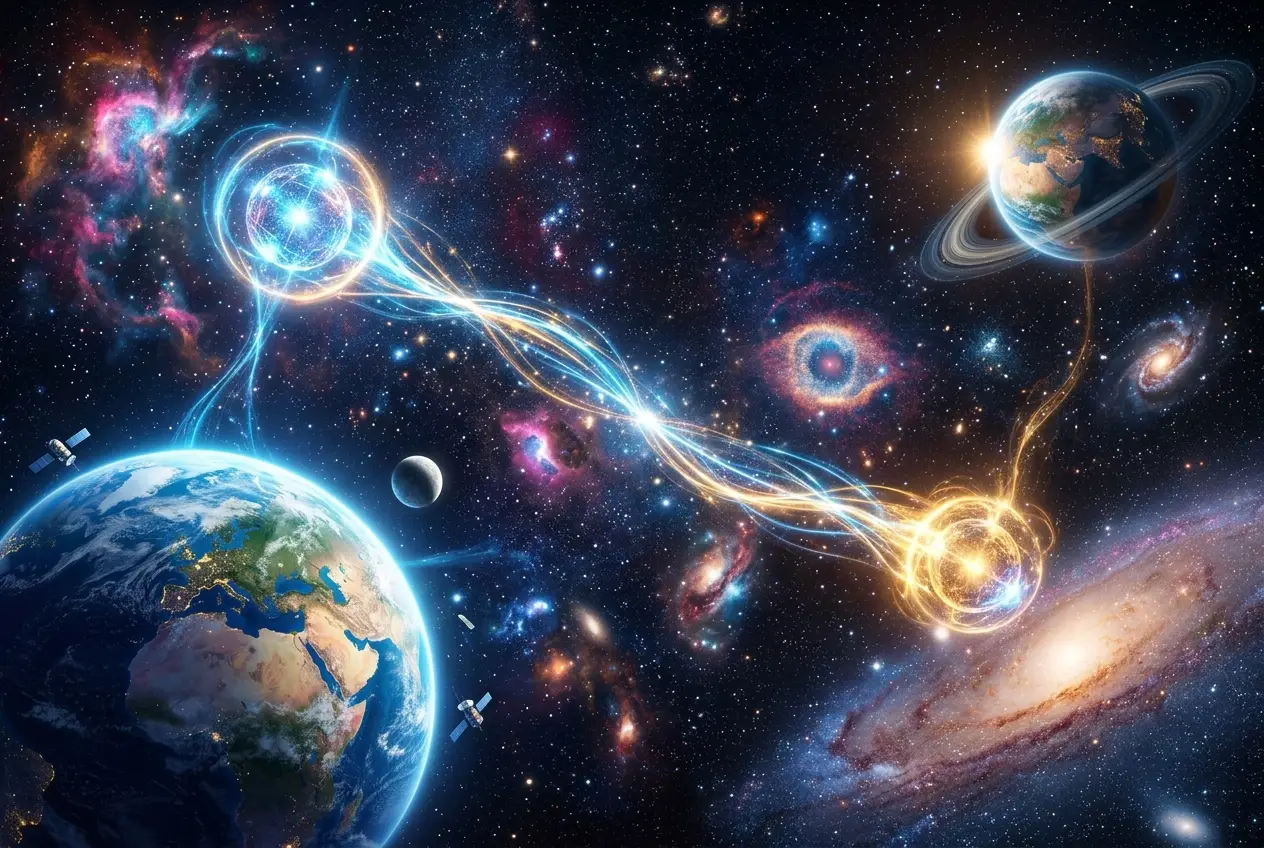
1. **Preparation:** Two entangled particles are created. Let's call them Alice and Bob.
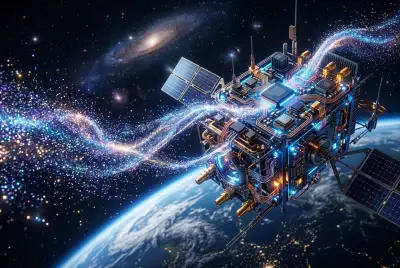
2. **Distribution:** Alice stays on Earth, and Bob is transported (via conventional means, which still takes time) to a distant star system, perhaps even carried by a deep-space probe.
3. **Communication Attempt:** When Alice wants to send a message, she performs a specific measurement on her entangled particle.
4. **Instant Correlation:** Due to entanglement, Bob's particle instantly takes on a correlated state.
5. **Information Extraction:** Bob then measures his particle and, by comparing its state to a pre-agreed code, theoretically extracts the information.
The challenge, as I see it, is not just *how* to entangle particles over light-years, but *how* to translate that instantaneous correlation into meaningful information transfer without violating the fundamental laws of physics.
## The Catch: Why "Spooky Action" Isn't a Free Ride
Before we start packing our bags for an instant chat with Alpha Centauri, there's a significant hurdle. While the correlation between entangled particles is instantaneous, this doesn't mean we can use it to transmit *classical information* faster than light. This is a crucial distinction.
The **no-communication theorem** in quantum mechanics states that you cannot use entanglement to send any information superluminally. When Alice measures her particle, she forces it into a definite state, and Bob's particle instantly collapses into its correlated state. However, Bob cannot *know* what state his particle has collapsed into unless he also has a way of knowing what measurement Alice performed or what state she *intended* to send. This requires a classical communication channel (e.g., radio waves) to convey that information, and that channel is still limited by the speed of light.
Think of it this way: Alice and Bob each have one of a pair of entangled coins. They both flip their coin. When Alice sees "heads," she instantly knows Bob's coin is "tails." But Bob, by looking at his "tails," doesn't know what Alice saw *until* she tells him, via a light-speed limited signal, "Hey, I saw heads, so you must have tails!" The act of knowing what the *other* person's state is still requires classical information.
This elegant explanation, deeply rooted in the principles of quantum mechanics, is why quantum entanglement doesn't offer a simple "FTL (Faster Than Light) phone." As Wikipedia explains, "the no-communication theorem implies that quantum entanglement cannot be used to transmit classical information faster than light." You can learn more about this on the [Wikipedia page for the no-communication theorem](https://en.wikipedia.org/wiki/No-communication_theorem).
## Beyond Simple Messaging: Other Quantum Opportunities
While entanglement might not be a direct FTL messenger, it opens other incredible avenues for interstellar endeavors:
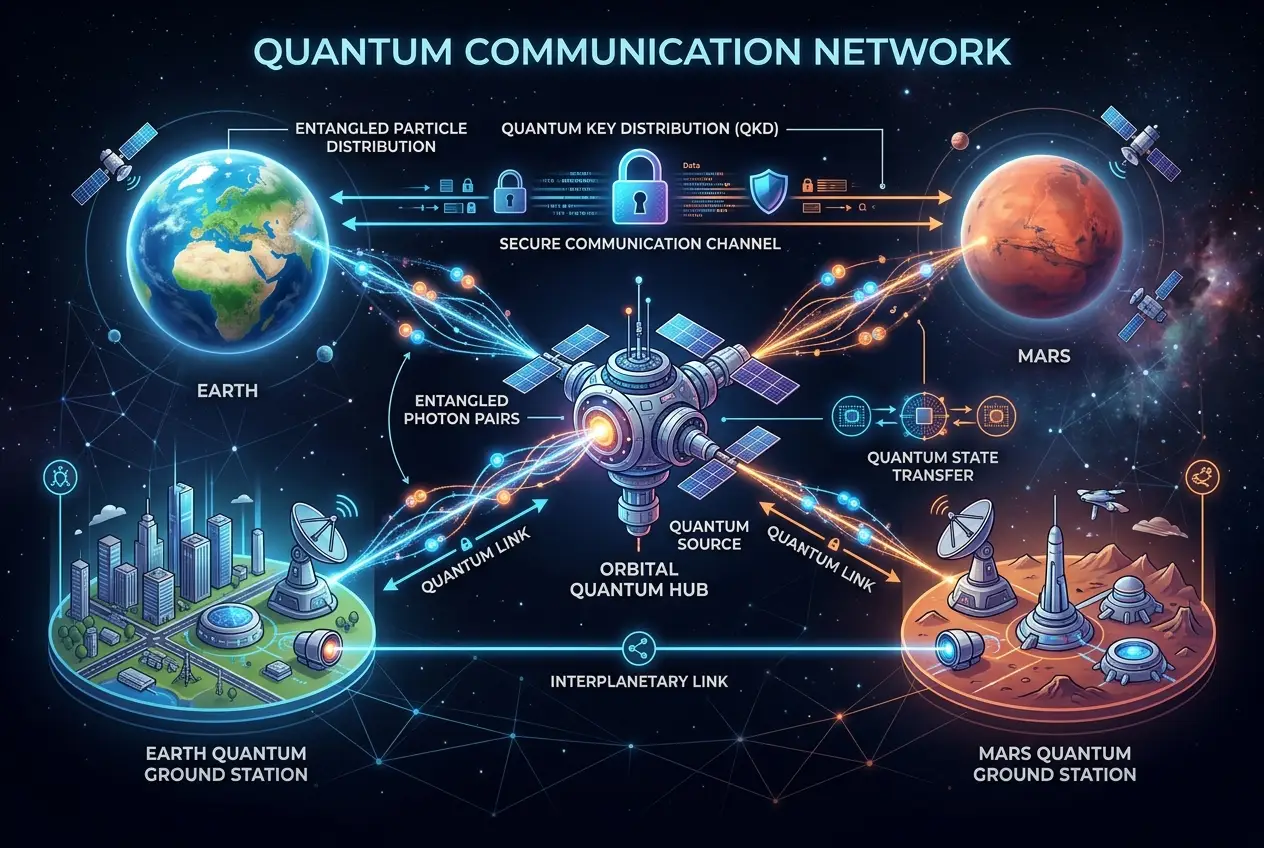
* **Quantum Cryptography:** Entanglement can enable hyper-secure communication. If a pair of entangled particles is used to generate cryptographic keys, any attempt by an eavesdropper to measure one particle would instantly disturb the entanglement, alerting the communicators. This provides a fundamentally secure communication channel, essential for sensitive data transmissions between planets or star systems. For more on this, consider exploring concepts like Quantum Key Distribution (QKD), often mentioned in the context of a future [quantum internet](https://en.wikipedia.org/wiki/Quantum_internet).
* **Quantum Teleportation (of State):** While not teleporting matter in a Star Trek sense, quantum teleportation is a real phenomenon where the *quantum state* of one particle is transferred to another, previously entangled particle, without physically moving the original. This could be critical for sending complex quantum information, such as the state of a quantum computer's memory, across vast distances for processing or reconstruction. My colleague wrote an insightful piece on this very topic: "Could Quantum Teleportation Send Matter Across Space?" You can find it at [/blogs/could-quantum-teleportation-send-matter-across-space-7785](https://curiositydiaries.com/blogs/could-quantum-teleportation-send-matter-across-space-7785).
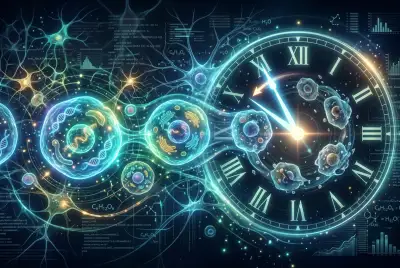
* **Enhanced Sensing and Timing:** Entangled particles could form the basis of ultra-precise clocks or sensors across the galaxy. Their correlated nature could allow for highly synchronized measurements over vast distances, potentially aiding in navigation, astronomy, or even the detection of faint signals from deep space.
* **Distributed Quantum Computing:** Imagine linking quantum computers across star systems. Entanglement could allow them to act as a single, massively powerful distributed quantum computer, tackling problems far beyond the scope of any local machine. This could unlock breakthroughs in materials science, astrophysics, and the search for extraterrestrial intelligence. The capabilities of quantum computing are truly mind-boggling, as we've discussed previously in "Can Quantum Computers Break Every Encryption?" which you can read at [/blogs/can-quantum-computers-break-every-encryption-1438](https://curiositydiaries.com/blogs/can-quantum-computers-break-every-encryption-1438).
## The Grand Challenges Ahead
Implementing any of these entangled-particle applications on an interstellar scale faces monumental hurdles.
First, **generating and distributing entangled particles** over light-years is an immense technical feat. Entanglement is fragile; environmental noise, radiation, and gravitational fluctuations in space can easily break the delicate quantum link, a process called decoherence. Maintaining entanglement over astronomical distances would require revolutionary technologies for quantum repeaters or extremely robust quantum states.
Second, **scaling up**. We're talking about individual particles. For meaningful communication, we would need to generate, transmit, and detect *billions* or *trillions* of entangled pairs. This requires efficient quantum memory and sophisticated quantum error correction, technologies still in their infancy even in terrestrial labs.
Third, **the time barrier for setup**. Even if we master the science, physically transporting one half of an entangled pair to a distant star system still requires a spacecraft traveling at conventional speeds. So, while the communication itself might be "instantaneous" *after* setup, the initial establishment of the entangled link would still be bound by the speed of light. This is a critical consideration for initiating communication with a newly discovered exoplanet or establishing a new colony.
As I ponder these challenges, it’s clear that while the dream of instantaneous interstellar communication via entanglement might be just that—a dream for now—the underlying physics is pushing the boundaries of what we thought possible. The strange and beautiful world of quantum mechanics, a topic we touched upon in "How Does Quantum Entanglement Defy Space-Time?", available at [/blogs/how-does-quantum-entanglement-defy-space-time-5424](https://curiositydiaries.com/blogs/how-does-quantum-entanglement-defy-space-time-5424), continues to surprise and inspire.
## Conclusion: A Glimmer of Hope in the Cosmic Void
While quantum entanglement won't give us Star Wars-style hyperspace calls anytime soon, it fundamentally changes our perception of connectivity in the universe. It’s a testament to the fact that reality is far stranger and more intricate than our everyday experiences suggest. The quest to leverage entanglement for interstellar applications, even if it's only for hyper-secure links or distributed quantum computing, pushes the very limits of our technological ingenuity and scientific understanding.
Perhaps the future of interstellar interaction isn't about breaking the speed of light for direct messages, but rather about leveraging the "spooky action" for entirely new paradigms of sensing, computation, and ultra-secure information transfer that make the vastness of space feel just a little bit smaller, a little less lonely. The universe, it seems, always has a few more tricks up its sleeve.
Frequently Asked Questions
No, while the correlation between entangled particles is instantaneous, the No-Communication Theorem in quantum mechanics prevents the transfer of classical information faster than light. You still need a classical (light-speed limited) channel to interpret the quantum measurement results.
Quantum teleportation is the transfer of a quantum state from one particle to another, previously entangled particle. It's not physical matter teleportation but could be crucial for sending complex quantum information, like a quantum computer's memory state, across vast distances securely, once entangled pairs are distributed.
Major obstacles include the extreme fragility of entanglement (decoherence) over long distances, the challenge of generating and distributing entangled particles across light-years, the need for robust quantum repeaters, and the immense technical difficulty in scaling these processes for practical communication.
Yes, by using entangled particles to create ultra-precise, synchronized clocks or sensors across vast distances, entanglement could significantly enhance space navigation, allow for more precise astronomical measurements, and potentially aid in detecting very faint signals from deep space.
Beyond direct FTL messages, entanglement is vital for hyper-secure quantum cryptography (quantum key distribution), distributed quantum computing across planets, enhanced sensing and timing, and potentially for quantum teleportation of states to transmit complex quantum information securely and efficiently.
Verified Expert
Alex Rivers
A professional researcher since age twelve, I delve into mysteries and ignite curiosity by presenting an array of compelling possibilities. I will heighten your curiosity, but by the end, you will possess profound knowledge.
Leave a Reply
Comments (0)
No approved comments yet. Be the first to share your thoughts!
 Join Us
 Unknown Author















Leave a Reply
Comments (0)