I remember staring up at the night sky as a child, utterly convinced there were secrets hidden just beyond the reach of my vision. That feeling never truly left me. Even now, with all our powerful telescopes and sophisticated scientific instruments, the cosmos continues to hold mysteries that challenge our most fundamental understandings. One such enigma that has always captivated my imagination, and that of many physicists, revolves around **antimatter**. We know it exists, but what if there's far more of it than we can currently detect, perhaps even forming entire galaxies invisible to our conventional observations?
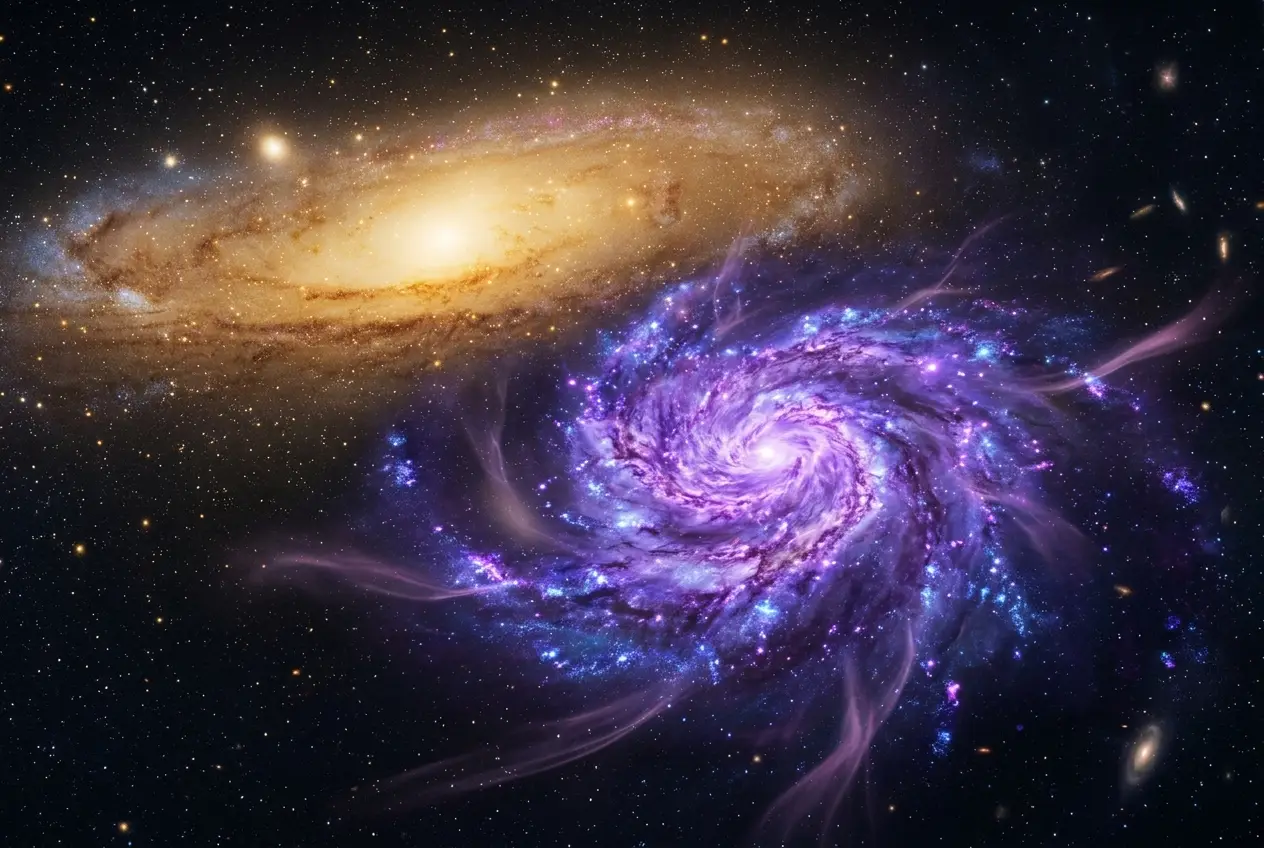
The very idea of **antimatter galaxies** sounds like something pulled straight from a science fiction epic, a cosmic mirror world reflecting our own. Yet, this isn't just a flight of fancy. It’s a serious question that probes the very origins and structure of our universe, driven by a profound imbalance that has puzzled scientists for decades: the matter-antimatter asymmetry.
### The Universe's Great Imbalance: A Cosmic Paradox
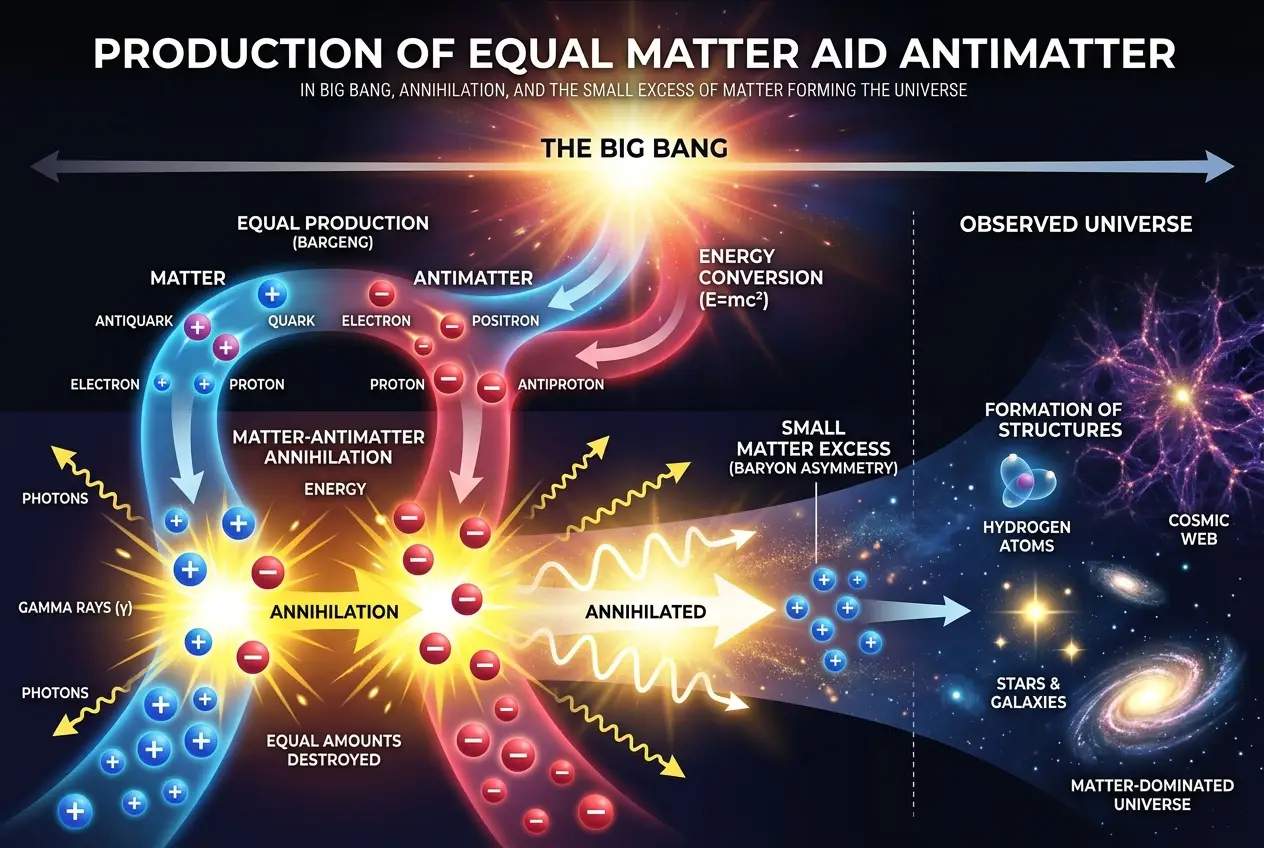
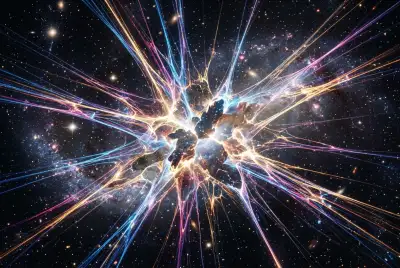
From what we observe, our universe is overwhelmingly made of matter. Stars, planets, dust, gas – everything we see, touch, and are made of – consists of protons, neutrons, and electrons. Antimatter, the identical twin of matter but with opposite charge, is incredibly rare in our immediate cosmic neighborhood. When a particle of matter meets its antiparticle, they annihilate each other in a burst of energy, typically gamma rays. This fundamental interaction is well-understood and has been demonstrated countless times in particle accelerators.
The paradox arises when we look back at the Big Bang. According to our most robust models, the Big Bang should have produced equal amounts of matter and antimatter. If that were the case, the early universe would have been a cosmic fireworks display, with everything annihilating into pure energy. Clearly, that didn't happen, or we wouldn't be here to ponder it. Some incredibly subtle mechanism, still largely unknown, must have tipped the scales ever so slightly in favor of matter, leading to the universe we inhabit today. This tiny excess of matter, perhaps one part in a billion, is what survived the annihilation phase and went on to form all the galaxies, stars, and ultimately, us.
But what if the "missing" antimatter isn't truly gone? What if it simply resides in regions of the universe so distant, or so isolated, that it has remained undisturbed and undetected, forming **antimatter galaxies**?
### The Evidence (or Lack Thereof)
So, if antimatter galaxies exist, where are they? And why haven't we found them? The primary challenge in detecting them lies in their very nature. An antimatter galaxy, like its matter counterpart, would be composed of antistars, antiplanets, and anti-gas. As long as these antiparticles don't come into contact with normal matter, they behave identically to their matter counterparts. An antistar would shine just like a star, emitting light, heat, and other electromagnetic radiation. A telescope looking at an antistar wouldn't be able to tell the difference.
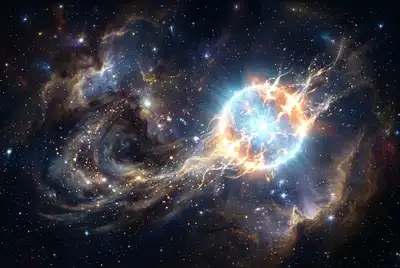
The only definitive way to identify an antimatter galaxy would be to observe **annihilation events** at its boundaries or interactions with normal matter. If an antimatter galaxy were to collide with or pass through a region of normal matter, such as a cloud of intergalactic gas, we would expect to see a distinct signature: a powerful emission of gamma rays from the annihilation sites.
For decades, astronomers have searched for these telltale gamma-ray signatures. Early balloon experiments and later satellite observatories like NASA's Compton Gamma Ray Observatory and the Fermi Gamma-ray Space Telescope have scoured the skies for evidence. While they have detected gamma rays from various cosmic sources – supernovae, active galactic nuclei, pulsars – none of these have provided conclusive evidence of large-scale matter-antimatter annihilation indicative of an antimatter galaxy.
### Why the Silence? The Great Galactic Divide
The absence of strong annihilation signals leads to two main possibilities:
1. **Antimatter galaxies don't exist:** The matter-antimatter asymmetry in our observable universe is indeed a universal phenomenon, and the early universe simply produced more matter than antimatter everywhere. This would mean that the mechanism responsible for this asymmetry was incredibly efficient and widespread.
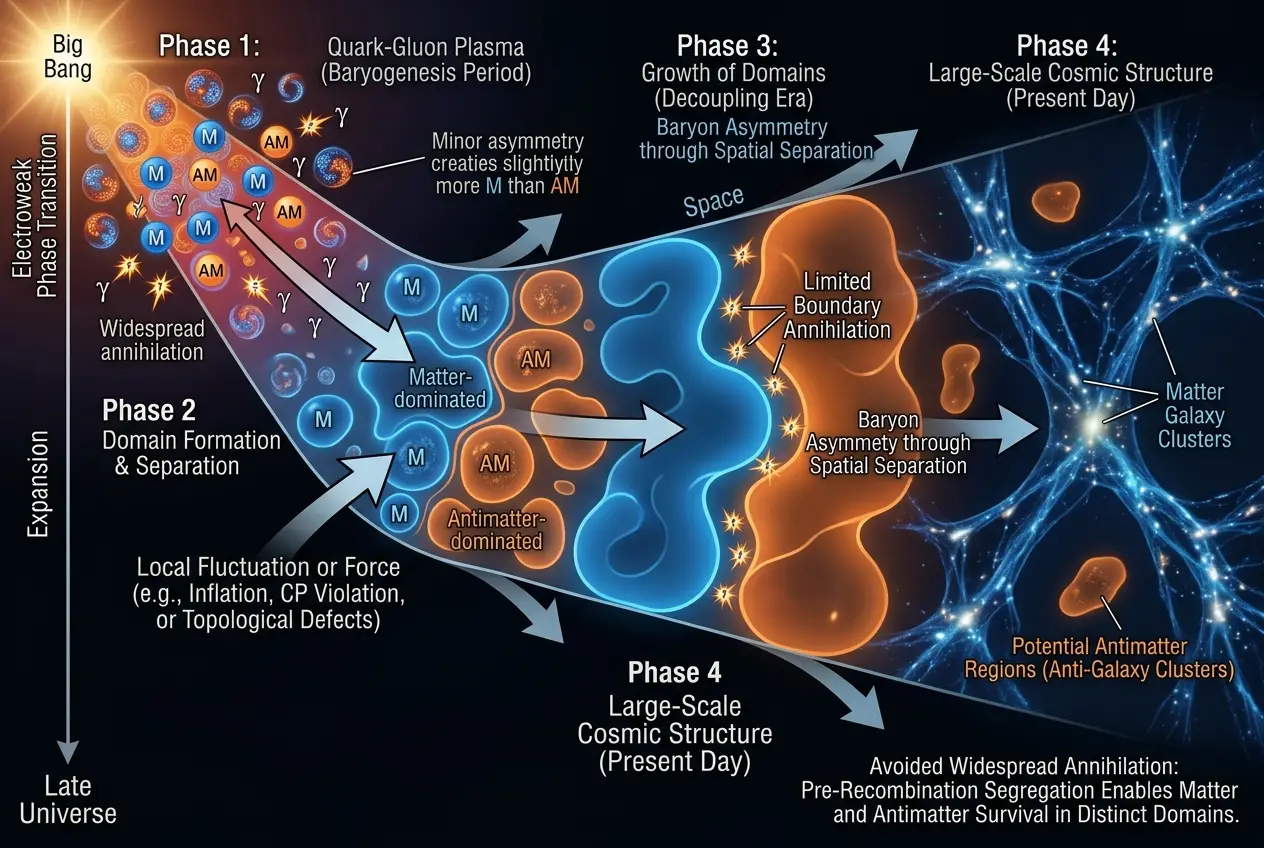
2. **Antimatter galaxies exist but are extremely isolated:** Perhaps the universe *is* divided into vast regions of matter and antimatter, but these regions are separated by cosmic voids so immense that collisions are exceedingly rare, or have never happened in the history of the universe. If these hypothetical antimatter domains are located beyond our observable horizon, or if they are simply too far away to interact with our matter-dominated region, we might never see the direct evidence.
Consider the vastness of space. Even within our own galaxy, there are immense stretches of emptiness. Imagine scaling that up to intergalactic and inter-cluster distances. It’s plausible that antimatter regions, if they exist, could be gravitationally bound into galaxy-like structures without ever brushing against matter.
### Theoretical Frameworks and the Multiverse
The idea of matter and antimatter regions coexisting in the universe isn't without its theoretical underpinnings. Some models propose that during the early universe, regions of matter and antimatter could have separated before significant annihilation occurred. These models often involve complex dynamics during the inflationary epoch or phase transitions in the very early universe.
One intriguing angle explores the possibility of a **CP violation** in the early universe, where fundamental interactions behave differently for particles and antiparticles, leading to the matter surplus. However, the CP violation observed in laboratories today is far too weak to account for the observed cosmic imbalance. This suggests either a new, stronger source of CP violation existed in the early universe or there's another, more exotic explanation.
Some physicists even flirt with concepts from **multiverse theories** to explain the asymmetry. Could it be that our universe is just one pocket of matter in a grander multiverse where antimatter universes also exist, perhaps even colliding with each other in dimensions we cannot perceive? While fascinating, these ideas push the boundaries of current scientific verification. You can read more about how physics might be missing fundamental forces in articles like "What If Physics Missed a Fifth Universal Force?" (/blogs/what-if-physics-missed-a-fifth-universal-force-2601).
### The Ongoing Search: Cosmic Rays and Beyond
While large-scale annihilation events haven't been found, scientists continue their hunt for subtle signs of antimatter. One promising area is the study of **cosmic rays**. These high-energy particles constantly bombard Earth from outer space. Most cosmic rays are protons (matter), but a small fraction are antiprotons or positrons (antielectrons).
The detection of a handful of antiprotons and positrons is not surprising; they can be produced when high-energy cosmic ray particles collide with interstellar gas, creating matter-antimatter pairs that then travel through space. However, if we were to detect a significant flux of heavier antimatter nuclei, like antihelium or anticarbon, that would be a game-changer. These heavier antinuclei are extremely difficult to produce through conventional cosmic ray collisions. Their presence would strongly suggest they originated from a region of antimatter, such as an antistar or an antimatter galaxy.
Experiments like the **Alpha Magnetic Spectrometer (AMS-02)** on the International Space Station are specifically designed to detect and identify cosmic rays, including potential antinuclei. So far, AMS-02 has found no evidence of antihelium or heavier antinuclei, setting stringent limits on the amount of antimatter in our galaxy and local universe. This makes the existence of antimatter stars or entire antimatter galaxies in our galactic neighborhood highly unlikely.
However, the universe is vast, and our observations are limited. The possibility still remains for such structures in the more distant, unexplored cosmos.
### The Future of Antimatter Detection
Future missions and telescopes will continue to push the boundaries of our understanding. Next-generation gamma-ray observatories with increased sensitivity and spatial resolution could potentially detect fainter annihilation signals or pinpoint their origin with greater accuracy. Scientists are also exploring new theoretical avenues and refining models of the early universe to better understand the conditions that might have allowed for the segregation of matter and antimatter.
The quest for antimatter galaxies is more than just a search for an exotic cosmic neighbor; it’s a fundamental inquiry into the origins of existence itself. If we were to find definitive proof of large-scale antimatter structures, it would force a radical re-evaluation of our most cherished cosmological models, from the Big Bang to the fundamental forces that govern our reality. It would also lead us to ponder if the universe is more complex, perhaps even reflecting a hidden order, akin to a giant neural network, as explored in "Is the Universe a Giant Neural Network?" (/blogs/is-the-universe-a-giant-neural-network-2907).
### Conclusion: A Universe of Unseen Possibilities
For now, the evidence suggests that our observable universe is predominantly matter-dominated. The silence from gamma-ray observatories regarding large-scale annihilation events is compelling. Yet, the allure of antimatter galaxies persists, driven by the profound cosmic asymmetry and the sheer scale of the universe. The thought that entire realms of antimatter might exist, invisible to our current instruments and beyond our conceptual reach, is a testament to the boundless mysteries that still reside in the cosmos. It reminds me that even as we unravel the universe's secrets, there are always deeper layers waiting to be discovered, keeping our curiosity alive and driving us to ask, "What else is out there?"
**External Sources:**
* [Wikipedia: Antimatter](https://en.wikipedia.org/wiki/Antimatter)
* [Wikipedia: Baryon asymmetry](https://en.wikipedia.org/wiki/Baryon_asymmetry)
* [Wikipedia: Alpha Magnetic Spectrometer](https://en.wikipedia.org/wiki/Alpha_Magnetic_Spectrometer)
Frequently Asked Questions
Visually, an antimatter galaxy would appear identical to a normal matter galaxy if observed from a distance, as antistars would emit light, heat, and other electromagnetic radiation in the same way stars do. The only noticeable difference would be the intense gamma-ray emissions if it were to collide or interact with a region of normal matter.
The matter-antimatter asymmetry problem refers to the observed imbalance in the universe where matter significantly outweighs antimatter. Theoretical models of the Big Bang predict equal amounts of both, which should have led to complete annihilation. The fact that matter survived to form the universe we see requires an as-yet-unknown mechanism that favored matter.
No, antimatter galaxies are not considered a form of dark matter or dark energy. Antimatter is a known form of baryonic matter (normal matter with opposite charge), albeit rare. Dark matter and dark energy are hypothetical forms of matter/energy that do not interact with light and are distinctly different from antimatter.
Cosmic rays are high-energy particles that originate from outer space and constantly bombard Earth. Scientists analyze these rays for the presence of antiprotons, positrons, and especially heavier antinuclei (like antihelium). Detecting heavy antinuclei would strongly suggest they originated from large antimatter regions, as they are difficult to produce through conventional cosmic ray collisions.
If an antimatter galaxy were to directly collide with our matter-dominated galaxy, the interaction would result in massive annihilation events, releasing enormous amounts of energy in the form of gamma rays. This would be catastrophic for any life within the collision zone. However, given the vast distances between galaxies and the lack of observed large-scale annihilation signals, such an event is considered extremely unlikely in our cosmic neighborhood.
Verified Expert
Alex Rivers
A professional researcher since age twelve, I delve into mysteries and ignite curiosity by presenting an array of compelling possibilities. I will heighten your curiosity, but by the end, you will possess profound knowledge.
Leave a Reply
Comments (0)
No approved comments yet. Be the first to share your thoughts!
 Join Us
 Unknown Author


















Leave a Reply
Comments (0)