


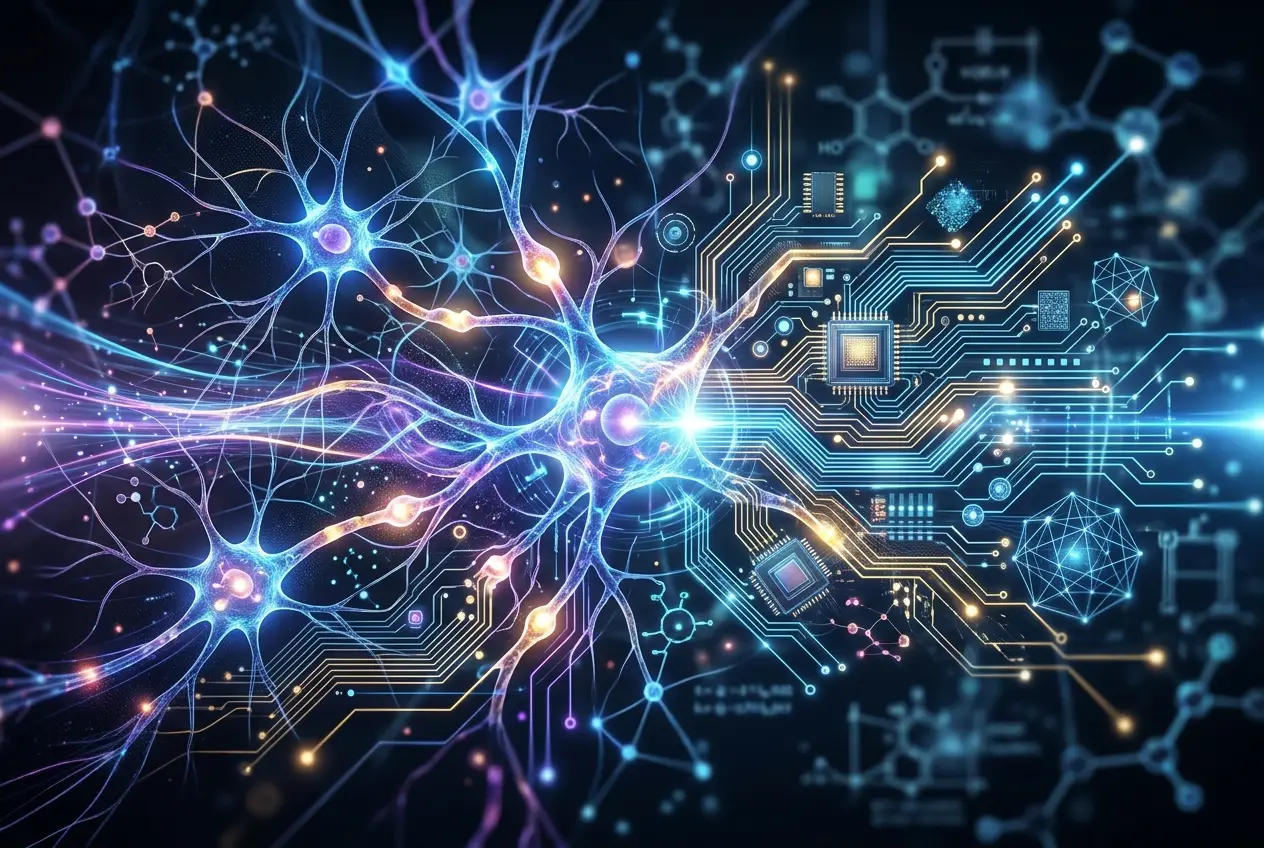
I often find myself peering into the microscopic world, imagining the boundless possibilities that lie within. For centuries, our understanding of life was confined to what nature had already sculpted. We studied, classified, and sometimes, manipulated existing organisms. But what if we could design life itself, cell by cell, molecule by molecule, not just to understand it, but to build our future? This isn't the realm of science fiction anymore; it’s the booming field of synthetic biology, and its most intriguing promise is the creation of synthetic cells capable of building tomorrow's technology.
Imagine a future where your smartphone isn't assembled in a factory but grown in a lab, where self-healing materials repair themselves at a cellular level, or where biological sensors detect diseases with unprecedented precision. This vision hinges on the incredible potential of synthetic cells: tiny, engineered biological units designed from the ground up to perform specific functions.
The Dawn of Designed Life: What Are Synthetic Cells?
At its core, a synthetic cell is a biological system created or heavily re-engineered to exhibit specific, often novel, characteristics. Unlike traditional genetic engineering, which modifies existing organisms, synthetic biology often aims to build from scratch. I’ve come to think of it as moving from editing a book to writing an entirely new one, chapter by biological chapter.
The concept began with pioneering work, most notably by Craig Venter's team, who in 2010 announced the creation of the first synthetic cell – Mycoplasma laboratorium JCVI-syn1.0 – by transplanting a chemically synthesized genome into a recipient cell. This wasn't strictly "building life from scratch" but rather booting up a cell with a synthetic operating system. However, it marked a monumental step, proving that a genome could be designed on a computer and then brought to life in a biological host. You can delve deeper into this historic achievement on its Wikipedia page: Synthetic life (opens in a new tab).
Architecting Life: How Are They Made?
The process of creating synthetic cells is a complex symphony of molecular biology, engineering, and computational design. It typically involves several key stages:
- Genome Design: Scientists use computational tools to design a minimal genome, containing only the essential genes required for a cell to survive and replicate. They also introduce new genetic circuits to impart desired functions, such as producing a specific chemical, sensing an environmental change, or performing a computational logic.
- DNA Synthesis: The designed DNA sequences are then chemically synthesized in the lab. This is where digital information transforms into physical biological code.
- Genome Assembly: These synthesized DNA fragments are then assembled into a complete, functional genome.
- Cellular Chassis: The synthetic genome is introduced into a "chassis" – often a stripped-down, living host cell (like E. coli or yeast) that has had its own genome removed or inactivated. The synthetic genome then takes over, reprogramming the cell.
- De Novo Construction (The Holy Grail): The ultimate goal is to create a truly "de novo" synthetic cell, one constructed entirely from non-living components (lipids, proteins, nucleic acids) without relying on a pre-existing cell. This is immensely challenging, but progress is being made with "minimal cells" and protocells.
The challenge isn't just to make a cell work; it's to make it do something useful and controllable. Just like with our post on how Can Microbes Self-Assemble Our Future Tech?, synthetic cells take the concept of biological self-assembly to a whole new level by designing the very building blocks themselves.
Revolutionary Applications: Beyond Basic Biology
The true power of synthetic cells lies in their diverse applications across various industries:
1. Biocomputing and Data Storage
Imagine a computer that operates not with silicon and electricity, but with biochemical reactions and genetic circuits. Synthetic cells can be engineered to perform complex logical operations, acting as tiny biological processors. I'm particularly fascinated by the idea of using DNA as a data storage medium. With its incredible density—a single gram of DNA can theoretically store all of humanity's digital data—synthetic cells could offer unprecedented storage solutions. Researchers are already demonstrating DNA-based data storage and retrieval systems. This connects beautifully with the discussion of Can Living Organisms Compute the Rise of Biocomputing?.
2. Advanced Materials & Manufacturing
Synthetic cells could become living factories, capable of producing materials with properties we can only dream of today. Think about:
- Self-Healing Materials: Cells embedded in materials could detect damage and actively repair it, extending the lifespan of products from infrastructure to consumer electronics.
- Bio-inspired Construction: Imagine buildings "growing" their own structural components, optimizing for strength and flexibility, similar to how bones or trees develop.
- Sustainable Chemical Production: Instead of relying on petrochemicals, synthetic cells can be programmed to produce biofuels, pharmaceuticals, and industrial chemicals from renewable resources, with minimal waste.
- Programmable Matter: The ultimate vision is for synthetic cells to self-organize into larger structures with dynamic, controllable properties, leading to true Programmable Matter.
3. Medicine and Diagnostics
The impact on healthcare could be transformative. Synthetic cells can be designed as:
- Smart Drug Delivery Systems: Cells engineered to detect specific disease markers (like cancer cells) and release therapeutic agents only when and where needed, minimizing side effects.
- Living Diagnostics: Implantable synthetic cells could continuously monitor health biomarkers, providing early warnings for diseases before symptoms appear.
- Vaccine Production: Rapid and efficient development of new vaccines, adapting quickly to emerging pathogens.
- Gene Therapy Enhancements: More precise and controlled delivery of genetic material to correct disease-causing mutations.
4. Environmental Solutions
Synthetic cells offer novel approaches to pressing environmental challenges:
- Bioremediation: Cells designed to break down pollutants in soil and water, cleaning up contaminated sites more effectively than traditional methods.
- Carbon Capture: Engineering cells to efficiently capture and convert atmospheric carbon dioxide into useful products.
- Resource Recovery: Developing microbial systems to extract valuable metals from waste streams or low-grade ores.
As J. Craig Venter, a pioneer in this field, once remarked, "Synthetic genomics is one of the most powerful technologies now on the planet." This underscores the profound potential of this science, not just to understand life, but to re-imagine its very purpose in service of human needs. You can explore more of his work at the J. Craig Venter Institute (opens in a new tab).
The Ethical Maze: Navigating the Future of Designed Life
With such profound capabilities come equally profound ethical considerations. I find myself constantly grappling with the boundaries we must set. What does it mean to create "synthetic life"? What are the potential risks if these engineered cells escape controlled environments? How do we ensure equitable access to these technologies and prevent misuse?
Societal discussions around biosafety and bioethics are crucial. There are ongoing debates about regulatory frameworks, public perception, and the fundamental question of humanity's role as designers of life. Ensuring responsible innovation, robust containment strategies, and transparent communication will be paramount as this field progresses. Organizations like the Presidential Commission for the Study of Bioethical Issues have deliberated on these topics, and their reports provide valuable insights into navigating this complex landscape. Further reading on Bioethics (opens in a new tab) can illuminate these discussions.
The Road Ahead: Challenges and Opportunities
While the potential of synthetic cells is immense, significant challenges remain. Scaling up production, ensuring long-term stability and predictability of engineered systems, and refining our ability to precisely control cellular behavior are all active areas of research. We are still learning the intricate language of life, and our synthetic cells are currently mere whispers compared to nature's eloquent symphony.
However, the rapid advancements in DNA sequencing, synthesis, and computational biology are accelerating progress. Interdisciplinary collaboration between biologists, engineers, computer scientists, and ethicists is forging new pathways. As we unlock more secrets of cellular function and improve our design principles, I believe synthetic cells will not just build future tech, but fundamentally redefine our relationship with nature and technology itself. The journey from understanding to engineering life is just beginning, and its implications are nothing short of revolutionary.
Conclusion: A New Era of Bio-Innovation
The idea that we can design and build life at its most fundamental level is both awe-inspiring and a little daunting. Synthetic cells represent a new frontier where biology meets engineering, promising to unlock solutions to some of our most pressing global challenges. From intelligent materials that repair themselves to biological computers that dwarf today's supercomputers, the future built with synthetic cells could be one of unprecedented innovation. As we continue this fascinating journey, my hope is that we approach it with both boundless curiosity and profound responsibility, ensuring that the life we design serves humanity and the planet.
&meta_title; Synthetic Cells: Can Living Tech Build Our Future? &meta_title; &meta_description; Explore the cutting-edge world of synthetic biology and discover how artificially created cells could revolutionize computing, medicine, and materials. Dive into the potential of living technology and its impact on tomorrow's innovations. &meta_description;
&faqs;{"faqs":[{"id":1,"question":"What distinguishes synthetic biology from traditional genetic engineering?","answer":"Traditional genetic engineering modifies existing genes within an organism. Synthetic biology, on the other hand, often involves designing and constructing entirely new genetic components, pathways, or even whole cells from scratch, creating functions not found in nature."},{"id":2,"question":"Are synthetic cells truly 'alive'?","answer":"The definition of 'alive' is complex. While synthetic cells can exhibit properties like metabolism and self-replication when given the necessary components, they are built and programmed by humans. The debate centers on whether life can be truly 'created' or only 're-engineered.'"},{"id":3,"question":"What are the main ethical concerns surrounding synthetic cells?","answer":"Key ethical concerns include biosafety risks (e.g., unintended environmental impact if synthetic cells escape), biosecurity risks (potential for misuse), questions about defining and valuing synthetic life, and socio-economic disparities in access to these powerful technologies."},{"id":4,"question":"How could synthetic cells impact the environment positively?","answer":"Synthetic cells could be engineered for enhanced bioremediation (cleaning up pollutants), efficient carbon capture from the atmosphere, sustainable production of biofuels and other chemicals, and more efficient resource recovery, reducing reliance on fossil fuels and mitigating climate change."},{"id":5,"question":"What is the concept of 'de novo' synthetic cells?","answer":"'De novo' synthetic cells refer to cells constructed entirely from non-living chemical components (lipids, proteins, DNA/RNA) without starting from a pre-existing, intact cell. This represents the ultimate goal of building life from fundamental building blocks, though it's still largely a research frontier."}]}&faqs;


Conversation0
No comments yet. Be the first to share a thought — the best questions often become new stories.