


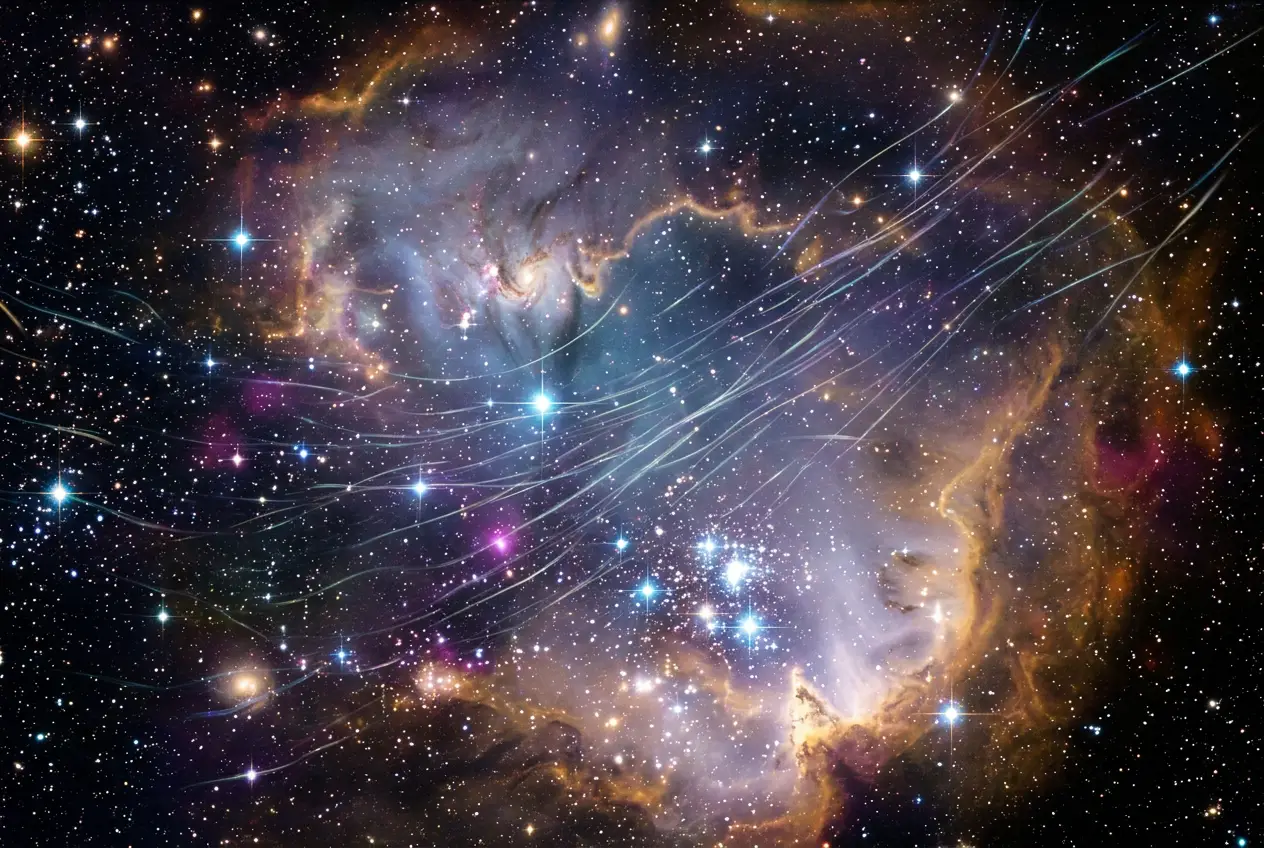
Have you ever felt a shiver down your spine, a sense of something unseen yet undeniably present? I remember sitting out on a clear night, gazing at the myriad stars, and feeling the sheer vastness of the cosmos. It’s a humbling experience, one that often sparks questions about the hidden mechanisms governing everything around us. What if I told you there’s an entire realm of particles, billions of them, passing through you right now, every second, completely unnoticed, and they might just be secretly shaping the very fabric of our universe?
These aren't hypothetical concepts from science fiction; they are real, measurable entities known as neutrinos, often dubbed "ghost particles." Their elusive nature makes them one of the most fascinating and frustrating subjects in modern physics. For decades, scientists have been working to understand these nearly massless, chargeless specks of matter, and what we’ve uncovered points to a profound, subtle influence on everything from the life and death of stars to the deepest secrets of Earth's core.
The Whispers of the Cosmos: What Are Neutrinos?
To truly grasp the significance of ghost particles, we first need to understand what they are. Neutrinos are fundamental particles, meaning they aren't made up of smaller components. They belong to a family called leptons, alongside the electron. Unlike electrons, however, neutrinos have no electric charge and an incredibly tiny mass – so tiny that for a long time, physicists thought they had none at all. Their most defining characteristic is their incredibly weak interaction with other matter.
Imagine trying to catch a whisper in a hurricane. That's essentially what detecting a neutrino is like. They rarely interact with electrons or nuclei, allowing them to pass through vast amounts of matter—including planets, stars, and even your own body—without leaving a trace. This "ghostly" quality is why billions of them stream through us every second, originating from diverse and often extreme cosmic events.
The Cosmic Smorgasbord: Where Do Ghost Particles Come From?
Neutrinos are born from some of the most energetic processes in the universe:
- Our Sun: The most abundant source for us here on Earth. Nuclear fusion reactions in the Sun’s core, where hydrogen atoms fuse to form helium, produce an astounding number of neutrinos. These "solar neutrinos" escape the Sun almost immediately, long before the light generated in the core reaches the surface. It’s like getting a real-time report from the Sun's engine room.
- Supernovae: When massive stars exhaust their fuel, they collapse under their own gravity and then explode in spectacular supernovae. This cosmic cataclysm releases a burst of neutrinos so intense that it carries away vastly more energy than the subsequent light show. These "supernova neutrinos" are crucial for understanding how these stellar giants meet their end and seed the universe with heavier elements.
- Cosmic Rays: High-energy particles from deep space, known as cosmic rays, collide with atoms in Earth's atmosphere, creating a shower of secondary particles, including atmospheric neutrinos.
- Earth's Own Heart: Our planet itself produces "geoneutrinos" from the radioactive decay of elements like uranium and thorium deep within its mantle and core. Studying these can give us unprecedented insights into Earth's internal heat engine and geological processes.
- Nuclear Reactors: Man-made nuclear reactors also produce antineutrinos, the antimatter counterparts of neutrinos, through the fission of heavy elements. These are used in experiments to study neutrino properties.
Catching a Ghost: The Challenge of Detection
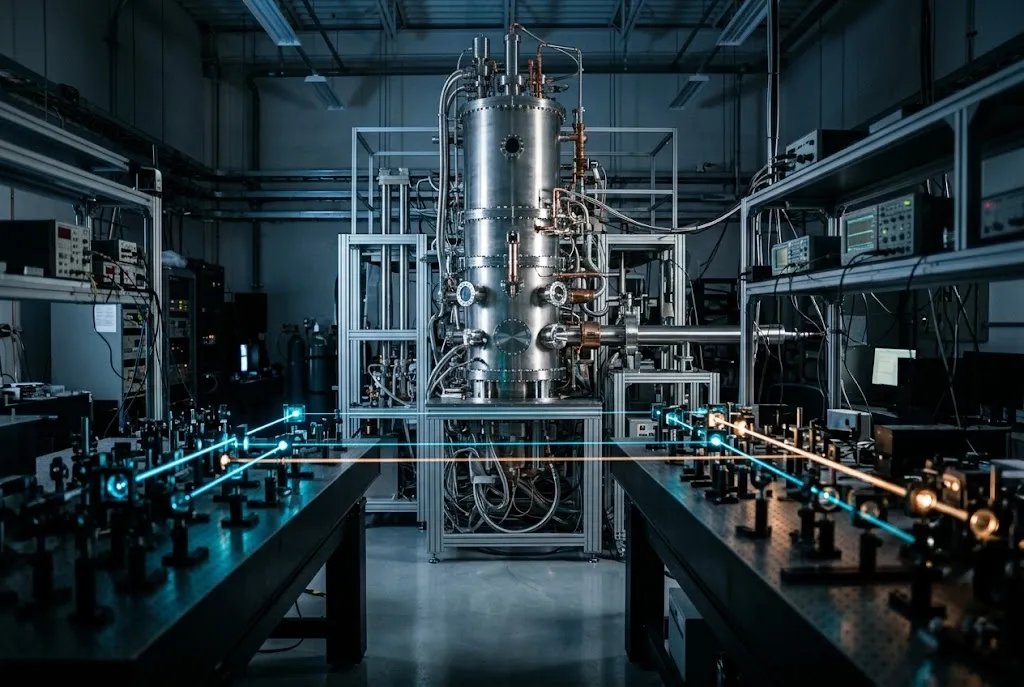
Given their elusive nature, detecting neutrinos is an enormous challenge. Scientists have to build massive, highly sensitive detectors, often located deep underground to shield them from other cosmic radiation that could interfere with measurements.
One common detection method relies on a phenomenon called Cherenkov radiation. Imagine a particle moving through a medium (like water or ice) faster than the speed of light in that medium (though not faster than the universal speed of light in a vacuum). It creates a blue glow, similar to a sonic boom. When a rare neutrino interaction occurs within a detector, it produces a charged particle that can move fast enough to generate this light, which is then picked up by sensitive photodetectors.
Iconic neutrino observatories like the Super-Kamiokande in Japan, filled with 50,000 tons of ultra-pure water, and the IceCube Neutrino Observatory at the South Pole, which uses a cubic kilometer of Antarctic ice, are monumental efforts to capture these fleeting messengers from the cosmos. You can learn more about Cherenkov radiation on its Wikipedia page (opens in a new tab).
The Subtle Influence: How Neutrinos Shape Our Universe
So, how do these almost undetectable particles "secretly shape" our universe? Their influence, while subtle, is profound and multi-faceted:
1. Stellar Evolution and the Cosmic Forge
Neutrinos play a pivotal role in the life and death of massive stars. During a supernova, the core collapse creates an incredibly dense and hot environment, trapping neutrinos temporarily. However, as the core rebounds, a massive burst of neutrinos is released. This neutrino burst carries away about 99% of the gravitational energy of the collapsing star, driving the shockwave that expels the star's outer layers into space. Without this neutrino-driven explosion, supernovae simply wouldn't occur as we understand them, and the heavy elements – like carbon, oxygen, iron, and even gold – forged in the star's heart and released during the explosion, wouldn't be dispersed throughout the galaxy. In essence, neutrinos are the unsung architects of the cosmic recycling program that eventually led to our own existence.
2. Probing the Unseen: Deep Earth and Beyond
Geoneutrinos, emitted from radioactive decays within Earth, are providing a unique "X-ray vision" into our planet's interior. Unlike seismic waves, which can be affected by rock type and temperature, neutrinos pass almost unimpeded. By measuring their flux, scientists can estimate the amount of radioactive material in the mantle and core, which helps determine how much of Earth's internal heat comes from radioactive decay versus residual heat from its formation. This allows us to understand the engine driving plate tectonics and Earth’s magnetic field. This is a fascinating area, much like understanding the unseen forces behind phenomena discussed in blogs like Earth's Hidden Pulse: Does Our Planet Hum a Secret Song?.
3. Unveiling the Early Universe
Cosmic background neutrinos are theoretical relics from the Big Bang, much like the cosmic microwave background radiation. While yet to be directly detected, their existence is predicted by the Standard Model of particle physics. If detected, they would offer a direct window into the universe just seconds after its birth, providing crucial information about its earliest moments, expansion rate, and fundamental composition. This relates to the very fabric of reality, a topic often explored in discussions like The Universe's Biggest Secret: Is It a Hologram?.
4. The Puzzle of Mass and the Standard Model
One of the most significant discoveries about neutrinos was that they possess a tiny, but non-zero, mass. This was a surprise, as the original Standard Model predicted them to be massless. This discovery led to the concept of neutrino oscillation, where neutrinos can change between three different "flavors" (electron, muon, and tau neutrinos) as they travel. This phenomenon proves neutrinos have mass and hints at physics beyond the Standard Model, potentially opening doors to understanding dark matter and other cosmic mysteries. You can delve deeper into the Standard Model of particle physics on its Wikipedia page (opens in a new tab).
Are They Linked to Dark Matter?
While neutrinos are a form of hot dark matter (meaning they move very fast), their contribution to the total mass of the universe is too small to explain the observed effects attributed to cold dark matter. However, their elusive nature and the fact that they have mass make them invaluable for understanding other fundamental particles that might constitute the bulk of dark matter. Learning more about their properties could provide clues about even more exotic, weakly interacting massive particles (WIMPs) that truly make up the cosmos's unseen scaffolding, a concept explored in our blog Dark Matter: Is It a Cosmic Communication Network?.
The Future of Ghost Hunting
The study of neutrinos is still very much in its infancy, with many mysteries yet to unravel. Scientists are working on:
- Determining the exact mass of neutrinos: This could have profound implications for cosmology and particle physics.
- Searching for "sterile neutrinos": These hypothetical particles would interact even more weakly than known neutrinos, potentially serving as a link to dark matter.
- Understanding matter-antimatter asymmetry: Neutrinos might hold clues as to why there's more matter than antimatter in the universe.
The more we learn about these ghost particles, the more we understand the fundamental forces that govern the universe. Their subtle, constant presence reminds us that even the most fleeting and invisible components of reality can play an incredibly powerful role in shaping the cosmos we inhabit. It’s a testament to the fact that sometimes, the biggest influences are the ones we can barely perceive.



Conversation0
No comments yet. Be the first to share a thought — the best questions often become new stories.