


The Free Speed Trick That Sounds Like a Lie
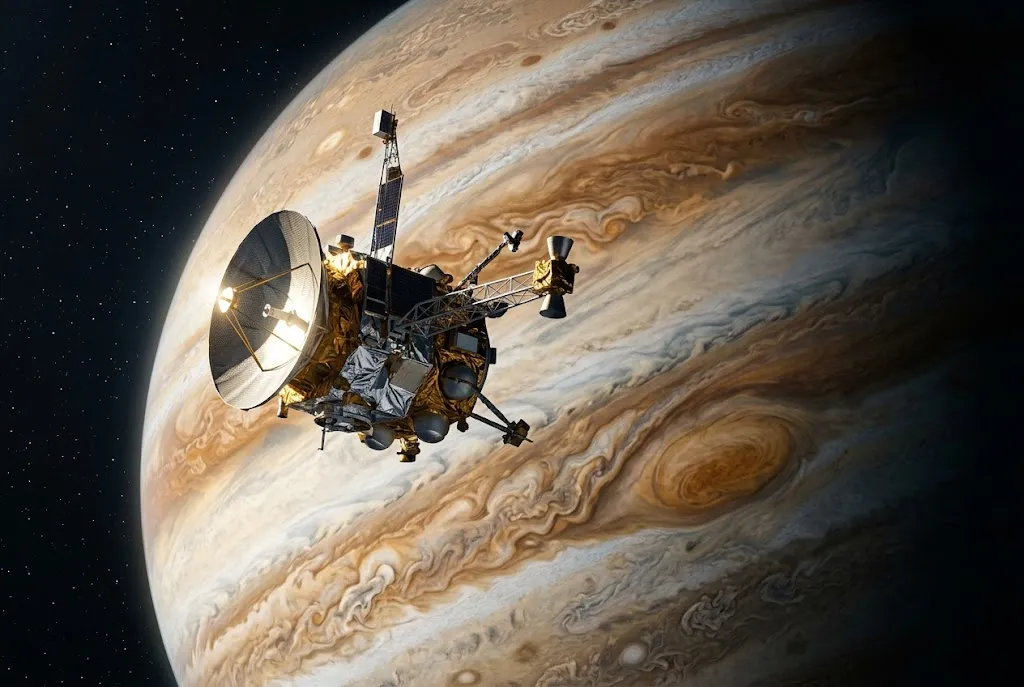
I used to think gravitational slingshots were an elaborate trick of science fiction. The premise sounded like a violation of basic physics: take a thousand-kilogram robotic probe, throw it near a massive planet without firing a single rocket engine, and watch it whip around the far side moving thousands of miles per hour faster than when it entered.
It feels like free lunch. It smells like a perpetual motion machine.
After all, high school physics drilled one rule into anyone who sat through classical mechanics: gravity is a conservative force. What goes down a gravitational hill must climb back up. As a spacecraft plummets toward a planet, gravity accelerates it. Yet as it zooms away on the other side, that exact same gravitational tug pulls backward on the craft, slowing it down by the identical amount. The net change in speed should be dead zero.
Except real deep-space missions do this constantly. In 1977, Voyager 1 used a flyby past Jupiter to gain roughly 35,700 mph relative to the Sun, flinging it toward Saturn and eventually out of our solar system entirely. In 2007, the New Horizons probe shaved three full years off its nine-year transit to Pluto by skimming past Jupiter’s radiation belts. No chemical fuel tank built by human hands could hold enough propellant to provide that kind of velocity change.
So how do mission navigators pull off this trick?
The answer relies entirely on who is watching the flyby.
Two Observers, Two Realities
To understand the mechanism, you have to break the universe into two different frames of reference: the planet's point of view and the Sun's point of view.
Picture yourself floating on Jupiter, staring through a telescope. A spacecraft approaches from millions of kilometers away at 10 kilometers per second. It falls into Jupiter's deep gravity well, picking up tremendous speed as it nears periapsis—its point of closest approach. Then it slings around the planet and climbs away into open space. As it escapes the gravitational pull, it sheds speed steadily.
When it finally breaks free of Jupiter's gravity well, how fast is it traveling relative to you on Jupiter?
Exactly 10 kilometers per second. Not a single meter per second faster.
From the planet's vantage point, the spacecraft entered on a hyperbolic trajectory at a certain velocity, bent its path around the planet by a specific angle, and left at that exact same speed. Energy was conserved. The only thing that changed was the probe’s direction. It entered heading one way and left heading another.
So where does the boost come from?
Now step outside the planet and look at the solar system from the Sun's stationary perspective. Jupiter is not sitting still on a pedestal. It is barreling through its orbit around the Sun at roughly 13 kilometers per second.
When you calculate the spacecraft's motion relative to the Sun, you must combine the probe's speed with the planet's orbital velocity. The spacecraft enters the planetary encounter, hooks into the planet's traveling gravity field, and gets dragged along in the direction of the planet’s orbital flight path.
Think about what happens when you throw a tennis ball against a brick wall. If the wall is stationary, the ball rebounds at roughly the same speed you threw it. But imagine hurling that same tennis ball straight at the front bumper of an oncoming freight train moving at 60 mph. Relative to the train driver, the ball hits the bumper at your throwing speed plus 60 mph, and bounces off at that same combined speed. But relative to you standing on the sidewalk, the ball shoots backward with your original throw plus twice the speed of the train.
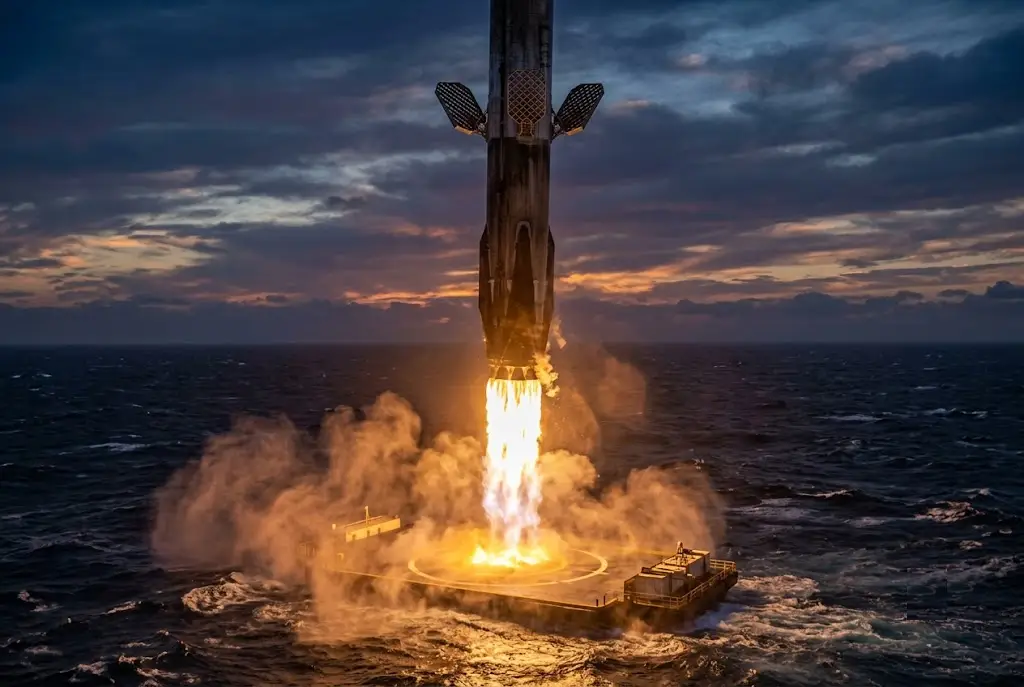
This is why interplanetary probes bound for Saturn or Neptune don't launch on a direct, straight-line sprint; the rocket would need to be the size of an office building just to carry the fuel, a dilemma that echoes the massive propellant mass ratios seen in how SpaceX rockets land vertically. Instead, engineers launch on an elliptical detour to bounce off other moving bodies.
Passing Behind vs. Passing in Front
The trajectory geometry dictates whether the spacecraft gains speed or bleeds it off. It comes down to one critical steering choice: do you fly behind the planet or in front of it?
If you want to accelerate, navigators aim the spacecraft to cross behind the planet's path of motion. As the planet rushes along its orbit, its gravity pulls the trailing spacecraft forward, tugging it along like an invisible gravitational tow rope. The spacecraft pulls on the planet too, but because the planet is gigantic, it barely notices. The probe, on the other hand, receives a massive forward surge in the heliocentric frame.
What happens if you steer across the planet's front bumper?
The exact opposite.
By aiming the probe just ahead of the planet's orbital path, the planet's gravity pulls backward against the craft's motion around the Sun. The spacecraft decelerates relative to the Sun, dumping orbital energy and dropping into a lower, tighter orbit.
NASA calls this a gravity brake.
We hear less about gravity braking in pop science because accelerating sounds more heroic, but planetary braking is essential for reaching the inner solar system. When NASA launched the Parker Solar Probe (opens in a new tab) to study the Sun's corona, its main challenge was shedding Earth’s massive sideways orbital velocity of 67,000 mph. Dropping toward the Sun requires shedding orbital speed, not adding it. The probe executed seven distinct Venus flybys, using Venus's gravity to brake repeatedly and drop its perihelion closer to the solar surface.
Similarly, the joint ESA/JAXA BepiColombo mission to Mercury requires nine planetary flybys—one of Earth, two of Venus, and six of Mercury—just to bleed enough kinetic energy to fall into Mercury's orbit without cooking its engines.
Did Jupiter Feel That? Conservation of Momentum
Whenever I explain this mechanism to friends, the immediate follow-up question is always the same: if the spacecraft stole kinetic energy, where did it come from?
It came from the planet.
Energy and momentum cannot be conjured out of thin air. The foundational law of conservation of momentum (opens in a new tab) governs every planetary flyby with ruthless precision: the momentum gained by the spacecraft must equal the momentum lost by the planet.
Because momentum is mass multiplied by velocity (), the velocity change is inversely proportional to mass.
When Voyager 1 swept past Jupiter and picked up a massive boost, Jupiter lost an identical amount of momentum. But Jupiter has a mass of roughly kilograms, while Voyager weighed less than a single metric ton.
Do the arithmetic, and you find that during the flyby, Jupiter slowed down in its orbit around the Sun by roughly meters per second. That is a deceleration so unimaginably tiny that over a billion years, Jupiter's position in its orbit shifted by less than the diameter of a single subatomic proton.
To human instruments, Jupiter's loss is completely undetectable. But to the laws of thermodynamics, the books balanced down to the final decimal.
The Oberth Effect: Burning Fuel at the Sweet Spot
Gravity assists get even more potent when navigators mix planetary gravity with an actual rocket burn. This relies on a quirk of orbital physics named after German rocketry pioneer Hermann Oberth (opens in a new tab).
The Oberth effect states that a rocket engine generates significantly more mechanical kinetic energy when fired at high speeds than when fired at low speeds.
At first glance, that sounds bizarre. A rocket engine produces the exact same amount of thrust regardless of how fast the vehicle is traveling. So why does firing it while moving faster produce more orbital energy?
Because kinetic energy scales with the square of velocity:
If you ignite your thrusters to add 1 kilometer per second of velocity while drifting slowly at 2 km/s, your kinetic energy jumps from to —a net gain of .
Now imagine firing that exact same engine to add that same 1 km/s when you are screaming past Jupiter's cloud tops at 40 km/s. Your energy jumps from to —a net gain of !
The rocket burn transferred a massive chunk of the exhaust propellant’s kinetic energy directly into the spacecraft’s orbit. (And honestly, the first time I calculated the energy differentials for an Oberth maneuver on scrap paper, I had to stop and verify the algebra twice to believe it).
When mission planners at NASA's Jet Propulsion Laboratory (opens in a new tab) design a "powered gravity assist," they wait until the exact moment the probe hits periapsis—deep inside the gravitational throat of the planet where speed peaks—and burn the thrusters. The gravitational slingshot and the Oberth effect multiply each other. The spacecraft punches out of the encounter with an exit trajectory that would have been impossible through either technique alone.
Why We Cannot Explore the Deep Cosmos Without It
Without gravitational slingshots, our exploration of the outer solar system would have stopped at Mars.
Consider the raw numbers. The Saturn V rocket, the most powerful launch vehicle flown during the twentieth century, threw roughly 45 metric tons toward the Moon. But sending a probe to Jupiter, Uranus, or interstellar space demands escape velocities that scale exponentially due to the tyrannical physics of Tsiolkovsky’s rocket equation. If you want to carry enough fuel to accelerate all the way to Neptune and then brake into orbit, your launch vehicle quickly becomes heavier than an aircraft carrier.
Instead, navigators treat planetary orbits like a giant clockwork pinball machine. When the Cassini mission departed for Saturn in 1997, it followed a trajectory known as VVEJGA: Venus-Venus-Earth-Jupiter Gravity Assist. It flew past Venus twice, swooped back past Earth, swung out to Jupiter, and stole momentum from every single encounter before cruising into Saturnian orbit seven years later.
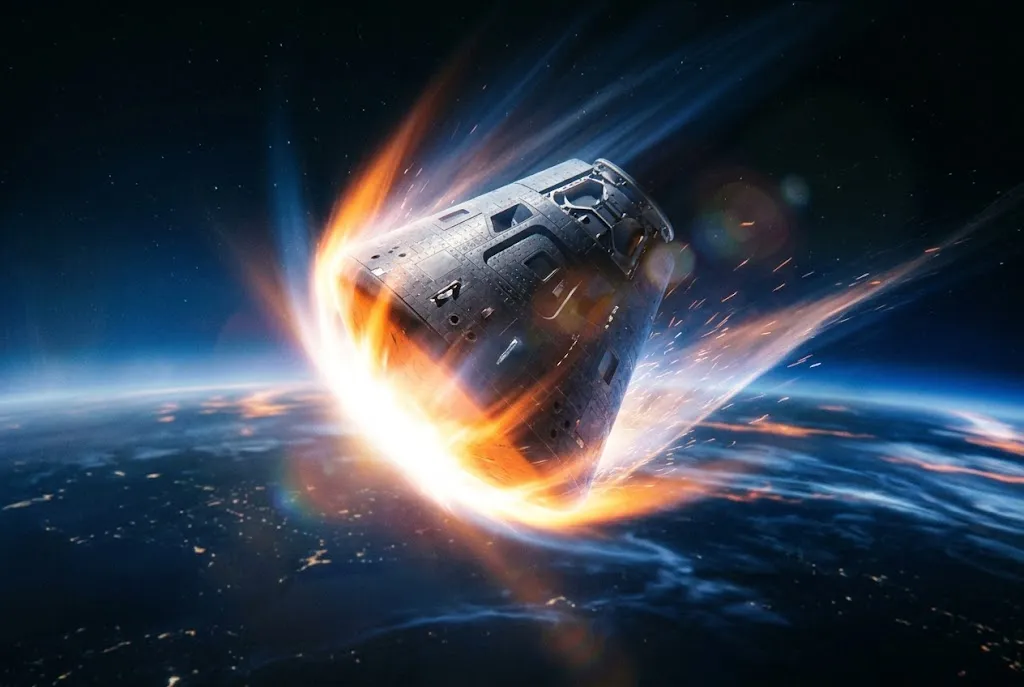
Each flyby had to hit its target within a window of a few kilometers and seconds. Stray slightly off course, and the spacecraft might skim the dense atmosphere below, subjecting the probe to the extreme thermal aerodynamic forces examined in how heat shields survive atmospheric reentry.
Celestial mechanics turns the massive orbital energy of planets into our cosmic highway. We aren't defying gravity when we slingshot past Jupiter. We are hitching a ride on the kinetic energy of a world that has been circling the Sun for four billion years, trading a microscopic fraction of a planet's orbit for humanity's first steps into deep space.
Conversation0
No comments yet. Be the first to share a thought — the best questions often become new stories.