I recently found myself down a rabbit hole, poring over ancient texts and archaeological findings that hint at something truly extraordinary: **super crops**. Not the genetically modified marvels of today, but highly productive, resilient, and even nutritionally superior plants cultivated by ancient civilizations. It made me wonder, did our ancestors possess a botanical knowledge or even a *lost agricultural technology* that allowed them to engineer these plant powerhouses, a secret now obscured by the sands of time?
For centuries, modern agriculture has struggled to feed an ever-growing global population. We battle pests, climate change, and nutrient depletion, constantly seeking innovative solutions. Yet, echoes from the past suggest a time when vast populations thrived on what appear to be miraculously efficient food sources. Think of the massive yields described in ancient Egypt, the incredible nutritional profile of some Aztec staple crops, or the sustained productivity of Incan terraced farms in challenging environments. Were these simply the result of hard labor and clever observation, or was there something more, a forgotten science of **ancient super crops**?
## Unearthing the Giants: Anomalies in Ancient Agriculture
When we talk about ancient crops, we often imagine rudimentary farming. But the evidence paints a more complex picture. For instance, **ancient maize** (corn) in Mesoamerica was a foundational crop, evolving from a wild grass called teosinte into the highly productive plant we know today. While traditional domestication is a slow process of selective breeding, some theories suggest a remarkably rapid transformation that implies a deeper understanding of plant genetics than previously assumed. Could this have been an early form of bio-engineering?
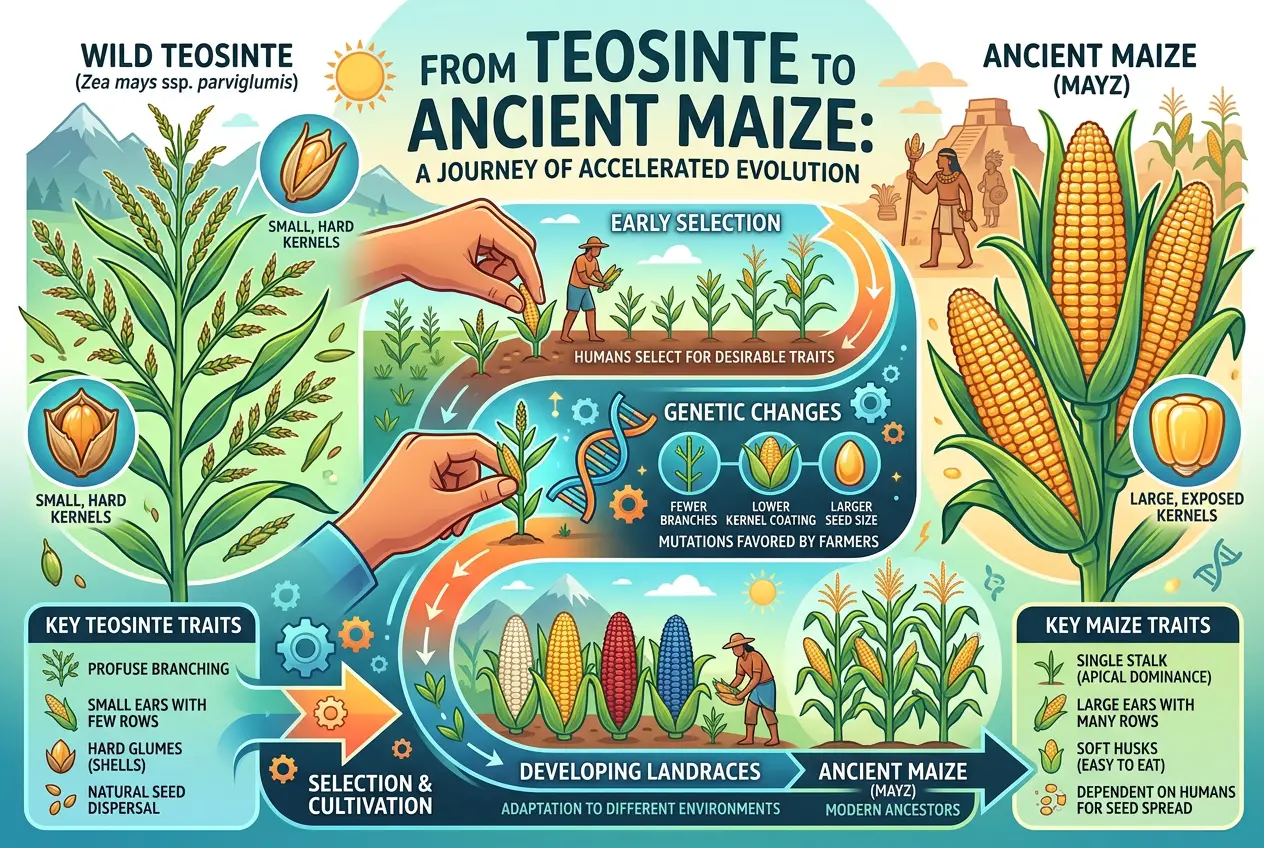
Consider the nutritional density of certain ancient grains like **amaranth** and **quinoa**, staples for the Aztecs and Incas. These "pseudo-cereals" are complete proteins, rich in essential amino acids, fiber, and micronutrients—qualities often lacking in modern staple crops. The meticulous cultivation techniques, like the Chinampas (floating gardens) of the Aztecs, demonstrate an advanced understanding of soil fertility, water management, and companion planting that maximized yields and nutrient uptake. It’s almost as if these ancient farmers were optimizing their **food systems** in ways that modern science is only now rediscovering. For more on how ancient civilizations managed their natural resources, you might find this interesting: [Ancient Ecosystems: Did They Engineer Nature?](/blogs/ancient-ecosystems-did-they-engineer-nature-1440).
### The Fertile Crescent: A Cradle of Agrarian Innovation
The Fertile Crescent, often called the "Cradle of Civilization," saw the domestication of many of humanity's most important crops, including wheat and barley. While conventional wisdom attributes this to simple selection, the speed and scale of these transformations raise questions. Early wheat strains, for example, rapidly developed non-shattering heads (where seeds stay attached to the stalk), a crucial trait for harvesting that typically takes many generations to fix. Was there an acceleration of this process through methods we no longer understand?
Some researchers propose that ancient farmers might have intuitively used methods akin to *epigenetics* or *directed evolution*, perhaps unknowingly influencing gene expression through specific cultivation practices, soil compositions, or even lunar cycles. It’s a bold thought, suggesting that the "tech" wasn't necessarily mechanical, but a profound, almost instinctual, mastery of biological processes.
## Whispers of Lost Botanical Knowledge
What kind of "tech" could this have been? I’m not talking about complex machinery, but rather sophisticated, possibly esoteric, knowledge systems.
* **Advanced Breeding Techniques:** Beyond simple selection, perhaps ancient cultivators understood cross-pollination in specific ways or practiced grafting with unusual precision to combine desirable traits more rapidly. Some ancient Egyptian hieroglyphs depict what appear to be intricate horticultural scenes, suggesting more than just basic planting.
* **Soil Science & Bio-enhancers:** Ancient civilizations often used complex irrigation systems and organic fertilizers. But what if they also employed natural "bio-enhancers" or understood specific microbial interactions in the soil that fostered extraordinary plant growth and resilience? The Roman writer Pliny the Elder, in his *Natural History*, describes various agricultural practices that hint at deep ecological understanding, some of which are only now being validated by modern science. More on this can be found on [Wikipedia's page on Ancient Roman agriculture](https://en.wikipedia.org/wiki/Ancient_Roman_agriculture).
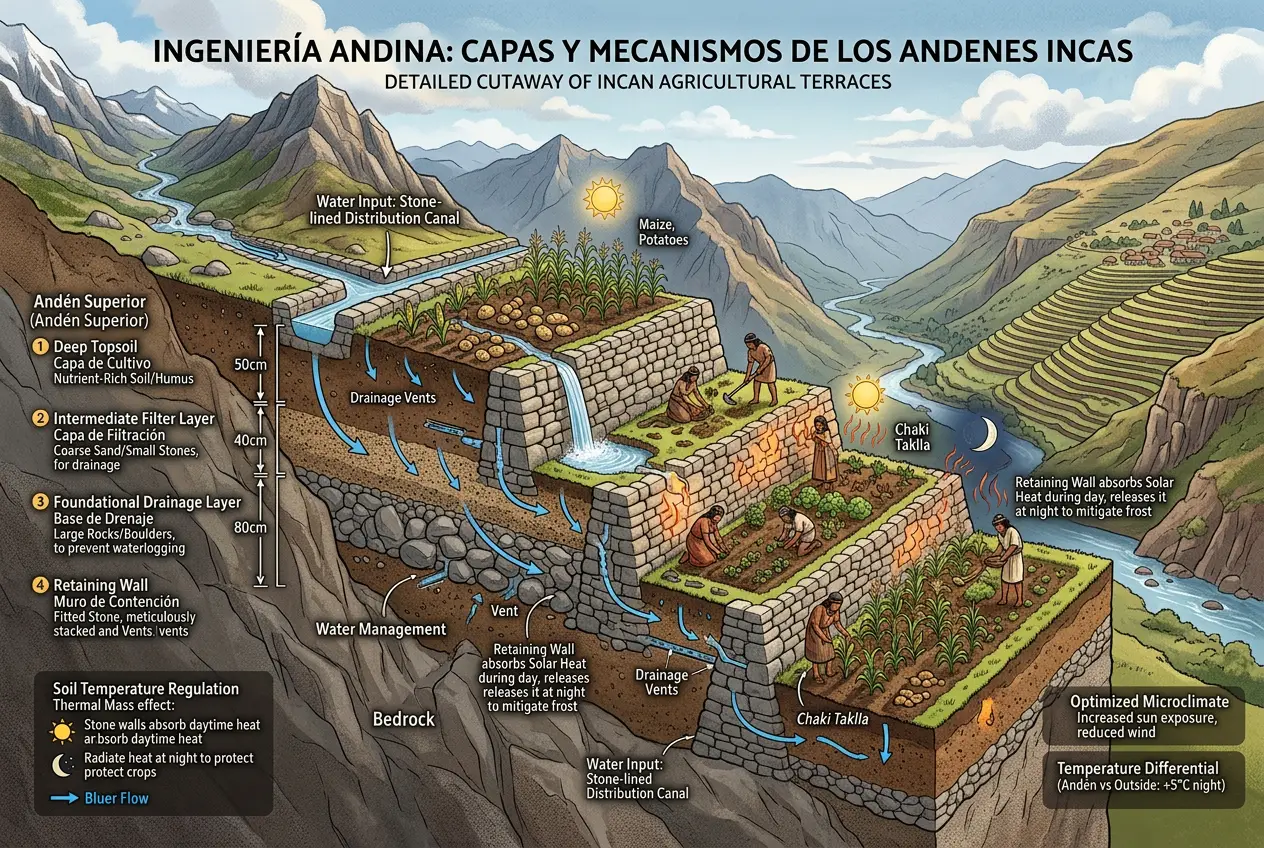
* **Environmental Manipulation:** The Incas' sophisticated terracing systems, known as *andenes*, not only prevented erosion but also created microclimates that allowed diverse crops to flourish at high altitudes. These systems often incorporated intricate drainage, heat absorption, and nutrient cycling. This wasn't just basic farming; it was **agro-engineering** on a grand scale, capable of sustaining populations in challenging terrains for centuries. You can delve deeper into such marvels in our post on [Impossible Artifacts: Clues to Lost Ancient Tech](/blogs/impossible-artifacts-clues-to-lost-ancient-tech-2132).
### The Case of the "Golden" Rice of Antiquity
While "golden rice" is a modern genetically modified crop, the concept of naturally nutrient-enhanced varieties isn't new. Certain ancient rice strains in Asia were reportedly more robust and vitamin-rich than common varieties. Could ancient farmers, through generations of keen observation and subtle manipulation, have selected for plants with naturally higher levels of specific nutrients? This would be a form of *pre-scientific genetic selection*, driven by practical outcomes.
The tales of **legendary crops** like the mythical *Soma* in ancient Vedic texts or the grains said to grow without extensive labor in certain myths, while perhaps embellished, might echo a memory of a time when plants were cultivated with such efficiency or contained such potency that they seemed almost magical.
## Was This Tech "Lost"?
The idea that advanced knowledge could be lost to time isn't far-fetched. Historical upheavals, invasions, natural disasters, and the collapse of empires have frequently led to the disappearance of entire bodies of knowledge. The destruction of the Library of Alexandria, for example, represents a colossal loss of ancient wisdom. Agricultural secrets, passed down through oral traditions or recorded in perishable materials, would be particularly vulnerable.
The specialization of knowledge could also play a role. If certain cultivation techniques were the guarded secrets of a priestly class or an elite group of farmer-engineers, their disappearance could mean the complete loss of that specific "tech." This concept is explored in a similar vein when we consider how ancient civilizations might have approached the very essence of life: [Did Ancient Egypt Code Life? Unveiling Bio-Tech's Secret Dawn](/blogs/did-ancient-egypt-code-life-unveiling-bio-techs-secret-dawn-7248).
Furthermore, the very nature of empirical, practical knowledge means it can be easily superseded or forgotten if circumstances change. As environments shifted or new crops were introduced, older, more complex techniques might have been abandoned in favor of simpler, less demanding methods, even if they were less productive or nutritious.
### Modern Echoes and Rediscoveries
Today, agricultural scientists are looking to indigenous practices for inspiration. Researchers are studying **landrace varieties**—local, traditional varieties of crops that have adapted to their specific environments over centuries. These often possess remarkable resilience to pests, diseases, and extreme weather, and can sometimes outperform modern hybrids in certain conditions. The rediscovery of these ancient varieties and the wisdom behind their cultivation techniques are powerful indicators that our ancestors might have had a deeper relationship with their plant kingdom than we currently acknowledge.
We are also seeing a resurgence of interest in permaculture and biodynamic farming, which echo many principles found in ancient agricultural systems—holistic approaches, soil health emphasis, and working *with* nature rather than against it. Could these modern "innovations" actually be partial rediscoveries of a **lost ancient tech**? The thought is compelling, suggesting a cyclical nature to human knowledge and innovation. Even the potential of [ancient plants to fuel tomorrow's cities](/blogs/can-ancient-plants-fuel-tomorrows-cities-9995) hints at the enduring power of these forgotten botanical secrets.
## Conclusion: A Seed of Curiosity
The notion of ancient super crops cultivated with lost technology isn't just a romantic fantasy; it’s a scientific inquiry into the incredible capabilities of our ancestors. While we may never unearth a definitive "ancient bio-engineering manual," the tantalizing clues from archaeology, botany, and historical texts strongly suggest that sophisticated agricultural practices, perhaps even forms of pre-scientific genetic understanding, were far more prevalent than we once believed.
Understanding these lost methods could offer invaluable insights for our current food security challenges. Perhaps the solutions to feeding tomorrow's world lie not just in future innovations, but in carefully examining the roots of our past. The earth beneath our feet still holds many secrets, waiting for curious minds to unearth them.
&meta_title; Ancient Super Crops: Unearthing Lost Agricultural Tech &meta_title;
&meta_description; Did ancient civilizations possess lost technology to cultivate super crops? Explore the evidence of advanced botanical knowledge and forgotten agricultural practices. &meta_description;
&faqs;{"faqs":[{"id":1,"question":"What distinguishes an 'ancient super crop' from a regular ancient crop?","answer":"An 'ancient super crop' refers to historical plant varieties that exhibit unusually high productivity, exceptional nutritional density, or remarkable resilience to environmental challenges, suggesting a level of cultivation or selection beyond simple traditional farming."},{"id":2,"question":"What evidence supports the idea of ancient civilizations having advanced botanical knowledge?","answer":"Evidence includes the rapid evolution of crops like maize from wild ancestors, the exceptional nutritional profiles of ancient staples like quinoa and amaranth, sophisticated agricultural infrastructure like Incan terraces or Aztec Chinampas, and descriptions in ancient texts hinting at complex cultivation practices."},{"id":3,"question":"Could ancient bio-engineering have involved genetic modification?","answer":"While direct gene splicing as we know it today is highly unlikely, ancient 'bio-engineering' might refer to sophisticated forms of selective breeding, grafting, understanding of soil microbiology, or even epigenetic manipulation through specific environmental controls, influencing plant traits in a directed manner over generations."},{"id":4,"question":"Why might this 'tech' have been lost?","answer":"Potential reasons for loss include the collapse of civilizations, destruction of knowledge repositories (like libraries), reliance on oral traditions that can disappear, specialized knowledge held by a select few, or the abandonment of complex methods in favor of simpler ones during times of upheaval."},{"id":5,"question":"How could rediscovering this ancient knowledge benefit modern agriculture?","answer":"Rediscovering these methods could provide insights into sustainable farming practices, drought-resistant crops, nutrient-dense food sources, and natural pest control. It could offer new strategies for enhancing food security and resilience in a changing climate, drawing inspiration from historically proven techniques."}]}&faqs;
Frequently Asked Questions
An 'ancient super crop' refers to historical plant varieties that exhibit unusually high productivity, exceptional nutritional density, or remarkable resilience to environmental challenges, suggesting a level of cultivation or selection beyond simple traditional farming.
Evidence includes the rapid evolution of crops like maize from wild ancestors, the exceptional nutritional profiles of ancient staples like quinoa and amaranth, sophisticated agricultural infrastructure like Incan terraces or Aztec Chinampas, and descriptions in ancient texts hinting at complex cultivation practices.
While direct gene splicing as we know it today is highly unlikely, ancient 'bio-engineering' might refer to sophisticated forms of selective breeding, grafting, understanding of soil microbiology, or even epigenetic manipulation through specific environmental controls, influencing plant traits in a directed manner over generations.
Potential reasons for loss include the collapse of civilizations, destruction of knowledge repositories (like libraries), reliance on oral traditions that can disappear, specialized knowledge held by a select few, or the abandonment of complex methods in favor of simpler ones during times of upheaval.
Rediscovering these methods could provide insights into sustainable farming practices, drought-resistant crops, nutrient-dense food sources, and natural pest control. It could offer new strategies for enhancing food security and resilience in a changing climate, drawing inspiration from historically proven techniques.
Verified Expert
Alex Rivers
A professional researcher since age twelve, I delve into mysteries and ignite curiosity by presenting an array of compelling possibilities. I will heighten your curiosity, but by the end, you will possess profound knowledge.
 Join Us




 Alex Rivers
































Leave a Reply
Comments (0)