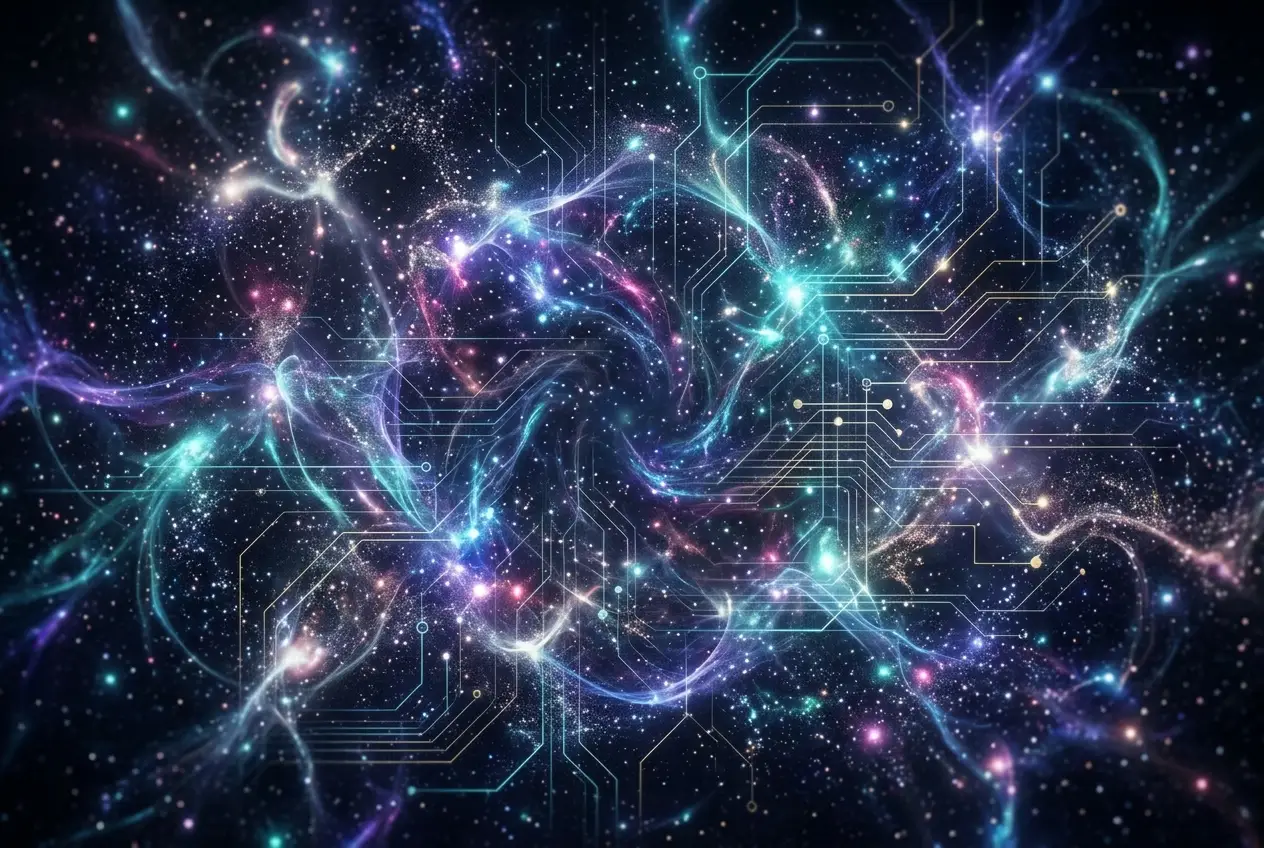
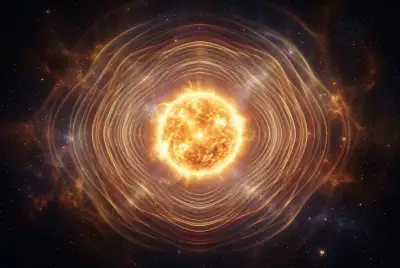
The vast expanse of space, often depicted as a silent, barren void, is anything but empty. When I first learned about the quantum vacuum, my perception of "nothingness" completely shattered. It's a cosmic arena teeming with frantic activity, a swirling cauldron of virtual particles popping into and out of existence in fractions of a second. This mind-bending concept makes me wonder: what if this inherent quantum fuzziness isn't just background noise, but the very fabric of an unimaginable cosmic computer?
The idea that empty space itself could be a processing unit, a gargantuan quantum machine running the universe, sounds like science fiction. Yet, modern physics, particularly quantum field theory, paints a picture of the vacuum that is far more complex and active than anyone in classical physics could have ever imagined. It’s a realm where energy, information, and even fundamental laws might be encoded in ways we’re only just beginning to grasp.
## The Quantum Vacuum: A Universe Teeming with Invisible Energy
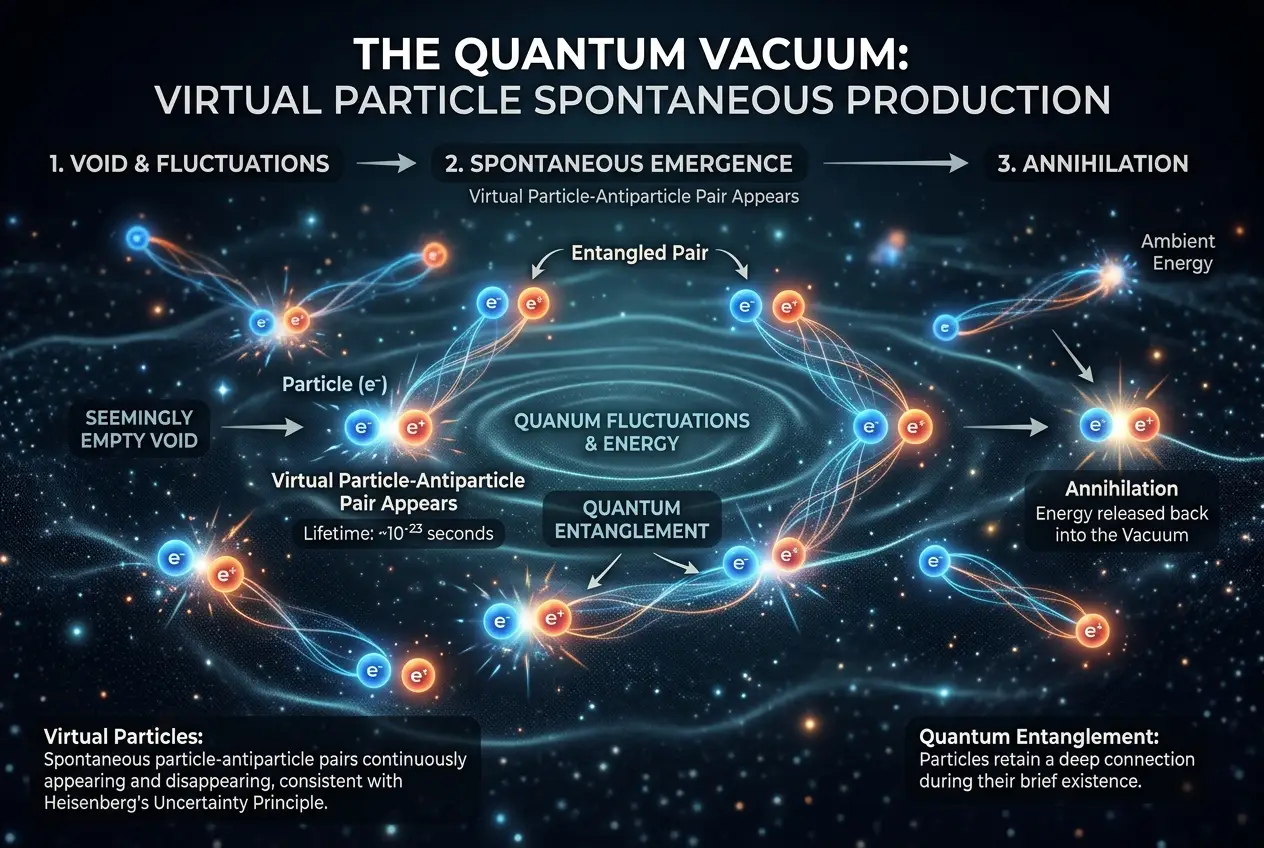
Imagine the deepest reaches of intergalactic space, far from any star or galaxy. To the untrained eye, it appears utterly void, a perfect vacuum. But quantum mechanics tells a different story. According to quantum field theory, even in the absence of matter and light, space is not truly empty. Instead, it is filled with **quantum fluctuations**—fleeting pairs of particles and antiparticles constantly appearing and disappearing. This phenomenon is known as the **quantum vacuum** or **zero-point energy**.
These quantum fluctuations aren't just theoretical curiosities; they have measurable effects, such as the Casimir effect, where two uncharged metal plates placed incredibly close together experience an attractive force due to differences in vacuum energy pressure. This tangible evidence hints at the profound reality of this invisible realm. If you’re curious to dive deeper into the basics of the quantum vacuum, Wikipedia offers an excellent starting point: [https://en.wikipedia.org/wiki/Quantum_vacuum](https://en.wikipedia.org/wiki/Quantum_vacuum).
So, if space is constantly bubbling with virtual particles and energy, how does this relate to computing? The essence of any computer is its ability to store and process information. In the quantum realm, information isn't confined to binary bits (0s and 1s) but exists in **qubits**, which can represent 0, 1, or both simultaneously through superposition. And this is where the vacuum's potential begins to shine.
## Spacetime as a Computational Grid
Consider the very structure of spacetime. Einstein showed us that space and time are not separate entities but interwoven into a flexible fabric. What if this fabric isn't just a passive stage for cosmic events, but an active participant, processing the information of the universe?
Physicists like John Wheeler famously suggested that "information is physical," implying that every particle, every interaction, every event in the universe can be broken down into discrete units of information. If this is true, then the universe itself could be seen as an immense information processing system. Where would this system operate? Perhaps within the very fabric of spacetime, powered by the quantum vacuum.
One compelling theory that touches upon this idea is the **holographic principle**. Proposed by Gerard 't Hooft and later developed by Leonard Susskind, this principle suggests that all the information contained within a volume of space can be encoded on its boundary, much like a 3D hologram is encoded on a 2D surface. If the universe operates like a hologram, then the information density of spacetime is incredibly high, hinting at a deep connection between geometry, gravity, and information itself. For a detailed overview of this fascinating concept, check out [https://en.wikipedia.org/wiki/Holographic_principle](https://en.wikipedia.org/wiki/Holographic_principle).
In a way, this aligns with the idea of a cosmic computer. The universe calculates its future state based on its current state, and this "calculation" happens at the most fundamental level of reality. Could the quantum fluctuations in the vacuum be the "processors" or "memory units" enabling this cosmic computation?
## Quantum Entanglement: The Universe's Neural Network?
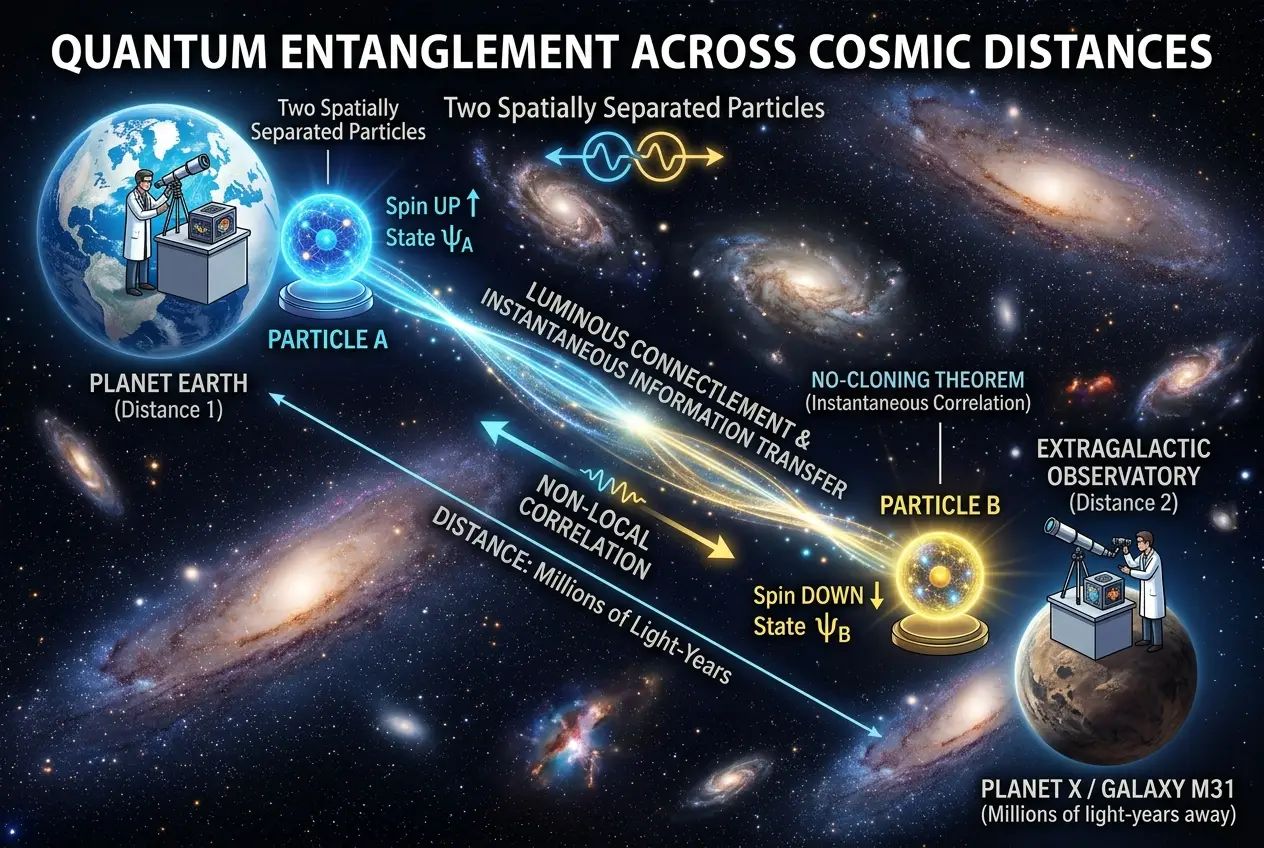
One of the most bizarre and powerful aspects of quantum mechanics is **quantum entanglement**. This phenomenon allows two or more particles to become linked in such a way that they share the same fate, regardless of the distance separating them. Measure the property of one entangled particle, and you instantly know the corresponding property of the other, even if it's light-years away. Albert Einstein famously called it "spooky action at a distance."
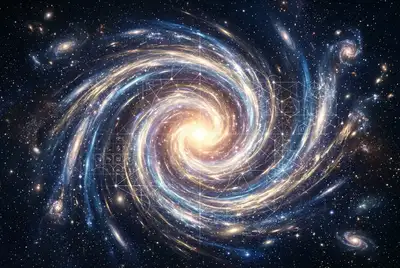
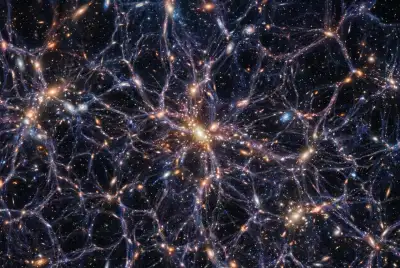
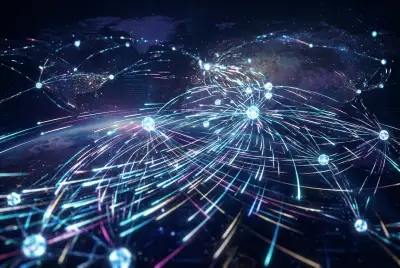
If space is indeed a cosmic computer, then quantum entanglement could be its fundamental communication network, connecting distant parts of the "machine" instantaneously. Think of the vast cosmic web, the intricate network of galaxies, dark matter, and cosmic voids that spans the universe. What if this large-scale structure is a macroscopic manifestation of a deeply entangled, underlying quantum information network?
Our understanding of quantum entanglement is crucial for developing our own quantum computers. If you've ever wondered how quantum entanglement defies space-time, you might find our previous blog post, [How Does Quantum Entanglement Defy Space-Time?](/blogs/how-does-quantum-entanglement-defy-space-time-5424), particularly enlightening. The ability for parts of space to be "linked" in this way strongly suggests an information-rich environment, rather than a truly empty one.
## Dark Energy and the Computation of Expansion
Dark energy, the mysterious force accelerating the expansion of the universe, is another puzzle piece that might fit into this cosmic computer hypothesis. While we don't fully understand its nature, some theories propose a connection to the zero-point energy of the quantum vacuum. If the vacuum energy is responsible for driving cosmic expansion, then it's not just passively fluctuating; it's actively influencing the largest scales of the universe.
Could this active role be interpreted as part of the universe's ongoing computation? As spacetime expands, the information content might change, requiring continuous "recalculation" or "reprogramming" by dark energy. The very act of expanding could be a form of cosmic processing, constantly updating the universe's state.
This leads to even wilder speculation: If the universe is a giant neural network, as explored in our article, [Is the Universe a Giant Neural Network?](/blogs/is-the-universe-a-giant-neural-network-2907), then dark energy might be the "power supply" or "global controller" influencing the network's behavior and learning processes. The interplay between quantum fluctuations, entanglement, and dark energy could be the engine of the universe's computational existence.
## The Edge of Reality: Black Holes and Information
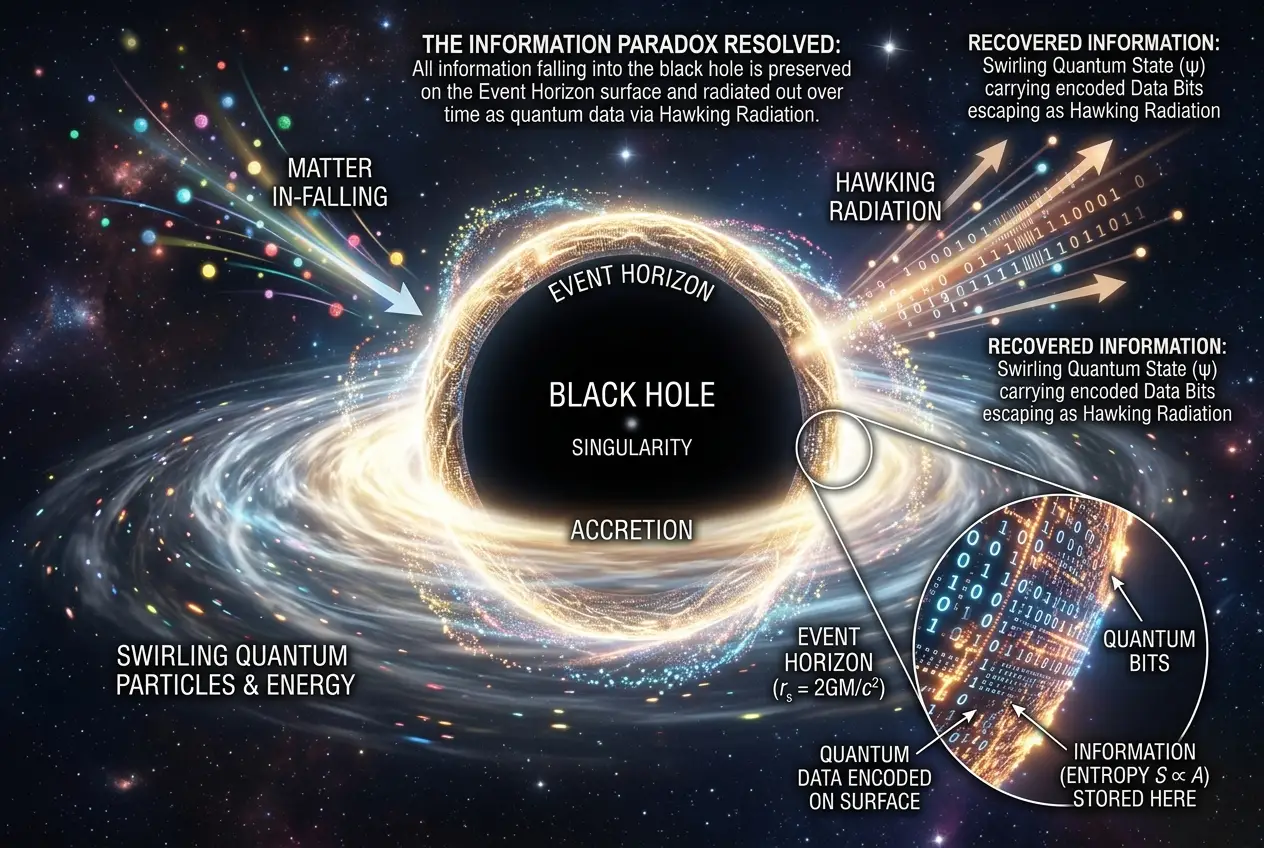
Black holes are another fascinating arena where information theory and gravity collide, often with quantum implications. Stephen Hawking's work on black hole thermodynamics and the **information paradox** suggests that information that falls into a black hole might not be truly lost, but somehow encoded on its event horizon. This concept reinforces the idea that information is a fundamental currency of the universe.
Some theoretical physicists have even posited that black holes are "nature's ultimate quantum computers," efficiently processing and perhaps scrambling information in ways that defy our current understanding. If you're intrigued by this notion, our blog post, [Black Holes: Are They Nature's Ultimate Quantum Computers?](/blogs/black-holes-are-they-natures-ultimate-quantum-computers-5819), delves deeper into this captivating idea.
The extreme conditions within and around black holes, where spacetime is dramatically warped, could be seen as localized "processing units" within the larger cosmic computer. They represent regions where information density reaches its theoretical limits, potentially providing clues about how the universe stores and manipulates its fundamental data.
## Implications for Our Future Understanding
The notion of empty space as a quantum computer isn't just a philosophical musing; it has profound implications for how we perceive reality and pursue scientific discovery. If information is truly fundamental, and spacetime itself is involved in its processing, then we might need to rethink our approach to physics.
For instance, understanding the computational nature of space could open doors to new forms of energy generation (tapping into zero-point energy, which you can learn more about here: [https://en.wikipedia.org/wiki/Zero-point_energy](https://en.wikipedia.org/wiki/Zero-point_energy)) or even new ways of communication that leverage quantum entanglement across cosmic distances. It might also help us solve enduring mysteries like the nature of dark matter and dark energy, which currently make up about 95% of the universe's mass-energy budget. If you're curious about other unseen cosmic phenomena, our article, [Does Dark Matter Hide a Universe We Can't See?](/blogs/does-dark-matter-hide-a-universe-we-cant-see-2793), explores similar questions about hidden realities.
It forces us to consider that perhaps the physical laws we observe are not static, but are dynamically computed or emergent properties of this underlying quantum information system. As I ponder this, I feel a renewed sense of wonder at the universe's complexity and the layers of reality yet to be uncovered.
Perhaps the greatest computer isn't some silicon chip we build, but the very fabric of existence, silently calculating and shaping reality around us. The next time you gaze into the "empty" night sky, consider that you might be looking at the ultimate quantum processing unit, humming with calculations that define everything we know.
Verified Expert
Alex Rivers
A professional researcher since age twelve, I delve into mysteries and ignite curiosity by presenting an array of compelling possibilities. I will heighten your curiosity, but by the end, you will possess profound knowledge.
Leave a Reply
Comments (0)
No approved comments yet. Be the first to share your thoughts!
 Join Us
 Unknown Author
















Leave a Reply
Comments (0)